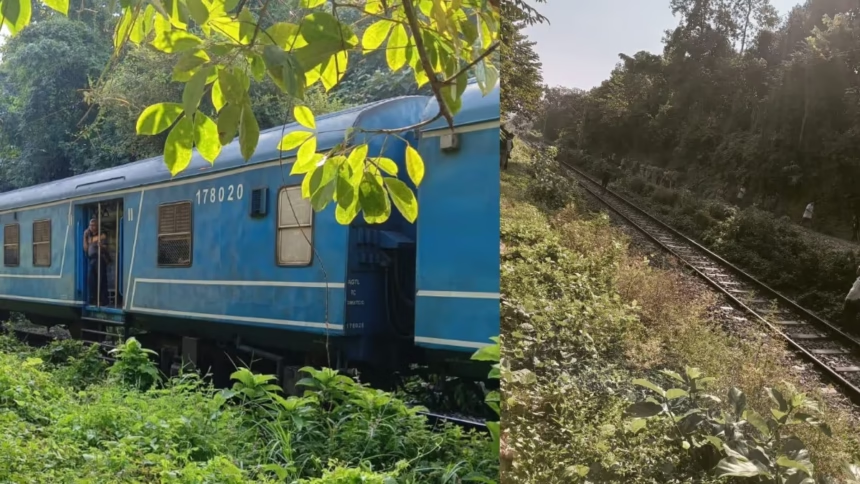
The Tripura Transport Blockade Announcement has triggered concern across the state after groups of surrendered militants reportedly declared an indefinite road and rail blockade beginning June 5. The decision comes amid allegations that promised rehabilitation measures have not been fully implemented by authorities. The announcement has raised fears of widespread disruption to transportation networks, including passenger travel and the movement of essential goods. Officials are expected to initiate talks with the concerned groups to defuse tensions and prevent escalation, while security agencies monitor the situation closely ahead of the proposed blockade date.
Tripura BJP Names New State President
Arunachal CM Resignation Rumours Rejected
Surrendered Groups Raise Rehabilitation Concerns
Former militant groups that earlier entered rehabilitation agreements with the government have raised concerns over delays in promised support measures. Representatives say several commitments linked to rehabilitation packages, employment assistance, and reintegration support remain incomplete.
The Tripura Transport Blockade Announcement escalates pressure on authorities as groups demand action on pending issues. In addition, group leaders say repeated appeals failed to produce meaningful progress, so they announced the blockade as a form of protest.
Meanwhile, officials acknowledge the concerns and plan to review rehabilitation program status. These schemes play a critical role in ensuring long-term peace and successful reintegration of surrendered cadres into civilian life.
Potential Disruption to Road and Rail Networks
The proposed blockade may disrupt both road and rail connectivity in Tripura. These transport systems carry passengers, goods, and essential supplies across the state and beyond.
The Tripura Transport Blockade Announcement raises concerns among traders, commuters, and logistics operators who rely on uninterrupted transport services. Moreover, any disruption could affect supply chains, fuel distribution, and the availability of essential commodities in local markets.
Authorities monitor the situation closely and assess risks to public order and infrastructure. Consequently, they consider contingency measures to reduce disruption if the blockade proceeds.
Government Expected to Initiate Dialogue
State authorities plan to engage surrendered groups in discussions to address grievances and prevent escalation. In addition, dialogue remains a key tool for resolving issues related to rehabilitation agreements and post-conflict reintegration.
The Tripura Transport Blockade Announcement increases urgency around unresolved concerns. Officials may verify claims about unmet commitments and identify solutions within existing rehabilitation frameworks.
Furthermore, security agencies and administrative officials coordinate efforts to maintain stability while encouraging peaceful negotiations. Open communication channels help avoid disruption and preserve peace in the region.
Importance of Rehabilitation Programs
Rehabilitation initiatives support surrendered militants through financial aid, skill development, and social reintegration programs. These measures help individuals transition into mainstream society and rebuild livelihoods.
The Tripura Transport Blockade Announcement highlights the need for timely and effective implementation of such schemes. Moreover, experts warn that delays in rehabilitation can create frustration and weaken peace processes.
Therefore, authorities must ensure transparency, accountability, and timely delivery of benefits. These factors strengthen trust between stakeholders and support long-term stability in conflict-affected regions.
Conclusion
The Tripura Transport Blockade Announcement by surrendered militant groups over rehabilitation demands raises concerns about possible disruption to road and rail connectivity from June 5. Meanwhile, authorities plan dialogue to resolve grievances and prevent escalation. Overall, the situation highlights the importance of timely rehabilitation delivery to maintain peace and stability in Tripura.
FAQs
Why are surrendered groups announcing a blockade?
They claim that promised rehabilitation measures have not been fully implemented.
When is the blockade expected to begin?
The groups have announced June 5 as the start date for the indefinite blockade.
What is the Tripura Transport Blockade Announcement?
It refers to the declared road and rail blockade by surrendered militants over rehabilitation issues.
How could the blockade affect Tripura?
It may disrupt transport, supply chains, and movement of essential goods and passengers.
What steps are authorities taking?
The government is expected to initiate dialogue and review rehabilitation commitments.
Can the blockade be avoided?
It may be avoided if negotiations lead to a resolution of the groups’ demands.