





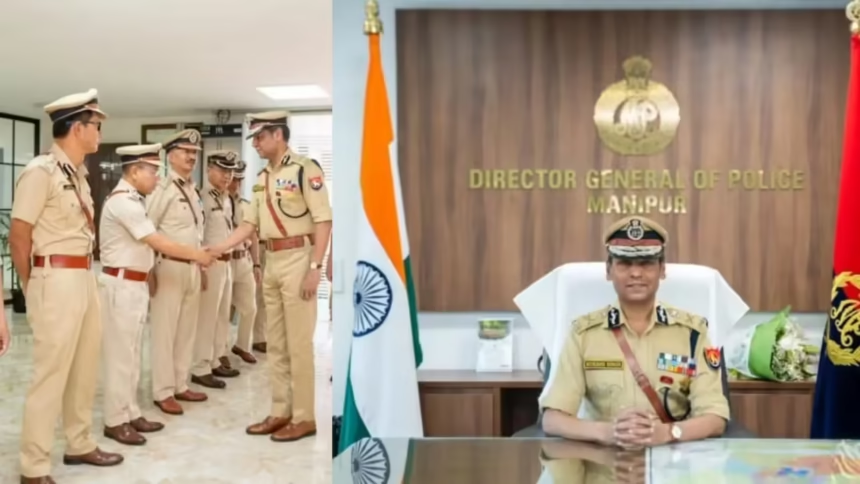
The Manipur new DGP appointment marks an important development in the state’s law enforcement framework as IPS officer Mukesh Singh of the 1996 batch has officially assumed charge as Director General of Police. Upon taking office, he emphasized the importance of public-centric policing, strengthening community trust, and ensuring immediate stability across the state. Moreover, his appointment comes at a crucial time as authorities continue efforts to maintain peace, security, and effective policing.
Breaking News: Northeast Floods Claim 25 Lives
Guwahati Waterlogging Crisis Deepens
Mukesh Singh Officially Assumes Charge
Senior IPS officer Mukesh Singh has formally taken charge as the Director General of Police of Manipur. The appointment places him at the helm of the state’s police force during a period when effective law enforcement and stability remain top priorities.
Moreover, his leadership is expected to guide policing strategies aimed at strengthening public confidence and maintaining law and order. As a seasoned officer from the 1996 batch, he brings extensive administrative and operational experience to the role.
Consequently, the appointment has drawn attention from security experts and public administrators alike.
Focus on Public-Centric Policing
Upon assuming office, Mukesh Singh highlighted public-centric policing as a key priority. This approach emphasizes stronger engagement between law enforcement agencies and local communities.
Furthermore, public-centric policing encourages transparency, accountability, and improved communication between citizens and police personnel. Such initiatives often help build trust and foster cooperation in maintaining public safety.
As a result, community engagement is expected to remain an important component of his leadership strategy.
Immediate Stability Among Top Priorities
The new DGP has also underscored the importance of ensuring immediate stability across the state. Maintaining peace and public order remains a fundamental responsibility of law enforcement agencies.
Moreover, stability creates an environment that supports economic activity, social harmony, and effective governance. Therefore, police authorities continue focusing on proactive measures to address security concerns.
Consequently, the emphasis on stability reflects the broader objectives of law enforcement administration.
Importance of Strong Police Leadership
Police leadership plays a critical role in shaping law enforcement priorities and operational effectiveness. Senior officers provide direction on policing strategies, resource allocation, and public engagement initiatives.
Furthermore, effective leadership helps improve coordination among different units and agencies involved in maintaining security. Strong administrative oversight often contributes to better service delivery and public confidence.
Therefore, leadership transitions frequently attract significant public and institutional interest.
Strengthening Community Trust
Building trust between law enforcement agencies and citizens remains essential for effective policing. Communities often cooperate more actively with authorities when they have confidence in the fairness and responsiveness of police services.
Additionally, trust-based policing can improve information sharing and strengthen crime prevention efforts. Public engagement initiatives frequently help create positive relationships between officers and residents.
As a result, community trust remains a key objective for modern policing systems.
Enhancing Law and Order Mechanisms
Maintaining law and order requires continuous monitoring, strategic planning, and efficient deployment of resources. Police departments regularly assess security conditions to identify emerging challenges and improve operational readiness.
Moreover, effective law enforcement supports public safety while ensuring that citizens can carry out daily activities without fear or disruption. Therefore, strengthening policing mechanisms remains a core priority.
Consequently, the new leadership is expected to focus on enhancing institutional effectiveness.
Role of Technology in Modern Policing
Modern police forces increasingly rely on technology to improve efficiency and strengthen public safety measures. Surveillance systems, digital communication tools, and data-driven strategies often support better decision-making.
Furthermore, technological advancements can enhance investigative capabilities and improve response times. Therefore, many police departments continue investing in modernization initiatives.
As a result, technology is likely to remain an important element of future policing strategies.
Supporting Public Safety Objectives
Public safety forms the foundation of law enforcement activities. Police agencies work to prevent crime, respond to emergencies, and maintain order across communities.
Moreover, effective public safety measures contribute to social stability and economic development. Citizens generally benefit when security institutions operate efficiently and transparently.
Therefore, public safety objectives will remain central to the new DGP’s responsibilities.
Expectations from the New Leadership
The appointment of a new police chief often generates expectations regarding policy direction and operational priorities. Stakeholders frequently look for initiatives that improve service delivery and strengthen institutional performance.
Additionally, leadership transitions provide opportunities to review existing strategies and implement new approaches where necessary. Such changes can contribute to organizational growth and improved outcomes.
Consequently, observers will closely monitor developments under the new administration.
Looking Ahead
As Mukesh Singh begins his tenure as Director General of Police, attention will focus on how his priorities translate into practical initiatives. Public-centric policing, community engagement, and stability measures are expected to guide future actions.
Moreover, continued coordination among law enforcement agencies and government departments will remain essential for achieving long-term security objectives. Effective planning and implementation can strengthen public confidence and support sustainable peace.
As a result, the coming months may prove significant for policing and public safety efforts in Manipur.
Conclusion
The appointment of Mukesh Singh as the Manipur new DGP marks an important transition in the state’s law enforcement leadership. By emphasizing public-centric policing and immediate stability, he has outlined priorities aimed at strengthening community trust and enhancing public safety.
As he begins his tenure, stakeholders will watch closely to see how these objectives shape policing strategies and contribute to maintaining law and order. The appointment reflects a continued commitment to effective governance, security, and community-focused law enforcement.
FAQs
Who is the new DGP of Manipur?
IPS officer Mukesh Singh of the 1996 batch has taken charge as the new Director General of Police.
What are his key priorities?
He has emphasized public-centric policing and ensuring immediate stability across the state.
What is public-centric policing?
Public-centric policing focuses on building trust, transparency, accountability, and cooperation between police and communities.
Why is the DGP position important?
The DGP leads the state’s police force and plays a crucial role in shaping law enforcement policies and strategies.
How can community trust improve policing?
Strong community trust encourages cooperation, improves information sharing, and supports effective crime prevention efforts.