



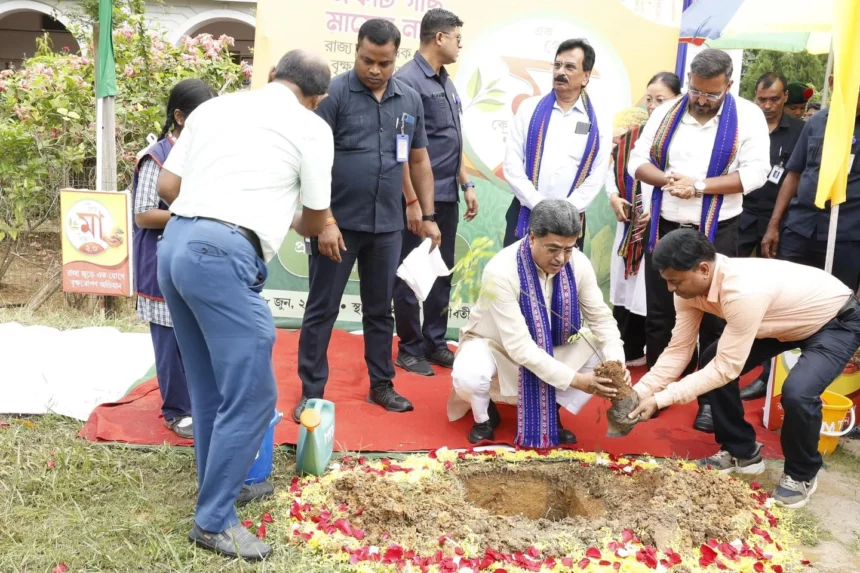
The Statewide Mission Green Launch marked a major environmental initiative in Tripura as Chief Minister Dr. Manik Saha inaugurated World Environment Day celebrations and directed all government departments to participate in large-scale sapling plantation drives across urban areas. The campaign aims to strengthen environmental protection, increase green cover, and encourage public participation in sustainable development efforts throughout the state.
Strategic Border Trade Expansion Talks Boost India-Bangladesh Cargo Connectivity
Kuki Inpi Manipur Raises Concern Over Possible Exclusion of Displaced Voter
Statewide Mission Green Launch Marks World Environment Day Celebrations
Tripura witnessed a significant environmental movement as Chief Minister Dr. Manik Saha officially inaugurated World Environment Day events across the state. The government launched an extensive plantation campaign under the banner of the Statewide Mission Green Launch, encouraging departments, institutions, and citizens to contribute toward a greener future.
The initiative arrived at a crucial time when environmental sustainability has become a major priority worldwide. Through this campaign, the state government seeks to improve urban greenery, enhance ecological balance, and create greater awareness about environmental conservation.
Officials reported that thousands of saplings would be planted in urban centers, public spaces, educational institutions, and government premises throughout the day. The campaign reflects the government’s commitment to addressing environmental challenges through collective action.
Chief Minister Calls for Department-Wide Participation
During the inauguration ceremony, Chief Minister Dr. Manik Saha emphasized the importance of active participation from every government department. He directed officials to ensure successful implementation of plantation activities and encouraged them to take responsibility for nurturing the saplings after planting.
The Chief Minister highlighted that plantation drives should not remain symbolic events. Instead, departments should focus on long-term maintenance and survival of the planted trees. Consequently, authorities have developed plans to monitor plantation sites and ensure healthy growth of the saplings.
Furthermore, Dr. Saha stressed that environmental protection requires continuous effort rather than one-day campaigns. Therefore, departments will likely continue related activities throughout the year to support sustainable environmental goals.
Urban Areas Receive Special Attention
One of the major highlights of the campaign involves extensive plantation activities across urban regions. Cities and towns often face environmental pressures due to rapid development, increasing population density, and reduced green spaces.
As a result, the government selected urban areas as key targets for plantation efforts. Authorities identified roadsides, parks, government complexes, educational campuses, and community spaces for plantation activities.
Officials believe that increasing tree cover in urban locations can provide several benefits. Trees help improve air quality, reduce heat levels, support biodiversity, and create healthier living environments. Moreover, urban greenery contributes to the aesthetic appeal of cities while enhancing residents’ quality of life.
The plantation campaign also aligns with broader urban development goals by promoting environmentally responsible growth.
World Environment Day Serves as a Platform for Action
World Environment Day provides governments, organizations, and communities around the world with an opportunity to highlight environmental issues and promote sustainable solutions. This year’s celebrations in Tripura focused strongly on practical action through mass plantation drives.
Instead of limiting the observance to speeches and awareness programs, authorities prioritized activities that can generate long-term environmental benefits. The plantation campaign stands as one of the most visible outcomes of the day’s events.
Environmental experts often emphasize the importance of tree plantation in combating climate change and environmental degradation. Therefore, initiatives such as this contribute to broader efforts aimed at creating resilient ecosystems and reducing environmental risks.
At the same time, awareness campaigns conducted alongside plantation drives helped educate citizens about sustainable lifestyles and environmental responsibilities.
Importance of Expanding Green Cover in Tripura
Tripura already possesses significant natural resources and forested regions. However, experts continue to advocate for expanded green cover, especially in rapidly developing urban areas.
Trees perform several essential ecological functions. They absorb carbon dioxide, release oxygen, regulate temperatures, and help conserve water resources. Additionally, trees provide habitats for birds and other wildlife species, supporting biodiversity.
The government’s latest plantation campaign seeks to strengthen these environmental benefits by increasing the number of trees in populated areas. Moreover, authorities hope that visible plantation efforts will inspire communities to adopt environmentally friendly practices.
Environmental conservation remains particularly important as climate-related concerns continue to affect regions across India. By increasing green cover, states can improve resilience against extreme weather conditions and environmental stress.
Public Participation Strengthens the Campaign
Government officials have repeatedly emphasized that public participation remains essential for the success of environmental initiatives. Accordingly, citizens, students, community organizations, and local bodies have joined plantation activities in several locations.
Schools and colleges played an important role by organizing awareness programs and encouraging students to plant saplings. Educational institutions often serve as effective platforms for promoting environmental responsibility among younger generations.
Meanwhile, local organizations and resident groups supported plantation efforts in neighborhoods and public spaces. Their involvement helps ensure better maintenance and protection of newly planted trees.
Community participation also creates a sense of ownership. Consequently, people become more likely to care for the saplings and contribute to their long-term survival.
Government Focuses on Sustainable Development
The plantation campaign forms part of a broader vision for sustainable development in Tripura. Governments increasingly recognize the need to balance economic growth with environmental protection.
Development projects often require careful planning to minimize environmental impact. Therefore, initiatives that expand green cover can help offset ecological pressures associated with urbanization and infrastructure expansion.
The current campaign demonstrates how environmental priorities can integrate with development objectives. By planting trees in urban spaces, authorities seek to improve environmental quality while supporting healthier and more attractive communities.
Furthermore, sustainable development initiatives often generate social and economic benefits. Green spaces can enhance public well-being, improve urban environments, and contribute to long-term ecological stability.
Monitoring and Maintenance Remain Key Priorities
While plantation drives attract public attention, experts consistently stress that maintenance determines long-term success. Many plantation campaigns achieve their objectives only when authorities ensure proper care for newly planted saplings.
Recognizing this challenge, the government has encouraged departments to take responsibility for monitoring plantation sites. Officials have indicated that maintenance efforts will continue after the initial plantation activities conclude.
Regular watering, protection from damage, and ongoing supervision remain essential during the early growth stages. Consequently, departments may establish monitoring mechanisms to improve survival rates.
Long-term maintenance strategies can significantly enhance the effectiveness of environmental initiatives and maximize ecological benefits.
Statewide Mission Green Launch Reflects Environmental Commitment
The Statewide Mission Green Launch represents more than a single-day event. It reflects Tripura’s broader commitment to environmental stewardship and sustainable growth.
As environmental concerns gain increasing attention globally, state governments play an important role in implementing local solutions. Plantation campaigns offer practical and visible opportunities to engage communities while delivering measurable environmental benefits.
The involvement of multiple departments also demonstrates a coordinated approach to environmental management. Such collaboration can improve efficiency, expand outreach, and strengthen long-term outcomes.
Moreover, public support for environmental initiatives continues to grow as awareness of climate and ecological issues increases.
Conclusion
The Statewide Mission Green Launch has set the stage for one of Tripura’s most significant World Environment Day initiatives. Under the leadership of Chief Minister Dr. Manik Saha, government departments, educational institutions, community groups, and citizens have united to plant thousands of saplings across urban areas. The campaign highlights the importance of environmental conservation, sustainable development, and collective responsibility. As authorities continue monitoring and maintaining the newly planted trees, the initiative has the potential to create lasting environmental benefits while inspiring greater public participation in building a greener and healthier Tripura.
FAQs
1. What is the Statewide Mission Green Launch?
The Statewide Mission Green Launch is a large-scale environmental campaign inaugurated by Chief Minister Dr. Manik Saha during World Environment Day celebrations to promote sapling plantation across Tripura.
2. Why was the plantation drive organized?
The plantation drive aims to increase green cover, improve environmental sustainability, enhance urban greenery, and encourage public participation in conservation efforts.
3. Who participated in the campaign?
Government departments, educational institutions, local organizations, community groups, and citizens participated in the plantation activities.
4. Why are urban areas a major focus of the initiative?
Urban areas often face environmental challenges such as reduced green spaces and air quality concerns. Planting more trees can help address these issues.
5. How will the government ensure the success of the plantation campaign?
Authorities have emphasized maintenance and monitoring of saplings to improve survival rates and ensure long-term environmental benefits from the campaign.