




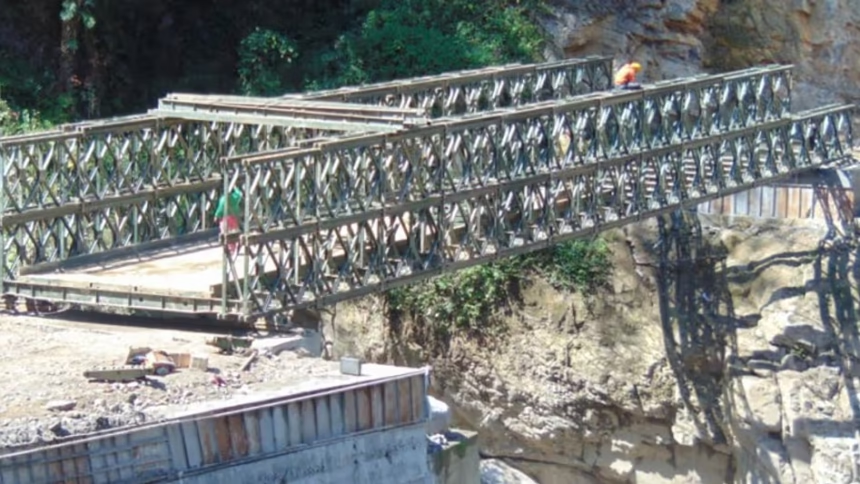
The Border Roads Organisation (BRO) has completed a 180-foot Bailey bridge in Arunachal Pradesh’s Kurung Kumey district, restoring a crucial route to forward border areas. The bridge improves military mobility and provides all-weather connectivity to remote villages. BRO teams completed the project despite heavy monsoon rains, flash-flood risks, and difficult mountain terrain. Officials said the bridge will strengthen national security and improve access to essential services for local residents.
Read More: Gauhati HC Upholds Foreigner Declaration in Assam
Key Facts
- Project: 180-foot Bailey bridge
- Location: Kurung Kumey district, Arunachal Pradesh
- Executing Agency: Border Roads Organisation (BRO)
- Construction Team: Team 85 Road Construction Company (RCC) and 756 Task Force
- Project Initiative: Project Arunank
- Bridge Type: Triple-double reinforced Bailey bridge
- Purpose: Improve border connectivity, military mobility, and public access
BRO Restores Vital Border Connectivity
The Border Roads Organisation (BRO) has completed a 180-foot Bailey bridge in the remote Kurung Kumey district of Arunachal Pradesh. The bridge restores an important transport link to India’s forward border areas.
The new structure will support faster movement of troops and military equipment. It will also provide reliable road access to villages that remain isolated during adverse weather.
Construction Completed Despite Tough Conditions
BRO personnel worked continuously to finish the bridge under challenging conditions. They faced heavy monsoon rains, flash-flood threats, and rugged mountainous terrain throughout the construction period.
Officials praised the dedication of the engineering teams for completing the project despite severe logistical and environmental challenges.
According to the BRO, the successful completion reflects the organisation’s commitment to strengthening strategic infrastructure in remote border regions.
Project Arunank Led the Construction
Team 85 Road Construction Company (RCC) and the 756 Task Force carried out the project under Project Arunank.
Project Arunank is the BRO’s strategic infrastructure programme for Arunachal Pradesh. It focuses on developing roads and bridges in difficult high-altitude and border areas.
The initiative has also improved connectivity along the Line of Actual Control (LAC), including the important Hapoli-Sarli-Huri road network.
Benefits for Security and Local Communities
The newly commissioned triple-double reinforced Bailey bridge will improve operational readiness by enabling quicker deployment of security forces and equipment.
The bridge will also ensure all-weather connectivity for remote villages. Residents will gain easier access to healthcare, education, markets, and other essential services.
Officials said the improved transport link will strengthen economic activity and enhance connectivity between border communities and the rest of the state.
BRO Highlights Commitment to Border Infrastructure
The BRO said the bridge demonstrates its continued focus on strengthening India’s border infrastructure under the Aatmanirbhar Bharat initiative.
The organisation added that such projects play an important role in supporting national security while improving the quality of life for people living in remote frontier regions.
Question & Answer
Q: What has the BRO completed?
A: The BRO has completed a 180-foot Bailey bridge in Kurung Kumey district of Arunachal Pradesh.
Q: Why is the bridge important?
A: It improves military mobility, restores border connectivity, and provides all-weather access to remote villages.
Q: Which teams executed the project?
A: Team 85 Road Construction Company (RCC) and the 756 Task Force under Project Arunank.
Q: What challenges did BRO personnel face?
A: They worked through heavy monsoon rains, flash-flood threats, and rugged mountainous terrain.
Q: How will local residents benefit?
A: The bridge will improve access to healthcare, education, markets, and other essential services throughout the year.
Location Context
Kurung Kumey is one of Arunachal Pradesh’s most remote border districts. Infrastructure projects in the district are strategically important because they improve connectivity near the Line of Actual Control (LAC) while supporting the development of remote communities across Northeast India.
Also Read: Imphal Hospital Shifting Under Heavy Security – Borok Times