




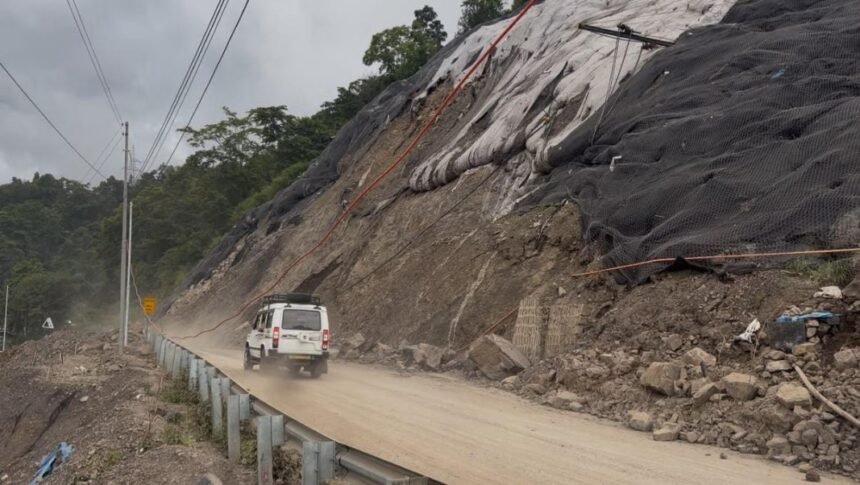
A petition has reportedly called for greater scrutiny of recurring artificial landslides and alleged poor road-building execution by the National Highways & Infrastructure Development Corporation Limited (NHIDCL). The demand has placed renewed attention on road construction practices and landslide risks in vulnerable areas.
The petitioners are seeking accountability over what they describe as repeated landslide incidents linked to construction activity. Moreover, they have raised concerns about the quality and execution of highway projects in areas where unstable terrain can create significant risks.
The allegations could prompt authorities to examine construction methods, slope management, drainage systems, and compliance with technical standards. However, the claims remain allegations contained in the petition and require independent investigation before responsibility can be established.
Tripura growth now drives a stronger development push
Petition Raises Landslide Concerns
The petition has reportedly called for scrutiny of recurring landslide incidents associated with highway construction.
Petitioners argue that construction activity may have contributed to artificial slope instability in certain locations. Furthermore, they want authorities to examine whether contractors and implementing agencies followed appropriate engineering practices.
The demand reflects broader concerns about road safety in mountainous and landslide-prone areas.
However, the petition itself does not establish that NHIDCL caused any specific landslide.
NHIDCL Faces Construction Allegations
The petition specifically raises concerns about the execution of projects involving NHIDCL.
Petitioners have questioned whether road-building activities adequately accounted for local geological conditions. Additionally, they have called for closer examination of construction quality and project implementation.
Such scrutiny could help determine whether construction practices contributed to environmental or safety problems.
However, allegations against an agency require technical assessment and evidence before officials can establish responsibility.
Artificial Landslides Under Scrutiny
The petition reportedly uses the term “artificial landslides” to describe incidents that petitioners believe may have resulted from human activity.
Road construction in mountainous terrain can involve excavation, slope cutting, drainage modification, and other interventions. Moreover, poorly managed construction can potentially increase slope instability in already vulnerable areas.
Technical experts would need to determine the cause of individual landslide events.
However, natural rainfall, geological conditions, erosion, and other factors can also contribute to landslides.
Road Construction in Fragile Terrain
Mountain highways present unique engineering challenges.
Engineers must consider rock stability, soil composition, drainage, rainfall patterns, and slope geometry when designing and constructing roads. Furthermore, changing weather conditions can increase pressure on slopes and road structures.
Construction methods therefore require careful adaptation to local terrain.
However, the petition does not provide enough technical evidence to determine whether specific projects failed to meet engineering requirements.
Drainage Could Be Examined
Effective drainage represents an important component of road construction in areas that experience heavy rainfall.
Water accumulation can weaken soil and increase pressure within slopes. Additionally, blocked or poorly designed drainage channels can contribute to erosion and damage roads.
The petition could therefore lead to scrutiny of drainage arrangements alongside other construction practices.
However, each site requires separate technical assessment.
Construction Quality Requires Independent Review
An independent technical review could help establish whether the reported problems resulted from construction practices.
Engineers could examine project designs, construction records, slope-protection measures, drainage systems, and site conditions. Moreover, comparing completed work with approved technical specifications could identify any deviations.
Such an assessment could provide evidence-based findings.
However, responsibility should depend on verified technical conclusions rather than allegations alone.
Landslides Can Disrupt Communities
Recurring landslides can affect more than highway infrastructure.
Road closures can interrupt transportation, emergency services, trade, education, and access to healthcare. Furthermore, communities that depend on a single highway corridor can face significant difficulties when landslides block connectivity.
This makes road stability an important public-interest issue.
However, the petition’s specific claims about community impacts require additional documentation.
Accountability Could Improve Road Safety
If investigations identify shortcomings, authorities could require corrective measures.
These measures might include improved slope protection, stronger drainage systems, revised construction methods, or additional monitoring. Additionally, contractors could face appropriate action if authorities establish violations of contractual or technical requirements.
Such accountability could improve future road projects.
However, any action should follow established investigation and legal procedures.
NHIDCL Projects Require Environmental Attention
Large highway projects can affect surrounding landscapes.
Excavation and slope modification can change drainage patterns and increase pressure on vulnerable terrain. Moreover, environmental safeguards can help reduce risks associated with construction in ecologically sensitive regions.
Proper planning can therefore complement engineering solutions.
However, environmental impacts vary by project and location.
Weather Can Compound Construction Risks
Heavy rainfall and extreme weather can increase landslide risks even where construction follows technical standards.
Mountain slopes can become unstable after prolonged or intense rainfall. Additionally, changes in soil moisture and natural erosion can weaken slopes independently of road construction.
Investigators must therefore consider both natural and human factors.
However, recurring incidents may justify a closer technical examination of individual sites.
Transparent Investigation Could Build Confidence
A transparent investigation could address concerns raised by petitioners and local communities.
Authorities could publish relevant findings, identify causes, and recommend corrective measures where necessary. Furthermore, independent technical assessments can help distinguish genuine construction failures from events driven primarily by natural conditions.
This can strengthen public confidence in infrastructure projects.
However, the investigation process should remain evidence-based and impartial.
What Happens Next?
The petition could lead to further scrutiny by the relevant authorities, depending on how officials respond to the demands.
Authorities may review project documents, inspect affected sites, and commission technical assessments. Moreover, officials could examine whether construction practices complied with approved standards and environmental requirements.
The findings could determine whether additional action becomes necessary.
However, no conclusion regarding NHIDCL’s responsibility should be reached before a proper investigation.
Conclusion
The landslide accountability petition has raised concerns about recurring artificial landslides and alleged shortcomings in road construction involving NHIDCL. The demands highlight the need for careful scrutiny of highway engineering, slope management, drainage, and construction quality in vulnerable terrain.
Moreover, an independent technical investigation could establish whether construction practices contributed to specific incidents or whether natural factors played the dominant role. At the same time, authorities must evaluate the allegations objectively and base any corrective or legal action on verified evidence.
Overall, the landslide accountability demand underscores the importance of safe, technically sound, and environmentally responsible highway construction in landslide-prone regions.
FAQs
1. What does the petition demand?
The petition reportedly seeks scrutiny of recurring landslides and alleged shortcomings in NHIDCL road construction.
2. What are artificial landslides?
The term refers to landslides that petitioners believe may result partly from human activities such as excavation or slope modification.
3. Does the petition prove NHIDCL caused landslides?
No. The allegations require independent technical investigation before responsibility can be established.
4. What factors can cause landslides?
Rainfall, geological conditions, erosion, slope instability, drainage problems, and construction activity can all contribute to landslides.
5. What could an investigation examine?
Experts could review construction designs, project records, drainage systems, slope protection, geological conditions, and compliance with technical standards.