





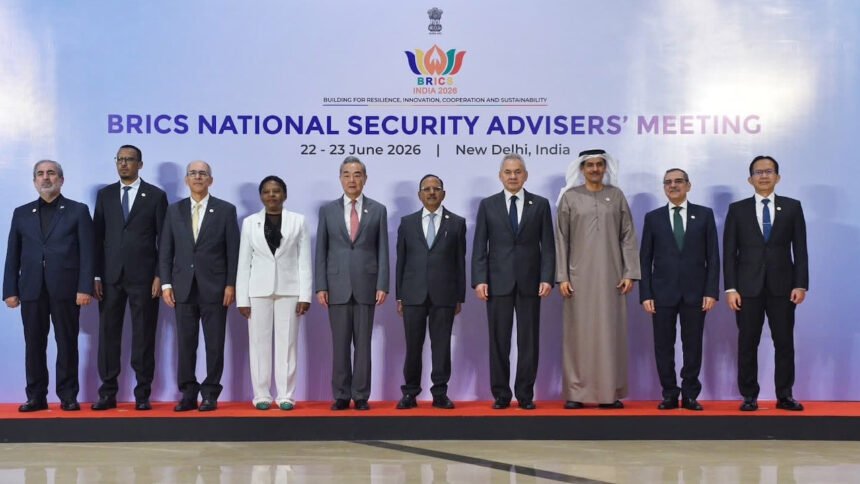
Senior security officials, strategic advisors, and intelligence planners from across Northeast India reportedly participated in a high-level security summit in New Delhi to assess evolving regional security challenges and formulate coordinated responses to emerging hybrid threats. The discussions focused on strengthening inter-agency coordination, enhancing intelligence-sharing mechanisms, and improving preparedness against complex security risks involving both conventional and non-conventional threats. Moreover, the summit underscored the growing importance of integrated security frameworks in safeguarding national and regional stability.
Delhi Strategy Meetings Pave the Way for Assam Cabinet Expansion
Majuli Ferry Suspension Disrupts River Transport
High-Level Security Summit Focuses on Emerging Threat Landscape
The strategic meeting brought together senior security planners and policymakers to review the changing security environment across Northeast India and adjoining border regions. Consequently, participants examined a range of emerging challenges affecting regional security and national preparedness.
According to officials familiar with the discussions, the summit emphasized the need for stronger coordination among security agencies, intelligence institutions, and administrative authorities. Moreover, evolving geopolitical conditions and technological developments have increased the complexity of security management. Therefore, the latest consultations have attracted significant attention within strategic and policy circles.
Security planners reportedly reviewed existing operational frameworks and discussed measures to improve institutional cooperation. As a result, enhanced coordination mechanisms may receive greater emphasis in future security planning.
Meanwhile, authorities continue to monitor regional developments and evolving security trends.
Hybrid Threats Emerge as a Major Strategic Concern
Experts participating in the discussions reportedly focused on the growing challenge posed by hybrid threats, which combine multiple forms of security risks and operational tactics. Moreover, such threats often require coordinated responses involving military, law enforcement, intelligence, and administrative institutions. Therefore, strengthening preparedness has become an important policy priority.
Security analysts noted that modern security environments increasingly involve overlapping challenges related to information security, organized crime, cross-border activities, cyber risks, and other non-traditional threats. Consequently, governments worldwide have adopted integrated approaches to security management. Such strategies can improve institutional resilience and operational effectiveness.
Furthermore, authorities emphasized the importance of continuously adapting security frameworks to address emerging risks. As a result, strategic reviews and policy consultations remain essential components of national security planning.
Meanwhile, security agencies continue to expand their operational and analytical capabilities.
Intelligence Sharing and Inter-Agency Coordination Prioritized
The summit also reportedly highlighted the importance of strengthening intelligence-sharing networks and improving coordination among various security institutions. Moreover, effective communication and cooperation are considered critical for responding to rapidly evolving security challenges. Therefore, institutional collaboration remains a key focus area.
Experts observed that successful security operations often depend on timely intelligence, coordinated responses, and efficient resource allocation. Consequently, governments continue to invest in integrated command structures and advanced information-sharing mechanisms. Such measures contribute to improved operational preparedness and public safety.
Furthermore, participants reportedly discussed opportunities to strengthen cooperation between central and state agencies. As a result, future security frameworks may place greater emphasis on coordinated operational planning.
Meanwhile, authorities continue to evaluate emerging technologies and strategic capabilities.
Long-Term Security Preparedness Remains a Strategic Priority
The high-level meeting reflects the broader objective of strengthening national security preparedness and maintaining long-term stability in Northeast India and surrounding regions. Moreover, policymakers continue to emphasize the importance of proactive planning and institutional resilience in addressing future challenges. Therefore, strategic consultations remain an essential component of security governance.
Analysts emphasized that effective security management requires continuous assessment, adaptation, and cooperation among multiple stakeholders. Consequently, regular reviews and strategic dialogues continue to play an important role in shaping policy responses. Such efforts can help strengthen institutional capacity and public confidence.
Furthermore, the outcomes of the latest summit are expected to influence future security strategies and operational priorities. As a result, policymakers and security experts remain closely focused on the evolving threat environment.
Meanwhile, efforts to strengthen regional security cooperation and preparedness continue.
Conclusion
The convening of Northeast security advisors and strategic planners in New Delhi highlights the increasing importance of coordinated responses to emerging hybrid threats and evolving security challenges. Moreover, the summit reflects broader efforts to strengthen intelligence coordination, institutional preparedness, and long-term regional stability.
As security environments continue to evolve, strategic cooperation and integrated planning are expected to remain central to national security policy. Therefore, developments arising from such high-level consultations will continue to attract significant attention from policymakers and security institutions.
The latest summit underscores the importance of collaboration, adaptability, and sustained strategic planning in ensuring the security and stability of Northeast India.
FAQs
1. Who participated in the security summit?
Senior security advisors, intelligence officials, and strategic planners from Northeast India reportedly participated.
2. What was the main focus of the meeting?
The discussions focused on emerging hybrid threats and strengthening security coordination.
3. What are hybrid threats?
Hybrid threats involve a combination of different security challenges requiring coordinated responses.
4. Why is inter-agency coordination important?
It improves intelligence sharing, operational efficiency, and overall security preparedness.
5. What broader objective does the summit support?
The summit supports long-term regional stability, national security, and institutional resilience.