





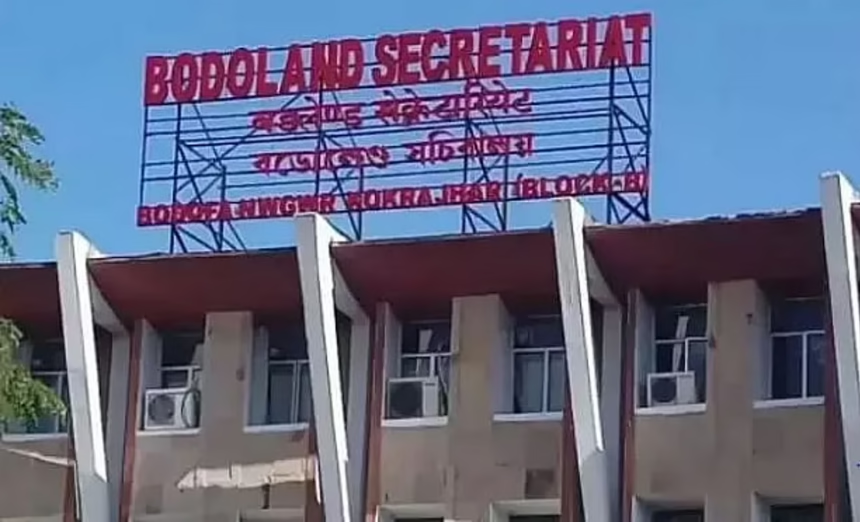
The BTR Conservation Expansion project was officially unveiled by the Bodoland Territorial Council (BTC) Chief Executive in Kokrajhar, marking a major step toward strengthening biodiversity conservation across northern Assam. Moreover, the initiative will cover five key northern districts through a protective community mapping programme designed to identify ecologically important landscapes and encourage local participation in conservation efforts. Consequently, the project aims to promote sustainable environmental management while safeguarding the region’s rich natural heritage.
Northeast Records Over 40% Monsoon Rainfall Deficit in June and Early July
Agartala Border Security Protocol Strengthened With Joint BSF Coordination Meeting
BTR Conservation Expansion Launched in Kokrajhar
The BTR Conservation Expansion project was formally launched by the BTC Chief Executive during an event held in Kokrajhar. Furthermore, the initiative reflects the council’s continued commitment to preserving biodiversity through structured conservation planning and community participation.
The newly announced programme focuses on strengthening environmental protection across multiple districts within the Bodoland Territorial Region. Consequently, the project is expected to improve the identification and management of ecologically significant areas.
Moreover, officials emphasized the importance of long-term conservation strategies that balance environmental protection with sustainable development. Therefore, the initiative has been designed to encourage coordinated action among government agencies and local communities.
Additionally, the launch marks another milestone in regional biodiversity conservation. Thus, Kokrajhar will serve as the starting point for broader implementation.
Community Mapping to Cover Five Northern Districts
The BTR Conservation Expansion programme will extend protective community mapping across five important northern districts. Furthermore, the mapping exercise aims to identify biodiversity-rich habitats, environmentally sensitive zones, and conservation priorities through community participation.
Community mapping enables local residents to contribute valuable knowledge about natural resources and ecological conditions. Consequently, conservation planning becomes more inclusive and responsive to local environmental needs.
Moreover, the collected information will support evidence-based decision-making for habitat protection and sustainable land management. Therefore, authorities expect the initiative to strengthen long-term conservation outcomes.
Similarly, involving local communities encourages greater environmental awareness and stewardship. Additionally, collaborative planning improves the effectiveness of conservation programmes.
Initiative Promotes Sustainable Environmental Management
The BTR Conservation Expansion project supports sustainable management of forests, wildlife habitats, and other ecologically significant landscapes. Furthermore, the programme seeks to integrate conservation with responsible resource use and community development.
Sustainable environmental management helps preserve biodiversity while supporting local livelihoods. Consequently, the initiative contributes to ecological resilience and long-term environmental health.
Moreover, conservation planning based on scientific data and community input improves policy implementation. Therefore, authorities aim to protect critical habitats without compromising sustainable development objectives.
Similarly, environmental education and public participation strengthen conservation efforts. Additionally, coordinated action among stakeholders enhances the success of biodiversity initiatives.
Community Participation Strengthens Biodiversity Protection
The BTR Conservation Expansion initiative highlights the important role of local communities in protecting biodiversity across the Bodoland Territorial Region. Furthermore, active public participation supports the identification, monitoring, and conservation of valuable natural ecosystems.
Community-led conservation has become an effective approach for safeguarding environmentally sensitive areas. Consequently, the project encourages stronger cooperation between local residents, conservation experts, and government agencies.
Moreover, sustained monitoring and regular environmental assessments will support adaptive conservation strategies. Therefore, the programme is expected to improve the long-term protection of biodiversity-rich landscapes.
Similarly, partnerships between public institutions and local communities contribute to sustainable ecological management. Additionally, continued conservation efforts will help preserve the region’s natural heritage for future generations.
Conclusion
The BTR Conservation Expansion project marks an important step in strengthening biodiversity conservation across five northern districts through protective community mapping. Moreover, the initiative, unveiled by the BTC Chief Executive in Kokrajhar, reflects a commitment to sustainable environmental management and inclusive conservation planning.
Furthermore, the project is expected to improve habitat protection, encourage community participation, and support evidence-based conservation strategies. Consequently, it will contribute to preserving the rich ecological heritage of the Bodoland Territorial Region.
Looking ahead, continued collaboration between government agencies, local communities, researchers, and conservation organizations will remain essential for ensuring the long-term success of the BTR Conservation Expansion initiative.
FAQs
1. What is the BTR Conservation Expansion project?
It is a biodiversity conservation initiative launched by the BTC Chief Executive to strengthen environmental protection through community mapping.
2. Where was the project unveiled?
The project was officially unveiled in Kokrajhar.
3. How many districts will the initiative cover?
The programme will cover five key northern districts under a protective community mapping framework.
4. What is the purpose of community mapping?
Community mapping helps identify ecologically important areas while encouraging local participation in biodiversity conservation.
5. Why is the BTR Conservation Expansion project significant?
It promotes community-led conservation, strengthens biodiversity protection, and supports sustainable environmental management across the Bodoland Territorial Region.