





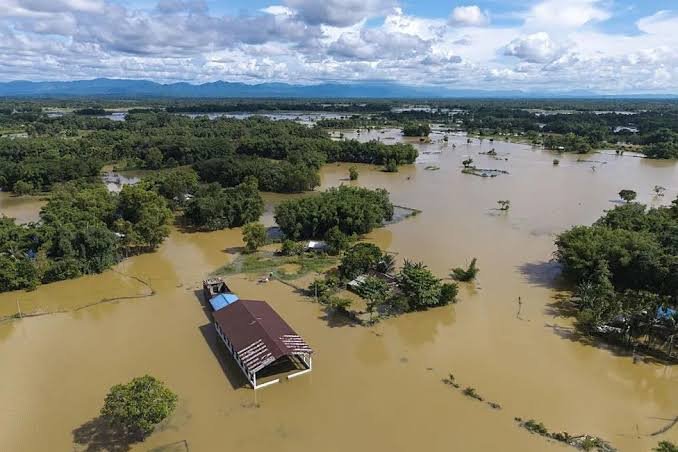
The Jorhat Inundation has intensified after the Brahmaputra River breached its banks, displacing approximately 45,000 residents across the district. According to the available information, the overflowing river has caused widespread flooding, disrupting normal life and adding to Assam’s ongoing monsoon flood emergency.
Charaideo Submerged as Over 80 Villages Go Entirely Underwater
The Jorhat Inundation has emerged as a significant development in Assam’s flood crisis following the Brahmaputra River breaching its banks in Jorhat. According to the available information, the flooding has displaced around 45,000 residents, highlighting the growing impact of rising river levels across the state.
The Brahmaputra River plays a crucial role in Assam’s geography and economy. However, prolonged monsoon rainfall can cause the river to overflow, leading to extensive flooding in nearby settlements and low-lying areas. Moreover, such events often disrupt transportation, public services, and daily life for thousands of people.
The latest development reflects the continuing severity of the flood situation across Assam. Therefore, authorities remain engaged in monitoring river levels, assessing affected areas, and coordinating disaster response efforts.
The displacement of thousands of residents also emphasizes the importance of effective flood preparedness and emergency management. Additionally, continuous monitoring helps authorities respond promptly as flood conditions evolve.
Jorhat Inundation Follows Brahmaputra River Breach
The Jorhat Inundation began after the Brahmaputra River breached its banks, resulting in widespread flooding across affected parts of the district. According to the available information, nearly 45,000 residents have been displaced due to the overflowing river.
Moreover, riverbank breaches can rapidly inundate nearby villages, residential areas, and agricultural land. Consequently, floodwaters often interrupt transportation, damage infrastructure, and affect access to essential public services.
The Brahmaputra remains one of India’s largest river systems and experiences substantial seasonal fluctuations during the monsoon. Furthermore, disaster management agencies continuously monitor river conditions to support timely response measures.
The available information confirms the riverbank breach and the displacement of approximately 45,000 residents. However, authorities have not released additional details regarding the number of relief camps, infrastructure damage, or agricultural losses.
Authorities Continue Monitoring the Jorhat Inundation
The Jorhat Inundation highlights the importance of coordinated disaster management during periods of severe flooding. Government agencies typically monitor water levels, assess flood-affected areas, and coordinate emergency response operations to assist impacted communities.
Additionally, regular field assessments enable authorities to identify priority areas requiring immediate attention. This coordinated approach strengthens relief efforts while improving operational efficiency.
Flood monitoring remains a critical component of public safety during the monsoon season. Meanwhile, officials continue evaluating changing river conditions and reviewing the overall flood situation across Assam.
The available information does not specify whether additional evacuation orders or emergency measures have been announced. Therefore, the current update relates specifically to the Brahmaputra breaching its banks and the resulting displacement of residents.
The situation remains under close observation by the relevant authorities.
Jorhat Inundation Highlights the Challenges of Seasonal Flooding
The Jorhat Inundation carries broader significance for disaster preparedness and flood management in Assam. Large-scale displacement places considerable pressure on emergency response systems, public infrastructure, and essential services.
Moreover, effective flood management depends on timely monitoring, coordinated relief operations, and close cooperation between disaster management agencies and local administrations. Strong preparedness measures also help communities respond more effectively to recurring flood events.
The displacement of approximately 45,000 residents demonstrates the widespread impact of the ongoing monsoon floods. Similarly, continuous assessments remain essential for understanding the evolving humanitarian situation and planning recovery efforts.
Strengthening flood resilience continues to be an important priority across Assam. Consequently, the Jorhat Inundation underscores the need for sustained disaster response, efficient relief coordination, and long-term flood management strategies.
As flood conditions continue to develop, future official updates are expected to provide additional information regarding relief operations, rehabilitation efforts, and the overall impact on the district.
Conclusion
The Jorhat Inundation has displaced around 45,000 residents after the Brahmaputra River breached its banks, adding to the growing flood emergency across Assam. The latest development highlights the continuing impact of rising river levels on communities living in vulnerable areas.
Furthermore, the situation reinforces the importance of coordinated disaster response, continuous monitoring, and effective relief operations during the monsoon season. Authorities remain focused on assessing conditions and supporting flood-affected residents.
Overall, the Jorhat Inundation reflects the severity of the ongoing flood crisis in Assam. As official assessments continue and response efforts progress, further updates are expected to provide greater clarity on relief measures, rehabilitation initiatives, and the evolving humanitarian situation.
FAQs
1. What is the latest update on the Jorhat Inundation?
The Jorhat Inundation occurred after the Brahmaputra River breached its banks, displacing approximately 45,000 residents.
2. What caused the flooding in Jorhat?
According to the available information, the flooding followed the Brahmaputra River breaching its banks.
3. How many people have been displaced?
The available information states that around 45,000 residents have been displaced by the flooding.
4. Have authorities released details about infrastructure damage?
No. The available information confirms the riverbank breach and displacement figures but does not provide details regarding infrastructure damage or relief camp numbers.
5. Are disaster management efforts continuing?
Yes. According to the available information, authorities continue monitoring the flood situation and coordinating disaster response operations.