




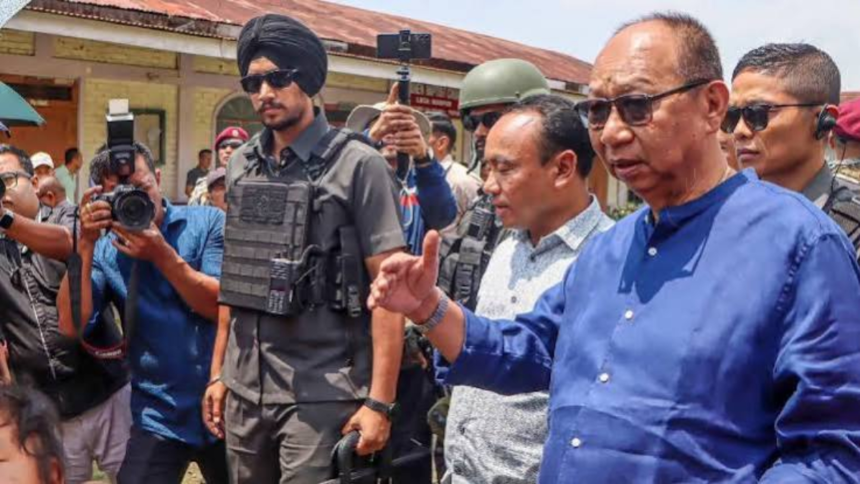
Manipur blockades are putting pressure on the state’s economy and affecting people who depend on daily earnings, Chief Minister Yumnam Khemchand Singh said on August 7. He urged citizens to avoid bandhs, blockades and other forms of agitation that disrupt normal life.
Speaking at a two-day consultative meeting and seminar on Manipur’s demographic profile in Imphal, Khemchand Singh said prolonged disruptions were also affecting the movement of essential commodities. He called for grievances to be addressed through constructive dialogue rather than actions that affect the wider public.
Manipur blockades affect daily wage workers
The Chief Minister said the impact of protests is especially severe for daily wage earners. Unlike salaried workers, many labourers depend on regular access to markets, transport and workplaces to earn their income.
When roads are blocked or businesses remain shut, these workers can lose an entire day’s earnings. Moreover, repeated disruptions can affect small traders, transport workers and other people whose livelihoods depend on daily economic activity.
Khemchand has previously made similar appeals. In May, he urged people to settle grievances through talks instead of bandhs and blockades, saying such actions mainly create hardship for ordinary citizens and daily wage earners.
Manipur blockades disrupt essential supplies
The Chief Minister also pointed to the effect of prolonged highway disruptions on the movement of goods into the state. According to his latest remarks, truck drivers carrying essential commodities have been stranded because of highway blockades.
Such disruptions can create wider problems for consumers and businesses. Transport delays can affect the availability and movement of goods, while traders may face additional costs when regular routes are disrupted.
The issue has remained a concern amid continuing tensions in parts of Manipur. In July, protests over an economic blockade escalated in Kangpokpi, where demonstrators demanded the restoration of essential supplies along National Highway-2. Reports at the time said a blockade had affected the movement of goods into Kuki-Zo areas.
Manipur blockades raise wider economic concerns
The latest appeal comes as the state continues to deal with the economic consequences of prolonged instability. Business activity, transportation and informal employment can all be affected when movement is restricted for extended periods.
Daily wage workers are particularly vulnerable because they often have limited financial protection when work stops. Therefore, repeated shutdowns can place additional pressure on families already dealing with higher transport and living costs.
The effects can also extend beyond the immediate areas where protests occur. When major highways are disrupted, transporters and suppliers may face delays, while consumers in other parts of the state can also feel the impact.
CM calls for dialogue over protests
Khemchand Singh said people should not resort to actions that interfere with the daily lives of others. Instead, he urged citizens to use dialogue and constructive engagement to raise concerns.
The government, he said, remains committed to initiatives that benefit the public, provided they operate within the constitutional framework. The Chief Minister also expressed hope that recommendations from the demographic seminar would contribute to public welfare.
His appeal reflects an emphasis on maintaining normal movement and economic activity while addressing grievances through peaceful means. However, the continuing use of blockades shows the difficulty of balancing public protests with the needs of the wider population.
Manipur blockades test push for normalcy
The call to end disruptive protests comes against a backdrop of recurring highway shutdowns and tensions involving different communities. In May, Khemchand also highlighted the need for trust and dialogue among communities while appealing against bandhs and blockades.
At the same time, recent disruptions have shown how quickly disputes can affect transport and access to essential supplies. Reports in July also highlighted the prolonged nature of an economic blockade and the tensions surrounding demands for restored supply routes.
Overall, the Chief Minister’s latest message places the economic cost of prolonged agitation at the centre of the debate. For daily wage earners, transport workers and small businesses, uninterrupted movement remains closely linked to their ability to earn. The government’s challenge will be to encourage dialogue while ensuring that public grievances can be raised without causing wider hardship.
Border Mining Blame: Displaced Residents Link Unregulated Mining