


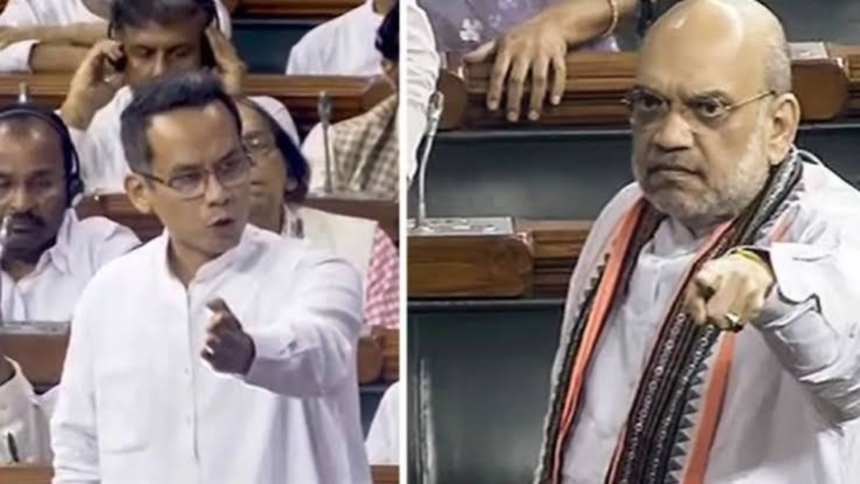
Lok Sabha absence has become a political issue after Congress MP Gaurav Gogoi questioned Home Minister Amit Shah’s reported absence from the House. Gogoi claimed that Shah had not attended the Lok Sabha for 14 days and asked how the Opposition could raise concerns without the Home Minister being present.
The remarks came during a heated Monsoon Session, with Opposition members seeking answers from the government on student protests and issues linked to the examination system. The government, however, has rejected several allegations raised by Opposition leaders.
Lok Sabha absence becomes a key Opposition concern
Gogoi raised the issue while participating in the parliamentary debate on matters connected with the Public Examinations (Prevention of Unfair Means) Amendment Bill, 2026. He questioned the absence of senior leaders during discussions that the Opposition considers important.
The Congress MP also questioned the absence of Prime Minister Narendra Modi during the proceedings. However, his criticism focused particularly on Shah because of the Home Ministry’s responsibility for internal security and policing matters.
The claim about 14 days of absence was made by Gogoi and should be viewed in that context. It was part of the Opposition’s political criticism rather than an independent parliamentary attendance finding.
Lok Sabha absence linked to student protest debate
The dispute also followed protests by students in Delhi. Opposition parties have sought an explanation from the government over police action during a demonstration held on July 20.
During the July 29 debate, Rahul Gandhi alleged that Shah had authorised police action against protesting students. Parliamentary Affairs Minister Kiren Rijiju rejected the allegation and called for evidence or an apology.
The government has also disputed the Opposition’s account of the protest. Union minister Jitendra Singh told the House that there had been no firing and that tear gas had been used. Therefore, the competing claims have remained part of the wider political debate.
Lok Sabha absence raises accountability questions
Gogoi’s criticism centres on parliamentary accountability. He argued that important questions should receive direct answers in the House, particularly when they concern the functioning of the Home Ministry.
However, a minister’s absence does not prevent Parliament from conducting business. Other ministers can respond on behalf of the government, while debates and legislative proceedings can continue.
Nevertheless, the Opposition can demand the presence of a particular minister when it wants direct clarification. As a result, Shah’s reported absence has become another point of contention between the government and Opposition parties.
Lok Sabha absence adds to Monsoon Session tensions
The controversy comes during a politically charged Monsoon Session. Opposition parties have repeatedly raised concerns over parliamentary procedures, student issues and the government’s handling of protests.
Meanwhile, the government has defended its actions and rejected allegations made by Opposition leaders. Ministers have argued that the administration followed established procedures and have challenged claims that they consider inaccurate.
The exchanges reflect the broader confrontation between the two sides. While the Opposition wants ministers to address specific concerns, the government has maintained that parliamentary business should continue without disruption.
The debate over ministerial attendance is therefore connected to a larger question of how Parliament handles contentious public issues.
What the political dispute means
The Lok Sabha absence controversy is likely to remain relevant as Opposition parties continue to press for answers from the government. Student concerns, examination reforms and the handling of protests are expected to remain part of parliamentary discussions.
For the government, the immediate task is to respond to Opposition criticism while ensuring that legislative work continues. For the Opposition, the issue provides another opportunity to demand greater ministerial accountability.
Ultimately, Gogoi’s remarks represent a political challenge rather than a confirmed finding that Shah deliberately avoided Parliament. The government has the opportunity to respond to the allegations and clarify the Home Minister’s participation in the ongoing session.
As the Monsoon Session continues, the focus is likely to remain on substantive issues affecting students and public institutions. The debate over Shah’s reported absence will remain part of that wider political contest.
Border Mining Blame: Displaced Residents Link Unregulated Mining