




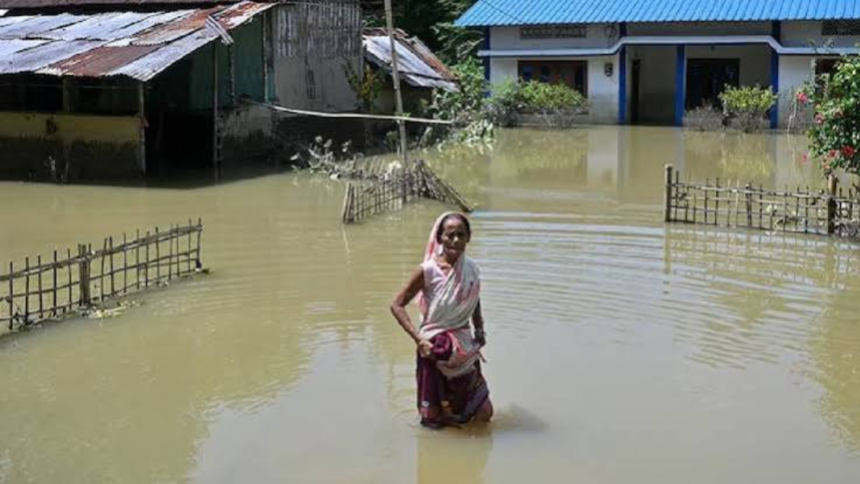
Assam flood has pushed the state into another difficult phase of the monsoon, with the death toll reaching 98 and 1,55,849 people still affected across 13 districts. The latest fatality was reported from the Mahmora revenue circle in Charaideo district, according to officials.
The number of affected people has fallen from more than 1.68 lakh across 15 districts a day earlier. However, thousands remain displaced, while floodwaters continue to affect villages, farmland, roads and other infrastructure in several parts of the state.
Assam flood toll rises as Charaideo reports death
The latest death has taken the flood-related toll for this year to 98. Officials reported the fatality from Charaideo as the situation remained serious in several eastern and central districts.
The latest bulletin shows that the affected districts are Sivasagar, Golaghat, Nagaon, Hojai, Sonitpur, Dhemaji, Darrang, Biswanath, Kamrup Metropolitan, Lakhimpur, Udalguri, Jorhat and Charaideo.
Golaghat remains the worst-hit district, with 58,750 people affected. Sivasagar follows with 48,286 affected people, while Jorhat has reported 25,259 people affected. Overall, 464 villages remain affected by floodwaters.
Assam flood impact remains significant
The current Assam flood situation continues to affect homes, agriculture and livestock. The impact is especially significant for rural families whose homes, fields and animals have been exposed to prolonged waterlogging.
A total of 10,748.64 hectares of crop area remains submerged, while more than 47,000 animals have been affected, officials said. Flooding has also damaged infrastructure, including roads, bridges and houses.
Meanwhile, the Dhansiri River was flowing above the danger level at Golaghat town and Numaligarh. The Kushiyara River was also above the danger level in Sribhumi district. Therefore, authorities continue to monitor river conditions as water levels and local flooding can change quickly.
Assam flood relief operations continue
Relief operations remain active across the affected areas. Local administrations are continuing to coordinate shelter and distribution efforts as people return cautiously to areas where water has started to recede.
The administration has set up 55 relief camps, where more than 10,000 displaced people are staying. In addition, 18 relief distribution centres are operating to provide assistance to affected communities.
These facilities remain important as families face disrupted access to homes, transport and basic services. Although the number of affected people has declined, the continued need for shelter and relief shows that the Assam flood emergency is not over.
Assam flood damage assessment to begin
The state government will begin a detailed door-to-door assessment of flood damage from August 9. The exercise will cover Jorhat, Sivasagar, Golaghat and Charaideo, identified as the four worst-affected districts in eastern Assam.
Chief Minister Himanta Biswa Sarma said every affected household would be included in the assessment. The initial list will later be verified with affected families to improve the accuracy of the damage estimates.
The government expects to estimate the funds needed for rehabilitation by September 10. The findings will also provide a clearer picture of losses faced by affected households. The assessment is intended to help speed up financial assistance for permanent rehabilitation after the floodwaters recede.
Assam flood recovery now faces a longer task
The immediate focus remains on relief, shelter and the safety of people in areas still affected by flooding. Officials also face the task of ensuring that assistance reaches households that may remain cut off or difficult to access.
The decline in the number of affected people offers some relief, but the Assam flood toll and continuing displacement underline the severity of the disaster. With damage assessment beginning on August 9, authorities will now have to translate field findings into timely rehabilitation support.
Overall, the situation has improved in some areas, but flood-affected communities still require sustained assistance. Continued monitoring, accurate damage assessment and timely relief will remain central to Assam’s recovery in the weeks ahead, particularly in low-lying areas during the monsoon.