





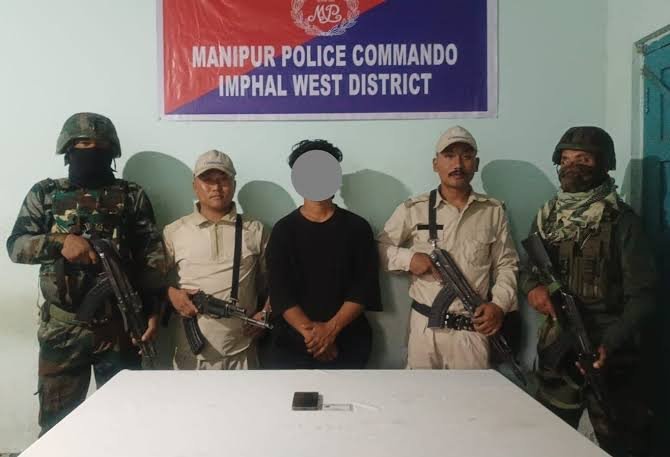
Security forces have arrested four suspected militants in Manipur’s Bishnupur district during a series of operations targeting alleged underground activities. The individuals were reportedly linked to the banned Kanglei Yawol Kanna Lup (KYKL) and Kangleipak Communist Party (Nongdrenkhomba) factions.
According to the information provided, the arrests relate to allegations involving illegal cadre recruitment and extortion along highways. The operations form part of continuing security efforts against militant networks operating in Manipur.
The arrests highlight the challenges authorities face in preventing extortion and recruitment activities amid the state’s wider security situation. However, the allegations remain subject to investigation and due legal proceedings, and arrest does not establish guilt.
109-Km Boundary Mapping: Joint Teams Begin Technical Review
Four Suspects Arrested in Bishnupur
Security forces apprehended four suspected militants during coordinated operations in Bishnupur district.
The suspects reportedly had links to KYKL and the KCP (Nongdrenkhomba) faction. Moreover, authorities are investigating their alleged involvement in recruitment and extortion activities.
The operations demonstrate continued efforts to identify underground networks.
However, investigators will need to establish the individual roles of each arrested suspect through evidence and legal proceedings.
KYKL and KCP Links Under Investigation
The arrested individuals have reportedly been associated with two banned militant organisations.
Security agencies have previously focused on underground groups suspected of conducting extortion, recruitment, intimidation, and other unlawful activities. Additionally, operations against such networks aim to disrupt their ability to operate and collect funds.
The latest arrests therefore form part of a broader security response.
However, allegations against the suspects remain subject to judicial examination.
Illegal Recruitment Becomes Security Concern
Authorities have linked the arrests to alleged cadre recruitment activities.
Recruitment can allow militant organisations to expand their networks and maintain operational capacity. Furthermore, investigators may examine how potential recruits were identified, contacted, and allegedly brought into underground groups.
Preventing unlawful recruitment remains an important component of counter-insurgency operations.
However, authorities must follow established legal procedures when investigating and prosecuting alleged recruitment offences.
Highway Extortion Allegations
The suspects have also been accused of involvement in highway extortion.
Extortion can place pressure on transporters, businesses, contractors, and other people using major road corridors. Moreover, illegal collections can disrupt commerce and increase insecurity along important transportation routes.
Security agencies therefore pay particular attention to reports of organised extortion.
However, the specific allegations against each arrested person will require evidence during the investigation.
Security Operations Continue Across Manipur
The arrests come amid continuing security operations across Manipur.
Security forces have conducted searches and targeted operations in areas where authorities suspect underground groups remain active. Additionally, agencies continue to monitor potential recruitment, extortion, weapons movement, and other unlawful activities.
Bishnupur remains strategically important because of its location and transportation links.
Therefore, security agencies continue to focus on maintaining stability in the district.
Impact on Highway Security
Highway security has wider implications for Manipur’s economy.
Major roads connect communities with markets, hospitals, educational institutions, and neighbouring states. Furthermore, uninterrupted transportation allows essential goods to reach different parts of the state.
Extortion or threats along these routes can undermine public confidence.
Authorities therefore have an incentive to strengthen security around vulnerable corridors.
Arrests Could Disrupt Underground Networks
The detention of suspected cadres can provide investigators with information about broader networks.
Authorities may examine communications, financial links, recruitment structures, and other evidence obtained during the operations. Moreover, information gathered during investigations can potentially help agencies identify additional suspects.
However, investigators must verify information before taking further action.
The legal process will ultimately determine the outcome of the cases.
Due Process Remains Important
Security operations against suspected militants require careful adherence to legal procedures.
An arrest allows investigators to pursue allegations, but courts ultimately determine criminal liability. Additionally, suspects retain legal rights throughout the judicial process.
This distinction remains particularly important in cases involving serious security allegations.
Therefore, authorities must present evidence through the appropriate legal channels.
Community Security Remains a Priority
Residents and businesses can face significant disruption when extortion networks operate in an area.
Illegal demands can affect transport costs and commercial activity while creating fear among local communities. Moreover, insecurity can discourage normal movement and economic activity.
Successful enforcement operations could therefore improve public confidence.
However, long-term stability also depends on broader political, social, and economic measures.
Coordination Among Security Agencies
Counter-insurgency operations often involve multiple security and intelligence agencies.
Information sharing can help authorities identify links between suspects and wider networks. Furthermore, coordinated operations can reduce duplication and improve the effectiveness of investigations.
The Bishnupur arrests may provide investigators with additional leads.
However, authorities will need to verify those leads before making further arrests.
Manipur’s Wider Security Challenge
The arrests form part of a complicated security environment in Manipur.
The state continues to deal with ethnic tensions, armed-group activity, displacement, and disruptions to normal life. Additionally, authorities must balance security operations with efforts to restore public confidence and maintain essential services.
The government’s broader peace-building efforts therefore remain important.
However, tackling underground criminal and militant activity remains a separate security responsibility.
Economic Consequences of Extortion
Extortion can have consequences beyond individual victims.
Transport operators may increase costs to account for security risks, while businesses can face financial pressure from illegal demands. Consequently, prolonged extortion can affect the wider local economy.
Protecting major highways can therefore support both security and economic recovery.
However, sustained enforcement and effective prosecution are necessary to deter repeat offences.
What Happens Next?
Investigators are expected to question the arrested suspects and examine evidence connected with the allegations.
Authorities may also investigate whether the individuals had links to additional cadres or extortion networks. Moreover, security agencies could conduct follow-up operations if investigations identify further suspects.
The next stage will depend on the evidence gathered during the investigation.
However, any further action will need to follow applicable legal procedures.
Conclusion
The Bishnupur militant arrests have highlighted continuing security concerns in Manipur, with security forces reportedly apprehending four suspected cadres linked to the banned KYKL and KCP (Nongdrenkhomba) factions. Authorities have associated the arrests with allegations involving illegal cadre recruitment and highway extortion.
Moreover, disrupting recruitment and extortion networks could help improve security along important transportation corridors. At the same time, the allegations remain under investigation, and the arrests themselves do not establish criminal guilt.
Overall, the operations demonstrate the continued focus of security agencies on underground networks in Manipur. Further investigations will determine the individual roles of the suspects and whether the arrests lead to action against wider militant or extortion networks.
FAQs
1. How many suspected militants were arrested?
Security forces reportedly arrested four suspected militants in Bishnupur district.
2. Which groups are the suspects linked to?
The suspects were reportedly affiliated with the banned Kanglei Yawol Kanna Lup (KYKL) and KCP (Nongdrenkhomba) factions.
3. What allegations do they face?
Authorities have linked the arrests to alleged illegal cadre recruitment and highway extortion.
4. Why is highway extortion a major concern?
Extortion can affect transporters, businesses, contractors, and other road users while disrupting commerce and creating security concerns.
5. Do the arrests establish guilt?
No. Arrests allow authorities to investigate allegations, but courts determine criminal responsibility based on evidence and applicable law.