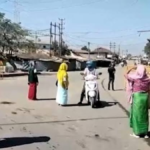

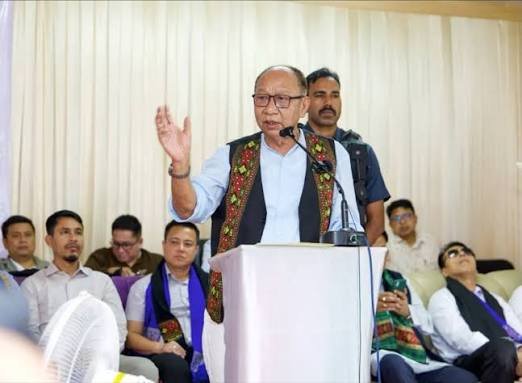
Manipur has announced a major step toward restoring normal movement across the state as Chief Minister Yumnam Khemchand Singh, Deputy Chief Minister Nemcha Kipgen, and Saitu MLA Haokholet Kipgen jointly announced the immediate reopening of national highways for free movement by people from all communities. The announcement came from Kangpokpi district on August 8, 2026, alongside plans to resume the Imphal-Dimapur bus service.
The announcement marks an important development after prolonged restrictions affected movement along key highways during the state’s ethnic conflict. Moreover, the government presented the move as part of wider efforts to restore peace, connectivity, and confidence among communities.
However, the highway situation remains complex. NH-2 and NH-37 serve as major lifelines, while NH-202 has also faced disruptions linked to intermittent blockades. Therefore, the government’s announcement represents an important commitment to free movement, but implementation on the ground will remain closely watched.
109-Km Boundary Mapping: Joint Teams Begin Technical Review
Manipur Announces Free Highway Movement
The state government has announced that national highways should allow free movement for people from all communities.
Chief Minister Yumnam Khemchand Singh made the announcement jointly with Deputy Chief Minister Nemcha Kipgen and Saitu MLA Haokholet Kipgen at Kangpokpi. Additionally, the government announced plans to resume the Imphal-Dimapur bus service.
The decision seeks to address one of the most persistent challenges created by prolonged conflict: the ability of residents to travel between different parts of the state.
However, restoring movement requires cooperation from communities, transport operators, security agencies, and groups that have previously enforced blockades.
109-Km Boundary Mapping: Joint Teams Begin Technical Review
NH-2 Remains a Critical Corridor
NH-2 connects Manipur with Nagaland and serves as one of the state’s principal transportation routes.
The highway has faced restrictions since the outbreak of ethnic violence in 2023. According to recent reporting, a Naga organisation had maintained an economic blockade on NH-2 since May 17, creating significant difficulties for movement and supplies.
The government’s latest declaration therefore carries considerable significance.
Moreover, restoring predictable movement along NH-2 could improve the transportation of goods and reconnect communities that have faced prolonged restrictions.
NH-37 Also Features in the Announcement
The government also included NH-37 in its announcement on free movement.
NH-37 provides an important connection between Manipur and Assam’s Barak Valley. Although the route remained open, disruptions and other restrictions had continued to affect vehicle movement at different times.
Improved movement along the corridor could support the state’s supply chains and transport network.
However, ensuring uninterrupted movement will require authorities to address local disruptions as they arise.
NH-202 Has Faced Separate Disruptions
NH-202 presents a somewhat different situation.
The Imphal-Ukhrul-Jessami corridor connects the Imphal Valley with Ukhrul and Kamjong districts. Recent reporting states that movement along NH-202 remained suspended following intermittent blockades called by Kuki organisations.
Therefore, describing the August 8 announcement simply as the complete reopening of NH-2 and NH-202 would overlook the distinction between the government’s broader free-movement declaration and the actual status of individual corridors.
The implementation of free movement on NH-202 will consequently require continued monitoring.
Peace-Building Efforts Gain Momentum
The announcement forms part of the government’s broader peace-building and reconciliation efforts.
Chief Minister Khemchand held meetings with community leaders in Kangpokpi while discussing the need for cooperation and normalcy. Moreover, he urged communities to trust one another and emphasised the shared history of Manipur.
Such engagement can complement administrative measures aimed at restoring transportation.
However, lasting peace will depend on sustained dialogue and cooperation among the communities involved.
Transport Connectivity Could Improve
Restoring free movement could have significant economic consequences.
Businesses depend on highways to move food, fuel, construction materials, agricultural products, and other essential goods. Furthermore, reliable road connectivity can reduce delays and improve access to markets and services.
The planned resumption of the Imphal-Dimapur bus service could also provide an important public-transport link.
However, transport operators will need confidence that routes remain safe and accessible before services can return to normal levels.
Communities Have Faced Prolonged Restrictions
The restrictions on highway movement have affected ordinary residents for years.
People travelling between communities have faced difficulties accessing work, education, healthcare, markets, and family networks. Additionally, restrictions on major roads can increase transportation costs and disrupt the supply of essential commodities.
The government’s latest announcement therefore addresses an issue with direct consequences for everyday life.
However, the success of the initiative will depend on whether communities can maintain uninterrupted movement after the announcement.
Security and Trust Remain Important
Free movement requires more than a government declaration.
Residents and transport operators need confidence that they can travel without facing threats or disruptions. Moreover, authorities need effective mechanisms to respond quickly if new blockades or security incidents emerge.
Building trust between communities will therefore remain central to the process.
However, the government must balance the restoration of movement with measures that protect civilians and maintain public order.
Naga Organisation Welcomes Announcement
The working committee of the Tangkhul Naga Long welcomed the Chief Minister’s declaration on free movement for all communities, describing it as a bold step by the government.
The response could provide an important opening for broader dialogue.
At the same time, questions remain about how other groups will respond and whether the declaration will translate into sustained movement on all affected routes.
Therefore, community-level reactions will remain important in the coming days.
Imphal-Dimapur Bus Service to Resume
The government also announced that the Imphal-Dimapur bus service will resume shortly.
The service could provide an important public-transport connection between Manipur’s capital and Nagaland’s Dimapur. Furthermore, its restoration could signal growing confidence in highway connectivity.
Regular bus services can also help residents who cannot rely on private vehicles.
However, the service’s long-term continuity will depend on road conditions, security, and passenger confidence.
Economic Recovery Could Benefit
Highway reopening could support Manipur’s broader economic recovery.
Improved transportation can help traders move goods more efficiently and allow agricultural producers to access markets. Moreover, businesses can benefit when customers and workers move more freely between districts.
The benefits could extend beyond transportation itself.
However, sustained economic recovery will require stability across other sectors as well.
The Road Ahead
The government’s declaration represents an important policy shift, but implementation will determine its practical impact.
Authorities will need to monitor major corridors, coordinate with communities, and respond to disruptions. Additionally, transport services will need to rebuild confidence after years of restrictions.
The coming weeks could therefore provide an important test of whether the announcement produces sustained free movement.
However, the restoration of highway connectivity should be viewed as one part of a much broader peace-building process.
Conclusion
The Manipur government has announced a significant move toward restoring free movement for all communities on the state’s national highways, with Chief Minister Yumnam Khemchand Singh, Deputy Chief Minister Nemcha Kipgen, and Saitu MLA Haokholet Kipgen making the announcement at Kangpokpi. The government also announced the forthcoming resumption of the Imphal-Dimapur bus service.
Moreover, the announcement could improve connectivity, support economic activity, and contribute to broader reconciliation efforts after years of disruption. At the same time, the status of individual highways remains important: recent reporting specifically identifies NH-2 and NH-37 as central to the free-movement announcement, while NH-202 has faced separate intermittent blockades.
Overall, the government’s declaration represents a potentially important step toward normalcy. Its lasting impact will depend on cooperation among communities, sustained security, and the ability of authorities to keep major transportation corridors open.
FAQs
1. What did the Manipur government announce?
The government announced the immediate reopening of national highways for free movement by people from all communities and said the Imphal-Dimapur bus service would resume shortly.
2. Which highways are central to the announcement?
Recent reporting identifies NH-2 and NH-37 as the principal highways covered by the free-movement announcement. NH-202 has separately faced disruptions linked to intermittent blockades.
3. Who announced the decision?
Chief Minister Yumnam Khemchand Singh, Deputy Chief Minister Nemcha Kipgen, and Saitu MLA Haokholet Kipgen jointly announced the decision at Kangpokpi.
4. Why are the highways important?
They provide vital connections for people, goods, businesses, and essential services across Manipur and with neighbouring states.
5. How could reopening support peace efforts?
Free movement can reconnect communities, improve access to essential services, support economic activity, and potentially build confidence between groups. However, lasting progress will require continued dialogue and cooperation.