





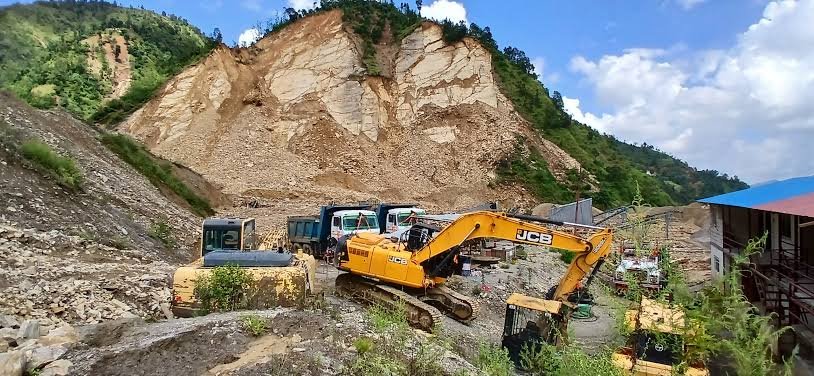
Special heavy-crane teams are reportedly working through Nepali Khuti village to recover hundreds of civilian vehicles trapped in approximately four feet of mud following severe flooding and waterlogging. The recovery operation highlights the scale of damage faced by residents as communities begin clearing roads and retrieving stranded vehicles.
It include civilian cars that could not move through the accumulated mud. Moreover, specialised heavy equipment has become necessary because conventional recovery methods may not provide enough power to remove vehicles from deeply saturated ground.
The operation forms part of broader efforts to restore mobility and clear affected areas. However, the exact number of vehicles recovered so far and the total number of vehicles still trapped have not been provided.
Meghalaya Forms Multi-Departmental Taskforce to Deliver Flags
Heavy Cranes Deployed in Nepali Khuti
Special crane teams have reportedly been deployed in Nepali Khuti village to recover stranded vehicles.
The equipment can provide the lifting and pulling capacity required to move vehicles from heavily damaged or mud-covered areas. Furthermore, heavy cranes can accelerate recovery operations when large numbers of vehicles remain trapped.
The deployment reflects the severity of the conditions faced by residents.
However, authorities have not provided details about the number of cranes involved.
Hundreds of Cars Reportedly Trapped
The operation reportedly involves hundreds of civilian cars.
Floodwater and heavy mud can immobilise vehicles and make roads difficult to navigate. Additionally, thick deposits can prevent drivers from safely moving vehicles even after floodwater recedes.
Recovering the vehicles can therefore become an important part of the cleanup process.
However, the precise number of trapped vehicles remains unclear.
Four Feet of Mud Creates Major Challenge
The reported depth of the mud has made vehicle recovery particularly difficult.
Approximately four feet of accumulated mud can cover wheels and parts of a vehicle’s lower body, making movement extremely difficult. Moreover, saturated ground can reduce traction and create additional risks for recovery workers.
Heavy equipment can help overcome these challenges.
However, recovery teams must assess ground conditions before moving large vehicles or machinery.
Flood Damage Disrupts Local Mobility
Vehicle losses can create additional difficulties for affected residents.
Cars provide access to workplaces, markets, schools, hospitals, and other essential services. Furthermore, when multiple vehicles become trapped, communities can face significant transportation shortages.
Recovering civilian vehicles could therefore help restore local mobility.
However, some vehicles may require mechanical inspection before returning to regular use.
Recovery Operations Require Careful Coordination
Vehicle extraction involves more than simply pulling cars out of mud.
Teams need to assess road conditions, identify safe recovery points, and coordinate equipment movement. Additionally, workers may need to clear surrounding debris before cranes can safely approach trapped vehicles.
Careful planning can reduce risks during the operation.
However, the available information does not provide details about the specific recovery procedures being used.
Roads Must Also Be Cleared
Vehicle recovery cannot occur effectively without sufficient road access.
Mud, debris, damaged surfaces, and standing water can restrict movement for cranes and other equipment. Moreover, clearing access routes can allow recovery teams to reach vehicles located deeper inside affected areas.
Road clearance therefore forms an important part of the wider operation.
However, the condition of all roads around Nepali Khuti has not been detailed.
Residents Await Return of Vehicles
Families whose vehicles remain trapped may depend on the recovery effort to regain transportation.
The return of usable vehicles can help residents resume daily activities and reach essential services. Furthermore, vehicle recovery can reduce the financial pressure associated with replacing damaged transport.
The operation could therefore provide practical relief.
However, flood exposure can cause mechanical or electrical damage even after vehicles are successfully extracted.
Vehicle Damage May Require Inspection
Recovering a vehicle does not necessarily mean it can immediately return to service.
Floodwater and mud can affect mechanical components and electrical systems. Additionally, prolonged exposure to water can create maintenance problems that require professional inspection.
Owners may therefore need to assess their vehicles after extraction.
However, the extent of vehicle damage in Nepali Khuti has not been established.
Heavy Equipment Supports Emergency Recovery
Specialised machinery can play an important role after major flooding.
Cranes, excavators, loaders, and other equipment can clear debris and recover heavy objects that manual labour cannot move efficiently. Moreover, such machinery can help reopen access routes for emergency and relief services.
The crane deployment therefore supports broader recovery activities.
However, equipment availability can influence the speed of operations.
Wider Cleanup Efforts Continue
Vehicle extraction represents only one part of the post-flood recovery process.
Communities may also need to clear mud from homes, remove debris, repair roads, and restore utilities. Furthermore, authorities may need to assess damage to public infrastructure and private property.
The recovery effort could therefore continue for an extended period.
However, the overall timeline will depend on weather, road conditions, equipment availability, and the extent of damage.
Safety Remains a Priority
Heavy machinery operations require careful safety management.
Workers need stable ground, adequate space, and controlled movement around damaged vehicles. Additionally, residents should maintain a safe distance from operating cranes and other heavy equipment.
Safety precautions can reduce the risk of additional injuries during recovery.
However, no information about accidents or injuries during the reported operation has been provided.
What Happens Next?
Recovery teams are expected to continue extracting vehicles from the affected area.
Officials and operators may prioritise roads needed for emergency access and vehicles that can be recovered safely. Moreover, continued road clearance could allow additional equipment to reach areas where vehicles remain trapped.
The operation may gradually restore mobility for affected residents.
However, the completion date for the vehicle recovery effort remains unknown.
Conclusion
The reported vehicle extraction operation in Nepali Khuti highlights the scale of flood-related disruption facing local residents. Special heavy-crane teams are reportedly working to recover hundreds of civilian cars buried in approximately four feet of mud.
Moreover, retrieving the vehicles could help restore mobility and allow families to resume essential travel. At the same time, recovery teams must manage difficult ground conditions, damaged roads, and potential vehicle damage while maintaining worker and public safety.
Overall, the heavy-crane recovery effort represents an important step in the wider cleanup process as Nepali Khuti begins recovering from severe flooding and mud accumulation.
FAQs
1. Where are the vehicle recovery operations taking place?
The reported recovery operation is taking place in Nepali Khuti village.
2. How deeply are the vehicles trapped?
The available information places the mud depth at approximately four feet.
3. How many vehicles are reportedly affected?
Hundreds of civilian cars are reportedly trapped, although an exact number has not been provided.
4. Why are heavy cranes being used?
Heavy cranes can provide the lifting and pulling capacity needed to extract vehicles from deep mud.
5. Will recovered vehicles immediately return to the road?
Not necessarily. Flood-affected vehicles may require mechanical and electrical inspections before they can safely return to service.