







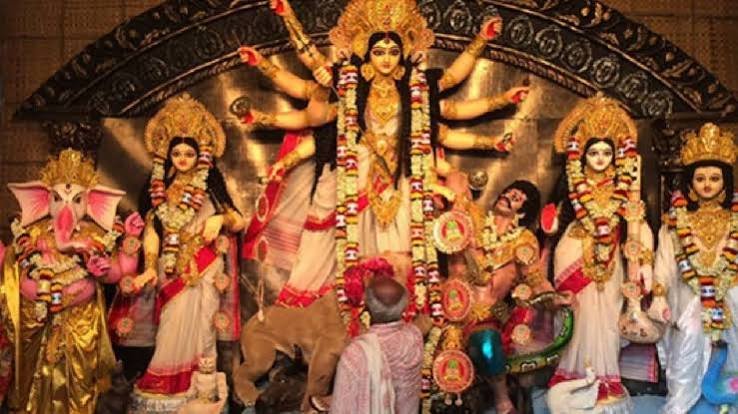
Gobindapur Durga Puja reflects a remarkable tradition in Assam’s Karimganj district, where residents celebrate the festival with devotion despite living beyond India’s border fencing. Unlike grand celebrations with elaborate decorations and loud music, this small border village preserves its religious customs through community participation and simple rituals.
Located along the India-Bangladesh border, Gobindapur has a unique geographical position. The village lies outside the main border fence, separating residents from parts of the Indian mainland. However, these restrictions have not erased the community’s attachment to its ancestral home or its annual worship of Goddess Durga.
The celebration highlights how faith and cultural identity continue to shape life in communities facing unusual geographical and administrative challenges.
Gobindapur Durga Puja and Its Long History
The village has reportedly celebrated Durga Puja for more than a century. Residents gather at a small temple to worship the goddess and maintain a tradition passed down through generations.
The construction of border fencing in the Barak Valley began in 1994. As the fencing divided settlements along the international boundary, several Indian villages found themselves outside the fenced mainland. Gobindapur was among the communities affected by these arrangements.
Residents faced new restrictions on movement, including the need to cross designated gates and return within permitted hours. The changes affected daily activities and made access to neighbouring areas more difficult.
Nevertheless, Gobindapur Durga Puja remained an important part of village life. Residents continued to preserve their religious customs, demonstrating their determination to maintain a connection with their ancestral land.
Life Behind the Border Fence
Life in Gobindapur differs considerably from that in villages with unrestricted access to the mainland. Residents must follow security arrangements governing movement through the border gates. These rules can affect everyday travel, access to services and participation in celebrations elsewhere.
According to reports published in 2023, Gobindapur had 44 families, including 42 Hindu families and two Muslim families. The village’s festival also reflected a shared community atmosphere, with Muslim residents joining their neighbours in the celebrations.
The village’s location makes ordinary festive activities more complicated. Residents cannot freely travel to nearby towns or visit other Durga Puja venues whenever they wish. Instead, they organise celebrations within the limits imposed by their circumstances.
Moreover, the border fence serves as a constant reminder of how international boundaries can reshape communities that existed long before modern security arrangements.
Gobindapur Durga Puja Relies on Community Support
The celebration does not depend on the large budgets, elaborate themes or extensive entertainment programmes associated with many urban festivals. Instead, villagers work together to organise worship and maintain their longstanding customs.
Preparations include arranging the place of worship, conducting religious rituals and distributing prasad among devotees. The emphasis remains on devotion and community participation rather than spectacle.
Security personnel have also reportedly supported the village’s celebrations. Earlier media accounts described assistance from the Border Security Force (BSF), including arrangements that allow eligible residents to reach the temple during the festival.
Such coordination is important because access to the area remains subject to border regulations. Residents must follow the applicable security procedures, even during religious occasions.
However, the community’s efforts show how local cooperation can help sustain cultural traditions under difficult circumstances. For villagers, the festival is not simply an annual religious event. It also offers an opportunity to strengthen relationships and preserve a shared identity.
Why This Border Festival Matters
Gobindapur Durga Puja offers a different perspective on Assam’s cultural life. While major cities often attract attention for their elaborate pandals, artistic installations and large public gatherings, smaller communities maintain traditions through quieter forms of celebration.
The village’s experience also highlights the social consequences of border fencing. Infrastructure introduced for security can affect established settlements, changing how residents travel, access services and participate in community activities.
At the same time, the festival demonstrates that geographical isolation does not necessarily weaken cultural belonging. Residents continue to attach importance to their ancestral village and its religious practices.
The participation of families from different religious backgrounds further illustrates the role community festivals can play in bringing neighbours together. Such participation should not obscure the distinct religious significance of the occasion, but it adds another dimension to the village’s shared experience.
A Tradition That Continues Beyond the Fence
The story of Gobindapur Durga Puja is ultimately one of continuity. Despite the challenges associated with border restrictions, residents have worked to preserve a tradition that connects present generations with their past.
Their celebration may lack the scale and fanfare of major urban festivals, but its significance lies in the community’s commitment to keeping the custom alive.
As Durga Puja brings communities across Assam together, Gobindapur stands as an example of how cultural traditions endure even in unusual circumstances. For its residents, the festival remains a meaningful expression of faith, belonging and collective memory.
Mizoram CM Lalduhoma Launches Four Digital Finance Systems to Boost Transparency