







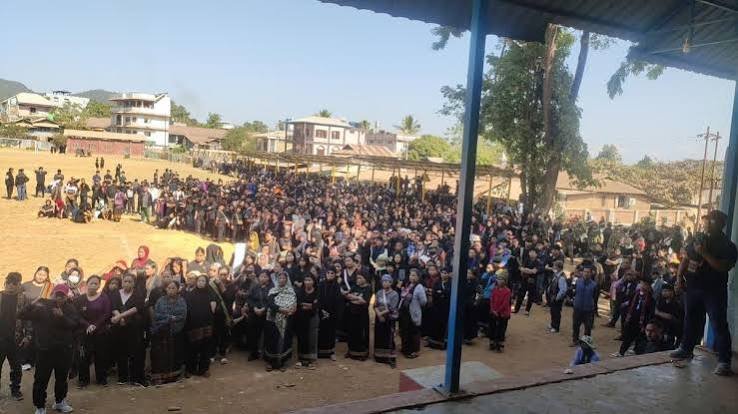
The Kuki-Zo Council has accused the governments of India and Manipur of failing to protect civilians in Kamjong district, as fresh violence raises concerns over public safety. The council has called for stronger security measures, including the deployment of central forces, to protect vulnerable villages and prevent further attacks.
The demand comes amid renewed tensions between Kuki-Zo and Naga communities in Manipur’s hill districts. Recent reports of civilian deaths, injuries and houses being set ablaze have intensified fears among residents. The council has urged authorities to ensure effective protection, investigate alleged attacks and hold those responsible accountable.
Kuki-Zo Council raises alarm over Kamjong security
The Kuki-Zo Council has repeatedly expressed concern over the security of its community in Manipur. It has alleged that existing arrangements have failed to provide adequate protection in vulnerable areas, particularly in districts affected by renewed inter-community tensions.
Kamjong has emerged as a major area of concern following a series of violent incidents. On October 15, a Kuki-Zo woman, Hatneikim Haokip, was reportedly killed in an ambush while travelling with other villagers. Her husband sustained serious injuries, according to reports citing the council.
The group was travelling from Molvailup towards Phaikoh to purchase essential commodities when the attack occurred. The council alleged the involvement of cadres of the National Socialist Council of Nagalim-Isak-Muivah (NSCN-IM) and demanded an impartial investigation.
However, the allegations require independent investigation, and responsibility for the attack must be established through evidence.
Kuki-Zo Council seeks central forces deployment
The Kuki-Zo Council has called for stronger security arrangements, including the deployment of central security forces in vulnerable areas. It has maintained that effective intervention is necessary to safeguard civilians and prevent further violence.
The demand reflects the council’s concerns over the ability of existing arrangements to protect residents in remote hill villages. Central forces have also been a key issue in earlier discussions about security in Manipur, where confidence in state security arrangements remains contested.
In April 2026, the council opposed a proposed replacement of central forces with state forces in hill areas. It argued that central personnel had played an important role in maintaining stability in sensitive zones.
Moreover, the council has called for security agencies to act impartially against all groups accused of violence. It has stressed that civilian protection should not depend on community identity and that allegations of attacks must receive equal attention.
Fresh violence deepens civilian fears
The latest incidents have added to concerns about safety in Kamjong. Reports published on October 18 said at least 15 houses belonging to members of the Kuki community had been set ablaze in a hill village. The violence reportedly forced some residents to seek refuge in nearby forest areas and an Army camp.
Separately, a gun attack in the district reportedly killed one person and injured four others. These incidents underline the risks facing civilians as tensions continue to affect communities in the region.
Meanwhile, reports of the October 15 ambush highlighted the dangers faced by villagers travelling to obtain daily necessities. The attack also raised concerns after another couple travelling with the group was reported missing.
Security personnel and villagers were involved in efforts to locate the missing individuals, according to earlier reports. The incidents have increased pressure on authorities to improve security and prevent further attacks.
Kuki-Zo Council demands accountability and impartial action
Beyond the immediate demand for central forces, the Kuki-Zo Council has called for impartial investigations into killings and attacks involving civilians. It has argued that authorities must identify those responsible and ensure that cases are pursued without discrimination.
The council has also raised broader concerns about shortages of essential commodities and restrictions affecting Kuki-Zo areas. In September, it alleged that an economic blockade imposed by the United Naga Council had disrupted supplies to communities in Kamjong and other districts.
The allegation remains the council’s position. Nevertheless, the reported shortages highlight the importance of maintaining access to food, medicines and healthcare in remote areas.
Furthermore, the council has demanded stronger administrative support and a clear response from the Centre to its security and political concerns. Its earlier demands included improved public services and measures to address the difficulties faced by affected communities.
Kuki-Zo Council presses governments for urgent action
The Kuki-Zo Council’s latest concerns place renewed focus on civilian safety in Manipur’s hill districts. The demand for central forces comes as residents face uncertainty following reports of killings, injuries, arson and missing villagers.
Authorities face the challenge of preventing further violence while ensuring that investigations remain impartial. Protecting civilians, securing essential supply routes and restoring confidence among affected communities will be important steps towards reducing tensions.
The council has accused both governments of failing to provide adequate protection and wants stronger action on the ground. Whether additional security deployments follow remains unclear.
For residents of Kamjong, the immediate priority is safety and access to essential services. A credible response from authorities, supported by fair investigations and effective security measures, will be vital to prevent further harm and help restore stability.
Mizoram CM Lalduhoma Launches Four Digital Finance Systems to Boost Transparency