






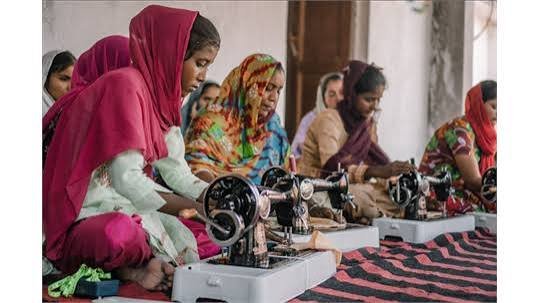
Kaliabor women are showing how small livelihood opportunities can create a path towards financial independence. With sewing machines and tailoring skills, two women in the Nagaon area are turning their work into a source of income and confidence.
Their journey reflects a wider effort to promote women-led livelihoods in rural Assam. Rather than depending only on household income, they are using practical skills to earn from work that can be managed within their communities.
Kaliabor women build livelihoods through tailoring
For the two women, sewing is more than a household skill. It has become a way to take greater control of their earnings and contribute to their families.
Working with two sewing machines, they stitch garments and take up tailoring-related work. The modest setup allows them to operate without the large investment normally required to start a formal business.
As a result, their work offers a practical example of how skill-based employment can support rural households. It also shows how access to basic equipment can help women turn existing abilities into an income-generating activity.
Sewing machines open a practical path
The experience of these Kaliabor women highlights the value of small-scale enterprises in areas where formal employment opportunities can be limited.
Tailoring has a relatively low entry barrier for people who already have sewing skills. A sewing machine, fabric, thread and basic accessories can provide the foundation for a home-based livelihood.
Moreover, such work can be adapted to local demand. Women can take orders for alterations, everyday clothing and other stitched items based on the needs of customers around them.
This flexibility can be particularly useful for women who also manage household responsibilities. They can organise their working hours around orders while gradually developing a regular customer base.
Kaliabor women add to Assam’s rural enterprise
The story comes amid wider efforts to strengthen women’s economic participation in Assam. Community-based livelihood programmes have increasingly focused on helping rural women develop skills, access equipment and find ways to earn independently.
In October 2025, 114 community cadres under Assam State Rural Livelihood Mission’s Sakhi Express scheme received scooters to support their work. The beneficiaries included bank sakhis, insurance sakhis, livelihood sakhis, agriculture sakhis and livestock sakhis from Kaliabor and West Kaliabor.
Meanwhile, tailoring remains one of several livelihood options available to women in the region. Government records and local enterprise data also show tailoring businesses operating in the Kaliabor area.
Skills can strengthen household income
For Kaliabor women, the importance of sewing lies not only in the finished garments. The skill creates an opportunity to earn while remaining connected to the local economy.
Income from tailoring can help families meet everyday expenses and may provide women with greater financial decision-making power. However, the scale of earnings can vary depending on demand, pricing, costs and the number of orders received.
Therefore, sustained support remains important. Access to training, affordable equipment, raw materials and reliable markets can help small tailoring ventures become more stable over time.
The experience also demonstrates why local demand matters. When customers choose nearby service providers, money remains within the community and small businesses have a better chance of growing.
Kaliabor women show the value of small beginnings
The story of these Kaliabor women underlines a simple point: self-reliance does not always begin with a large business or major investment.
Sometimes, it starts with a skill, a sewing machine and the determination to keep working. Their efforts show how modest livelihood activities can gradually create economic opportunities for women and their families.
More broadly, such examples add to the picture of rural entrepreneurship emerging across Assam. Women involved in tailoring, weaving, farming and other small enterprises are finding ways to turn skills into income.
Finally, the two sewing machines represent more than equipment. They provide a practical tool through which the women can work, earn and build greater independence. For communities seeking sustainable livelihoods, that combination of skill and opportunity can be an important first step.