







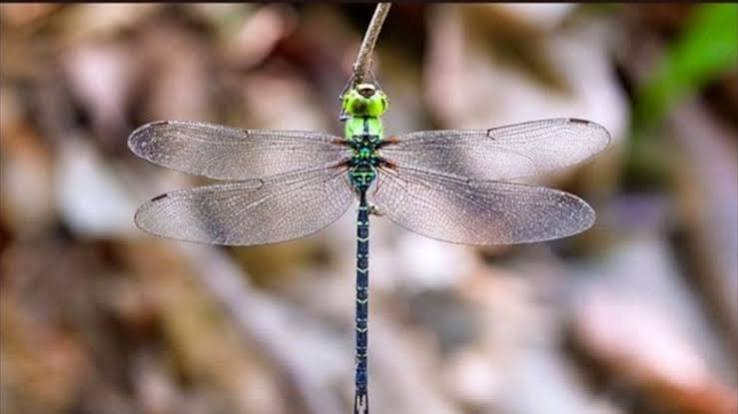
The Spoon-tailed Duskhawker has been recorded through the first verifiable photographic evidence in Arunachal Pradesh, adding an important entry to the state’s biodiversity records.
The rare dragonfly, scientifically known as Gynacantha basiguttata, was photographed in October 2024 along the Miao-Vijaynagar Road inside Namdapha National Park and Tiger Reserve in Changlang district. The record was later confirmed through taxonomic examination. The finding has now been reported as a significant addition to India’s documented dragonfly fauna.
Spoon-tailed Duskhawker adds to India’s dragonfly record
The Spoon-tailed Duskhawker is a member of the Aeshnidae family, a group that includes large dragonflies commonly known as hawkers or darners. It belongs to the order Odonata, which includes dragonflies and damselflies.
The latest documentation is significant because the species had been absent from recent Indian and South Asian Odonata checklists. Older literature had mentioned Gynacantha basiguttata in India, but that record was considered doubtful because it relied only on female specimens.
Researchers have now recommended adding the species to India’s Odonata checklist. Therefore, the Arunachal record provides stronger evidence of its presence in the country.
How the Spoon-tailed Duskhawker was identified
A team of five researchers documented dragonflies in Namdapha, which covers about 1,985 square kilometres. A single male was photographed hanging vertically from vegetation in a densely shaded area on a cloudy day.
The insect was initially identified as Gynacantha khasiaca. However, later taxonomic verification established that it was Gynacantha basiguttata.
The identification was based on features visible in the photographs. These included a black T-shaped mark on the frons, an olive-green thorax without a stripe and distinctive wing pigmentation. The male also had narrow, expanded cerci at the end of the abdomen, giving the species its spoon-like appearance.
The researchers did not collect a physical specimen. They said this was in accordance with forest regulations and the Wildlife (Protection) Amendment Act, 2022.
Spoon-tailed Duskhawker is a rare forest dragonfly
The Spoon-tailed Duskhawker was originally described from the Philippines and is known from parts of Southeast Asia. Its presence in Namdapha extends the documented range of the species into northeastern India.
The dragonfly is associated with forest environments and is known for its elusive nature. Its distinctive body markings and the spoon-shaped abdominal appendages of males make it identifiable when clear photographic evidence is available.
Moreover, the record shows why detailed field observations can matter in biodiversity research. A photograph initially linked to another species eventually provided evidence for a different and rarely documented dragonfly.
Namdapha remains important for biodiversity research
Namdapha National Park and Tiger Reserve is known for its rich flora and fauna. Located in Changlang district, the protected landscape continues to produce wildlife records as researchers conduct surveys and examine species that can be difficult to detect.
The Spoon-tailed Duskhawker finding also highlights the value of systematic documentation in Arunachal Pradesh. The state contains extensive forest landscapes, many of which remain challenging to study in detail. As a result, field surveys can help reveal species records that may otherwise remain overlooked.
Deputy Chief Minister Chowna Mein described the record as another notable addition to Arunachal Pradesh’s biodiversity story. He also highlighted the diversity emerging from the state’s forests.
Spoon-tailed Duskhawker highlights need for continued surveys
The latest record does not simply add another name to a species list. It also demonstrates the importance of combining field photography with careful taxonomic verification.
The researchers’ findings were published in the Journal of Threatened Taxa. Their work shows how photographic records can help clarify the distribution of elusive species without requiring the collection of a specimen.
For Arunachal Pradesh, the Spoon-tailed Duskhawker record adds to a growing body of evidence about the ecological value of its protected forests. Continued surveys, species identification and scientific documentation will be important for understanding that biodiversity more fully.
This is useful when elusive insects inhabit dense forests.
Overall, the discovery reinforces Namdapha’s role as an important site for wildlife research and underlines how much remains to be documented in Arunachal Pradesh’s forests.