






The Nagaland Legislative Assembly has unanimously approved the revised and amended Frontier Nagaland Territorial Authority (FNTA) Bill, 2026, marking a major step towards establishing a special institutional arrangement for the development of Eastern Nagaland.
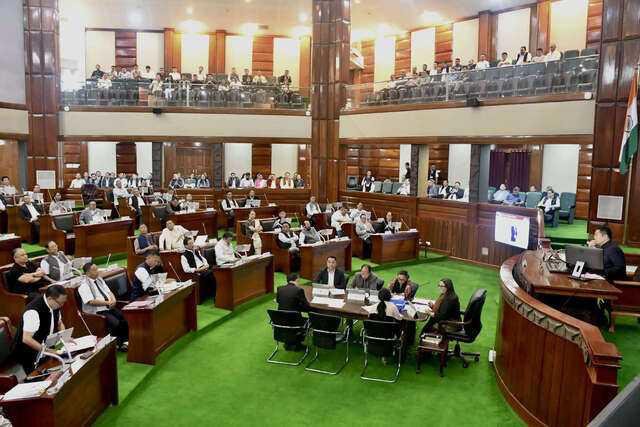
The Bill was passed during the ninth session of the 14th Nagaland Legislative Assembly in Kohima on September 3. The legislation seeks to establish the Frontier Nagaland Territorial Authority for six eastern districts of the state—Tuensang, Mon, Longleng, Kiphire, Noklak and Shamator.
Chief Minister Neiphiu Rio described the FNTA as an important mechanism for addressing the longstanding developmental gaps in Eastern Nagaland. He said the proposed authority would promote decentralised governance and help the region pursue faster and more inclusive growth while remaining within the constitutional framework of Nagaland.
The unanimous passage of the Nagaland FNTA Bill 2026 is being seen as a landmark development after years of demands from Eastern Nagaland for a special institutional arrangement.
FNTA Bill Passed Unanimously by Nagaland Assembly
The revised FNTA Bill was moved in the Assembly by Deputy Chief Minister Y. Patton for consideration and passage.
Following discussion in the House, the Nagaland Legislative Assembly unanimously passed the legislation. A minor amendment was also made to the preamble of the Bill before its approval.
The unanimous approval reflects broad political support for the creation of the new authority.
The FNTA is intended to provide a distinct institutional framework for the eastern region of Nagaland.
The authority will cover Tuensang, Mon, Longleng, Kiphire, Noklak and Shamator districts.
These districts have long raised concerns regarding development, infrastructure and governance challenges.
The new arrangement aims to bring decision-making closer to people living in the eastern region.
It is also expected to provide greater decentralisation in the planning and implementation of development programmes.
FNTA Aims to Address Developmental Gaps in Eastern Nagaland
Chief Minister Rio said Eastern Nagaland has faced developmental disadvantages because of several factors.
These include difficult geographical conditions, historical circumstances and limited state resources.
He said the state government’s approach was guided by the principle of equitable and inclusive development.
According to the Chief Minister, the FNTA will create an institutional mechanism to address these longstanding gaps.
The objective is to ensure that development reaches communities across the eastern districts, including people living in remote areas.
The proposed authority will seek to support the social, economic, educational, cultural and linguistic aspirations of the people of Eastern Nagaland.
It will also provide a framework for democratic and decentralised self-governance at the regional level.
Rio said the initiative was not merely an administrative exercise.
He described it as part of a wider commitment to bridge developmental disparities and ensure inclusive progress across Nagaland.
Six Eastern Districts to Come Under FNTA
The Frontier Nagaland Territorial Authority will cover six districts in the eastern region of the state.
These districts are Tuensang, Mon, Longleng, Kiphire, Noklak and Shamator.
The creation of a single institutional arrangement for these districts is expected to improve coordination in development planning.
The authority will focus on the specific requirements and challenges of the eastern region.
Geographical remoteness has created difficulties in providing infrastructure and public services in several parts of the region.
The FNTA framework aims to address these concerns through decentralised planning and administration.
The authority will be able to identify development priorities in consultation with the state government.
This is expected to help ensure that projects reflect local and grassroots needs.
The proposed arrangement could also allow development programmes to focus more closely on regional priorities.
FNTA to Promote Decentralised Self-Governance
A major objective of the FNTA is to strengthen decentralised governance in Eastern Nagaland.
The proposed authority will provide a regional-level institutional framework for administration and development.
The idea is to bring governance closer to citizens.
This could help authorities respond more effectively to the needs of communities in remote areas.
The FNTA will also prepare its own annual development plan within the funds allocated for departments and subjects under its control.
The authority is expected to have its own planning and financial setup for preparing development plans based on local requirements.
The state government will continue to play an important role in the overall framework.
Rio said the state would ensure the timely release of funds in accordance with established norms.
The proposed arrangement therefore seeks to combine regional planning with coordination between the FNTA, the Nagaland government and the Centre.
Special Development Funds Expected for Eastern Region
Funding and infrastructure development are expected to form an important part of the FNTA framework.
The Nagaland government has said it will allocate funds to the authority based on factors including population and geographical size.
The Centre is also expected to support development in Eastern Nagaland through special development grants and other schemes.
The special focus reflects concerns about the infrastructure deficit in the eastern region.
Development projects may include initiatives designed to improve connectivity and other essential facilities.
The FNTA will be able to identify development projects in consultation with the state government.
This approach is expected to give the region a greater role in determining its own development priorities.
The financial provisions of the earlier legislative framework also stated that development funds for the eastern region would be allocated based on population and area after accounting for common state expenditure.
Demand for FNTA Followed Long Consultations
The creation of the Frontier Nagaland Territorial Authority follows a long process of discussions and negotiations.
The demand for a special institutional arrangement was raised by the Eastern Nagaland Peoples’ Organisation (ENPO).
The organisation sought a framework that could address concerns related to development and governance in the eastern districts.
The process eventually led to a Memorandum of Agreement signed on February 5, 2026.
The agreement involved the Government of India, the Government of Nagaland and the ENPO.
Under the agreement, the FNTA was to be established through special legislation enacted by the Nagaland government in consultation with the Union Ministry of Home Affairs.
The state government subsequently began drafting legislation to give effect to the agreement.
The process involved several consultations because questions were raised regarding the legal and constitutional framework for the proposed authority.
Earlier FNTA Bill Was Deferred for Further Examination
The FNTA Bill was first introduced in the Nagaland Assembly in March 2026.
However, its consideration and passage were later deferred.
The decision followed requests for further clarity on issues related to the legal and constitutional framework of the proposed authority.
The Ministry of Home Affairs had asked the Nagaland government to wait for further views and opinions on matters concerning the proposed legislative powers of the FNTA.
The ENPO and other stakeholders had also raised concerns regarding the need to uphold the provisions of the Memorandum of Agreement.
The original Bill was subsequently returned to the state government for further examination.
The government then revisited the proposal and held additional consultations with stakeholders.
A revised and amended version of the Bill was later prepared and brought before the Assembly.
Its unanimous passage on September 3 marks the latest and most significant step in the process towards establishing the authority.
Government Stresses Protection of Article 371A
The Nagaland government has also emphasised the importance of protecting the constitutional safeguards available to the state.
During the consultations surrounding the FNTA, the government reiterated that Article 371A of the Constitution would remain protected.
The state government maintained that the constitutional safeguards under the provision should not be diluted or altered.
This position has been significant in the discussions surrounding the FNTA.
The government has sought to create a special institutional arrangement for Eastern Nagaland while maintaining the constitutional and political unity of the state.
Chief Minister Rio has emphasised that the effort is aimed at promoting equity, inclusive development and regional progress.
The FNTA is therefore intended to address developmental concerns without undermining Nagaland’s broader constitutional framework.
Rio Says FNTA Will Fulfil Aspirations of Eastern Nagaland
Chief Minister Rio said the people of Eastern Nagaland had for years sought a special institutional arrangement that could address their genuine developmental concerns.
He said the new authority would help accelerate economic growth and promote all-round development.
Rio also said the government wants governance and development to reach people living in the remotest parts of the state.
According to the Chief Minister, the FNTA represents a commitment to ensure that every region receives an equitable opportunity for progress.
He said the authority could help reduce the developmental divide between Eastern Nagaland and other parts of the state.
The government believes that decentralised planning will allow development programmes to respond more effectively to local needs.
The success of the FNTA will now depend on its implementation and the effective coordination of the state government, the Centre and regional institutions.
Landmark Step Towards Inclusive Development in Nagaland
The unanimous passage of the Nagaland FNTA Bill 2026 marks a significant political and developmental milestone for the state.
The legislation creates the foundation for establishing the Frontier Nagaland Territorial Authority for six eastern districts.
The proposed authority aims to strengthen decentralised governance and address longstanding developmental challenges.
It will also provide a framework for planning and implementing projects based on the needs of the region.
The FNTA has emerged after years of demands, consultations and negotiations involving the Nagaland government, the Centre and the ENPO.
The Memorandum of Agreement signed in February 2026 provided the foundation for the new institutional arrangement.
With the Nagaland Assembly now approving the revised legislation unanimously, attention will shift towards the next stages of establishing the authority.
For Eastern Nagaland, the FNTA is expected to open a new chapter focused on decentralised governance, infrastructure development and greater economic progress.
The landmark legislation also reflects a broader effort to bridge regional development gaps and ensure that the benefits of growth reach communities across every corner of Nagaland.