







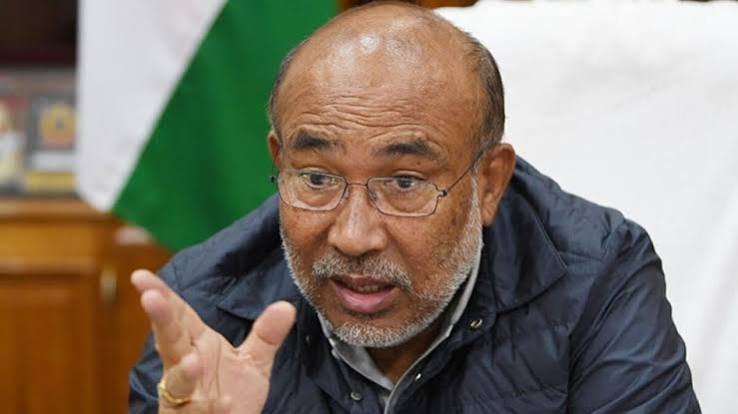
Drug trafficking Northeast India has emerged as a national concern, former Manipur Chief Minister N Biren Singh said on September 19. He argued that the issue should not be treated only as a regional or local problem.
In a post on X, Singh said his government had warned about the scale of drug trafficking in the region and had taken action against alleged drug networks and illicit activities in Manipur. He also called for sustained efforts to tackle the problem.
Drug trafficking Northeast India needs wider focus
Singh said the region’s location makes it particularly important in the fight against narcotics. Manipur shares an international border with Myanmar, while several northeastern states are connected to routes leading towards Southeast Asia.
The former chief minister said drug trafficking affects people beyond the Northeast. He linked efforts to stop the movement of narcotics through the region with the wider need to protect young people across India.
However, his remarks represent his political assessment of the situation. Law enforcement agencies continue to investigate individual trafficking cases and alleged networks based on evidence collected during seizures and arrests.
Biren Singh recalls his government’s action
Singh also referred to the measures taken during his tenure as Manipur chief minister. He served as chief minister from 2017 until his resignation in February 2025.
During that period, his government launched what it called a “War on Drugs”, including action against poppy cultivation and drug trafficking. Official Manipur records from 2021 also documented seizures, arrests and the destruction of poppy cultivation as part of the state’s anti-drug efforts.
Singh has repeatedly highlighted these measures while arguing that narcotics trafficking requires continued attention from authorities.
Earlier warnings over narcotics
His latest comments follow several statements on drug trafficking and poppy cultivation. In September 2026, Singh alleged that large areas of Manipur were being used for poppy cultivation and urged central agencies to take action. Those claims concerned specific locations and were presented by Singh through social media posts.
Therefore, allegations about the scale of cultivation or trafficking need to be distinguished from independently verified seizure and enforcement data.
Recent drug cases underline regional links
Drug trafficking Northeast India has also featured in cases involving multiple states. In September 2025, Meghalaya Police arrested two people from Manipur after recovering 512.63 grams of heroin in West Jaintia Hills. Police valued the seizure at about Rs 2.5 crore and registered a case under the Narcotic Drugs and Psychotropic Substances Act.
Investigators said they were examining the supply chain and possible cross-border links. Singh later cited the case while arguing that drug trafficking could not be viewed only through a state-level lens.
Additionally, a 2025 drug seizure in Bengaluru involving cocaine allegedly linked to two women from Manipur and Mizoram prompted Singh to call for stronger action against trafficking routes involving the Northeast.
Call for sustained action against drug networks
Singh has now called for continued and coordinated action against drug trafficking. He said the response should not be selective or temporary and argued that enforcement agencies must maintain pressure on illicit networks.
The broader challenge involves several layers, including cultivation, production, transportation and distribution. Authorities also have to investigate financial networks and establish links between individual seizures and larger trafficking operations.
Moreover, the Northeast’s proximity to Myanmar and the wider Golden Triangle has long made narcotics trafficking a significant security and law-enforcement concern. Manipur government records have previously described the state as vulnerable to trafficking because of its location and border connections.
Regional concern with national implications
Singh’s latest remarks place drug trafficking Northeast India within a broader national security and public health discussion. His central argument is that narcotics moving through the region can eventually affect consumers and communities elsewhere in the country.
For authorities, the challenge remains to combine border surveillance, intelligence sharing, seizures, investigation and action against major trafficking networks. At the same time, enforcement efforts need to distinguish between verified criminal activity and unproven allegations.
Overall, the former chief minister’s comments renew attention on the Northeast’s role in India’s continuing fight against narcotics. The scale of the threat will ultimately depend on evidence gathered through investigations and sustained action by agencies across the region.
Zubeen Garg Remembered Across Assam as Sonowal Highlights Tribute and Blood Donation Drive