

The Quit India Movement was remembered across Assam on September 20, as state leaders paid tribute to freedom fighters who died during the 1942 struggle against British rule. Chief Minister Himanta Biswa Sarma and minister Jayanta Mallabaruah recalled the sacrifices of martyrs linked to the movement.
The tributes came on the anniversary of the deaths of Kanaklata Barua and Mukunda Kakati, who were killed in police firing at Gohpur on September 20, 1942. Their deaths are remembered as part of the wider resistance in Assam during the final years of British rule.
Quit India Movement tributes from Assam leaders
Sarma said Assam had risen with the rest of the country during the 1942 movement. In a social media post, he remembered Kanaklata Barua, Mukunda Kakati, Tileswari Barua, Bhogeswari Phukanani and Manbar Nath among those who sacrificed their lives.
He described their resolve to uphold the Tricolour as an enduring example of courage, sacrifice and patriotism. Meanwhile, Mallabaruah also paid homage to the martyrs and recalled the contributions of Kanaklata Barua and Mukunda Kakati.
The observance also connects local memories with the larger national campaign for independence.
Kanaklata Barua and the Gohpur firing
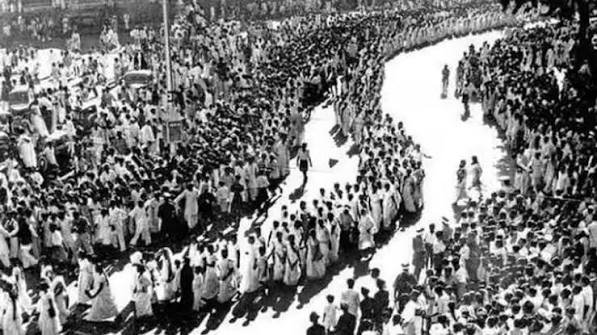
Kanaklata Barua was 17 when she led a procession towards the Gohpur police station on September 20, 1942. The group sought to hoist the national flag at the police station during the uprising.
According to the Government of India’s Amrit Mahotsav archive, Kanaklata was at the head of a procession that included women volunteers. She carried the Tricolour as the procession moved towards the police station. Police firing followed, and she was killed.
Mukunda Kakati, who was part of the same procession, also died in the firing. Their deaths became closely associated with Assam’s freedom struggle and remain part of public remembrance in the state.
Quit India Movement martyrs of Dhekiajuli
The 1942 movement also brought deadly confrontation to Dhekiajuli in present-day Sonitpur district. On September 20, 1942, a procession moved towards the Dhekiajuli police station to hoist the Tricolour.
The Amrit Kaal archive records that police opened fire after the procession reached the station. Several participants were killed that day or later died from their injuries. Among those listed are Dayal Panika, Golapi Devi, Kahili Nath, Kundu Kachari, Lerela Kachari, Mahiram Koch, Manbar Nath, Mangal Kurki, Mani Kachari, Numali Nath, Sam Nath Sutia, Tileswari Koch and Tulavi Devi.
These records show that the sacrifices linked to the movement extended beyond better-known names. Women and men from local communities took part in actions that challenged British authority, often at considerable personal risk.
Quit India Movement and Assam’s wider role
The national movement spread through Assam after the call for an end to British rule in August 1942. Students, women, political workers and local residents took part in demonstrations, flag-hoisting efforts and other forms of resistance.
Historical accounts also document participation in areas beyond Gohpur and Dhekiajuli. In the Barak Valley, local political and student leaders helped organise activities, while arrests affected several Congress workers and activists.
The movement had a broad local character, with communities responding to events in their own areas. Its course was shaped by British repression, arrests and police action, creating different experiences across districts.
Remembering the martyrs in the present
The latest tributes place the 1942 struggle within Assam’s continuing public memory of the independence movement. For state leaders, the September 20 observance is an opportunity to recall the people who confronted colonial rule and lost their lives.
Kanaklata Barua’s story remains especially prominent because of her age and her role in the Gohpur procession. Yet the records from Dhekiajuli and other parts of Assam also point to a wider group of participants whose names form part of the state’s freedom movement history.
As Assam remembers these martyrs, the focus remains on their participation and sacrifice. The commemorations underline how the Quit India Movement became a mass struggle in which local communities played a significant role alongside national leadership.
Drug trafficking Northeast India now a growing national threat