






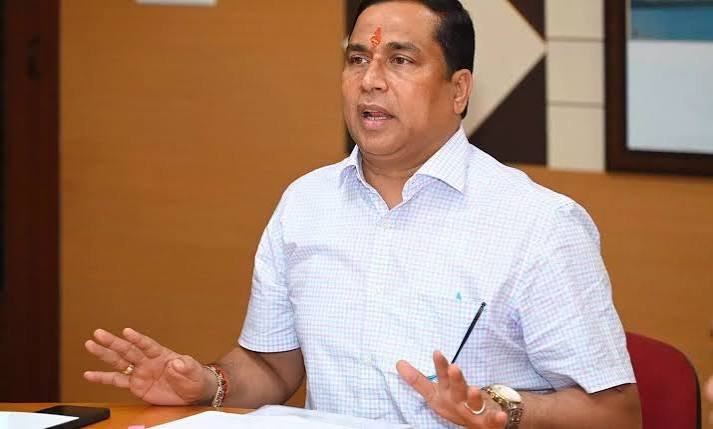
BTC development has become closely linked to Assam’s wider growth, Finance Minister Jayanta Malla Baruah said as the Hagrama Mohilary-led Bodoland Territorial Council (BTC) government completed its first year in office.
Baruah said progress in the Bodoland Territorial Region (BTR) would contribute to a stronger Assam. His remarks came as the council marked a year of governance, with development, coordination and public welfare at the centre of the anniversary message.
BTC development takes centre stage
The BTC, an autonomous council governing the BTR, completed one year under Hagrama Mohilary on October 5, 2026. The Bodo People’s Front won 28 of the council’s 40 seats in the September 2025 elections, while the BJP won five and the United People’s Party Liberal secured seven.
Against this backdrop, BTC development has emerged as an important area of cooperation between Kokrajhar and Dispur. Baruah has previously stressed the need for stronger coordination between elected representatives and the council leadership to improve administration and public welfare.
The state government has also maintained that closer coordination can help speed up projects and strengthen delivery across the region.
Road connectivity gets fresh focus
Chief Minister Himanta Biswa Sarma said the Assam government had approved a special package of Rs 1,000 crore for road development in the BTR.
The package places BTC development within a wider infrastructure strategy. Better roads can improve access to markets, public services and educational institutions while supporting movement between the four districts that make up the BTR: Kokrajhar, Chirang, Baksa and Udalguri.
Sarma also said the government was working to position the region as a manufacturing and logistics hub.
From infrastructure to investment
The emphasis on economic activity comes as the BTC has set aside substantial funds for infrastructure and development in its 2026-27 budget. Hagrama Mohilary presented a budget of Rs 1,588.31 crore, with major allocations for education, infrastructure, capital assets and implementation of the Bodoland Territorial Region Accord.
These allocations give BTC development a broader policy base. However, the impact will ultimately depend on how quickly projects move from budget provisions to work on the ground.
Welfare delivery remains important
Development in the BTR is also being linked to the reach of state welfare schemes. Sarma said schemes such as Orunodoi, the Chief Minister’s Atmanirbhar Asom Abhiyan, Mukhyamantri Mahila Udyamita Abhiyan and free ration were being implemented in the region.
For the council government, BTC development therefore extends beyond roads and physical infrastructure. It also includes access to government support, livelihood opportunities and services for people across the region.
Moreover, the focus on welfare reflects the wider effort to translate political stability into visible benefits. The state government has repeatedly highlighted coordination between Dispur and Kokrajhar as a way to improve implementation.
Peace and development move together
The anniversary also brought renewed attention to the Bodo Peace Accord. Sarma said the government was implementing every clause of the accord under Prime Minister Narendra Modi’s leadership, with the stated aim of maintaining lasting peace and stability in the region.
That connection is significant because the BTR’s development agenda has long been tied to the region’s transition from conflict towards elected governance and economic activity. In this setting, BTC development is being presented as part of a longer peace-to-progress process.
At the same time, the anniversary provides a point for assessing delivery rather than only announcements. Projects, welfare benefits and administrative reforms will need sustained implementation to produce measurable improvements for residents.
A wider test for Assam’s growth
Baruah’s message places the council’s performance within Assam’s larger development story. The argument is straightforward: stronger infrastructure, better administration and greater economic activity in the BTR can add to the state’s overall strength.
The coming period will show how effectively the BTC government and the Assam government turn these priorities into completed projects and wider opportunities.
Overall, the anniversary has reinforced a shared development narrative between Kokrajhar and Dispur. Whether that narrative delivers lasting results will depend on execution, coordination and the ability to ensure that growth reaches communities across the BTR.