





The Sikkim NH-10 route clear update offers relief to travellers using the vital Gangtok-Siliguri corridor after repeated landslides disrupted movement during the monsoon. The key 20th Mile and Bardang stretch has reopened following clearance and restoration work. Recent reports indicate that traffic can move through the route, although motorists still need to exercise caution because of unstable mountain conditions.
NH-10 remains one of the most important road links between Sikkim and Siliguri. The highway connects Gangtok with Rangpo, Teesta Bazaar and Sevoke before reaching the Siliguri region. Consequently, its condition directly affects tourism, passenger movement, supplies and commercial transport.
The latest road situation also comes with a separate maintenance schedule on parts of the West Bengal section. Therefore, travellers should distinguish between the reopened Bardang stretch and planned nighttime closures around 29 Mile and Ravijhora.
Malem Thongam’s Kashmir-to-Mizoram Peace Ride Gains Local Support
Sikkim NH-10 Route Clear Update Covers Mile and Bardang
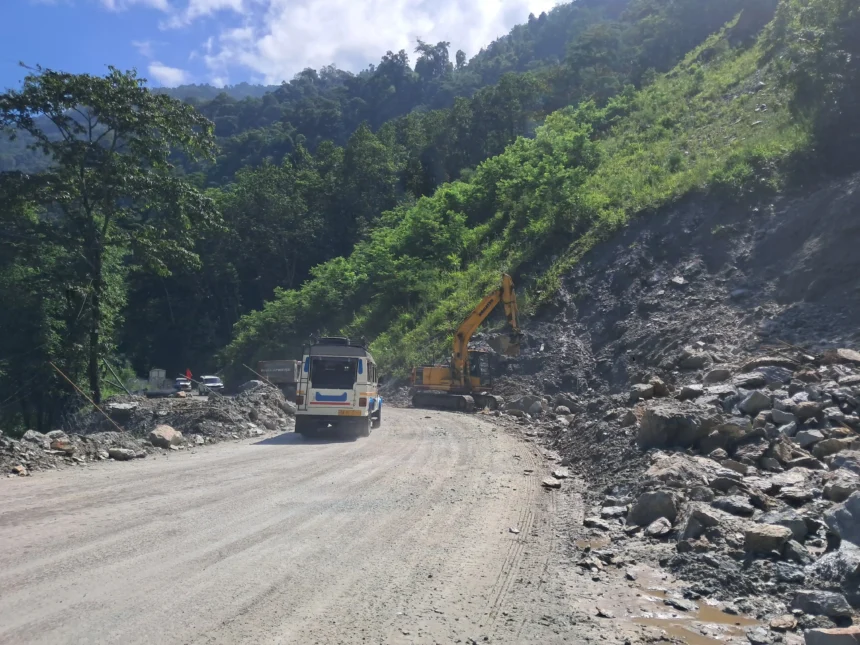
The Sikkim NH-10 route clear update follows several disruptions at 20th Mile near Bardang in Pakyong district. Heavy rain had repeatedly triggered mudslides and landslides in the area, affecting the road surface and creating difficulties for vehicles.
On September 20, NH-10 at 20th Mile, Bardang, reopened to one-way traffic after a day-long clearance operation. A truck had earlier become stranded in the mudslide, while restoration teams continued work on the affected stretch. The 30th Mile section also reopened temporarily as clearance continued.
The situation had followed a difficult monsoon season for the highway. In July, a major landslide at 20th Mile near Bardang completely disrupted traffic between Gangtok and Siliguri. Authorities deployed machinery to remove boulders, mud and debris from the road.
Sikkim government officials later inspected the affected Bardang stretch to assess damage and review restoration work. The state administration said the inspection involved officials from the Roads and Bridges Department, NHIDCL, police, disaster management and other agencies.
A subsequent high-level inspection in August also reviewed restoration work along the Bardang-Rangpo road. The exercise focused on assessing the prevailing condition and expediting repairs at the landslide-affected section.
These efforts have helped restore movement through a section that had repeatedly become vulnerable during heavy rainfall. However, reopening does not remove the underlying landslide risk. Mountain roads can deteriorate quickly when rainfall saturates slopes or damages the road edge.
Sikkim NH-10 Route Clear After Repeated Monsoon Disruptions
The Sikkim NH-10 route clear update is significant because the highway has faced several weather-related disruptions this year. The road runs through steep terrain alongside the Teesta corridor, leaving some stretches particularly exposed to landslides, falling rocks and water accumulation.
In September, another mudslide affected 20th Mile at Bardang. A vehicle travelling from Singtam towards Rangpo became stuck on the affected section after the road surface softened and cracked. The occupants were reported safe, while an NHIDCL excavator helped remove the vehicle and restore safer movement.
Authorities subsequently advised motorists to reduce speed, maintain distance from other vehicles and follow instructions from traffic and road officials. Such precautions remain important even when a road officially remains open because mountain conditions can change without much warning.
Meanwhile, other parts of Sikkim have experienced separate road disruptions. Heavy rainfall has affected routes in districts including Mangan, Gyalshing and Soreng, while several interior roads have faced closures or restrictions. The road situation can therefore differ significantly from one district or corridor to another.
The distinction matters for tourists travelling beyond Gangtok. A clear NH-10 does not automatically mean that every road leading towards North, South or West Sikkim remains unrestricted. Travellers must therefore consider their complete route rather than relying only on the status of the main highway.
At the same time, the reopening of the main Gangtok-Siliguri connection provides an important logistical advantage. Supplies, passenger vehicles and commercial transport can use the corridor instead of relying entirely on longer alternative routes.
Sikkim NH-10 Route Clear as Maintenance Work Continues
The Sikkim NH-10 route clear update should also be viewed alongside planned maintenance work on the highway. Reports from October 5 said the Sevoke-Rangpo section of NH-10 would face nighttime closures for repair work between October 7 and October 15. The affected areas include 29 Mile and Ravijhora in the Kalimpong district of West Bengal.
The proposed restriction is linked to damage caused by landslides and erosion. Some portions of the road have reportedly narrowed after sections weakened towards the river side. Falling stones and unstable slopes have also created safety concerns.
According to the reported schedule, the road would remain closed during nighttime hours from 9 pm to 6 am during the maintenance period. A further repair phase has also been reported for October 26 to November 5.
This planned closure is different from an emergency blockade at Bardang. The authorities are undertaking the work to address vulnerable stretches before further deterioration creates a larger disruption.
The timing is particularly important because October falls within a busy tourism period for Sikkim and North Bengal. Hotels, taxi operators, tour agencies and local businesses depend heavily on road connectivity during the festive travel season.
Consequently, scheduled repair work can create temporary inconvenience while reducing longer-term risks. Maintaining the highway before the winter and subsequent weather cycles can help improve reliability along the corridor.
Travellers should also remember that traffic conditions can change during the day. Even when a road remains officially open, temporary restrictions may become necessary if rainfall triggers fresh debris or slope movement.
Sikkim NH-10 Route Clear Supports Gangtok-Siliguri Connectivity
The Sikkim NH-10 route clear update has wider importance because NH-10 serves as the principal road connection between Sikkim and the Siliguri gateway. The corridor carries tourists, residents, commercial vehicles and essential supplies throughout the year.
For Sikkim, dependable access to Siliguri is particularly important because many goods and passengers enter the state through the lower plains. Disruptions on NH-10 can therefore affect supply chains as well as everyday travel.
The highway also supports the tourism economy. Gangtok, East Sikkim and several other destinations receive visitors who travel through the Rangpo-Siliguri corridor. During periods of road closure, tourists can face delays, route changes and additional travel costs.
The importance of NH-10 has also prompted long-term infrastructure plans. On October 1, Union Road Transport and Highways Minister Nitin Gadkari announced approval for a ₹1,176-crore six-lane bridge over the Teesta River at Sevoke. The proposed structure, including its approaches, will extend for about 6.9 kilometres and is intended to strengthen the NH-10 corridor connecting Sikkim, the Northeast and Siliguri.
Such infrastructure projects address longer-term capacity and connectivity concerns. However, immediate road maintenance remains equally important because landslides can affect existing infrastructure even when larger projects are under development.
The recent experience at Bardang demonstrates this challenge clearly. Road agencies have had to combine debris clearance, slope monitoring, traffic management and structural restoration to keep the corridor functional.
Furthermore, continued coordination between Sikkim authorities, NHIDCL, West Bengal authorities and traffic agencies will remain essential. The route crosses different administrative areas, so a disruption at one location can quickly affect the entire Gangtok-Siliguri journey.
The present situation therefore offers cautious relief rather than a guarantee of uninterrupted travel. With the Bardang section reopened and further maintenance planned elsewhere, authorities are attempting to balance immediate connectivity with necessary safety work.
Conclusion
The Sikkim NH-10 route clear update confirms improved movement through the 20th Mile and Bardang area after repeated landslides and restoration operations. The reopening restores an important section of the Gangtok-Siliguri corridor, although mountain-road risks remain during periods of adverse weather.
Meanwhile, planned nighttime maintenance around 29 Mile and Ravijhora shows that authorities are continuing work on vulnerable portions of the wider NH-10 corridor. Therefore, the latest situation combines improved access at Bardang with ongoing repairs elsewhere, making regular road-status checks important for travellers.
FAQs
Is the Sikkim NH-10 route clear at Bardang?
The Sikkim NH-10 route clear update indicates that the 20th Mile Bardang section has reopened after mudslide clearance and restoration work. Traffic conditions can still change because of weather and road stability.
Does NH-10 connect Sikkim with Siliguri?
Yes. NH-10 is the principal road corridor connecting Gangtok and other parts of Sikkim with Rangpo, Teesta Bazaar, Sevoke and the Siliguri region.
Why was NH-10 repeatedly disrupted?
Heavy rainfall has triggered landslides, mudslides, falling rocks and water accumulation along several sections of the highway. The 20th Mile Bardang stretch has been among the affected locations.
Will NH-10 face any planned closures in October?
Reports indicate nighttime closures for maintenance on parts of the Sevoke-Rangpo section, particularly around 29 Mile and Ravijhora, from October 7 to October 15. A further repair period has also been reported for October 26 to November 5.
Why is NH-10 important for Sikkim?
The highway provides a crucial connection between Sikkim and the Siliguri gateway. It supports passenger travel, tourism, commercial transport and the movement of essential supplies into the state.