



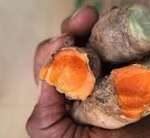




Meghalaya turmeric has entered a new export market, with the state sending its Megha-1 variety to Singapore in a major step towards expanding international trade. The commercial consignment was flagged off on October 9, 2026, at Bhoirymbong in Ri-Bhoi district.
The shipment was organised by the Eastern Ri-Bhoi Organic Farmer Producer Company Ltd (ERBOFPC) and supplied to Singapore-based importer Veg Pro PTE Ltd. The export operates under the Meghalaya government’s umbrella brand, Meghalaya Collectives, which aims to connect local producers with wider markets.
Meghalaya Times
+1
Meghalaya turmeric enters the Singapore market
International Fund for Agricultural Development (IFAD) President Álvaro Lario flagged off the consignment at the company’s PRIME Hub in Bhoirymbong. His visit focused on reviewing the progress of the Meghalaya Livelihoods and Access to Markets Project, known as Megha-LAMP.
The export marks an important step for Meghalaya’s agricultural sector. It shows how farmer-owned organisations can connect local produce with overseas buyers through organised marketing and improved processing.
Moreover, the shipment creates an opportunity to test demand for the state’s turmeric in an international market. However, a single consignment does not establish the scale of future exports or guarantee sustained demand.
The initiative also highlights the growing role of farmer producer organisations in linking small-scale growers with commercial buyers. These organisations can bring produce together, improve consistency and help farmers negotiate access to markets that may otherwise remain difficult to reach.
Meghalaya turmeric gains support from processing facilities
Processing and quality control are central to the state’s export plans. In June 2026, Union Finance Minister Nirmala Sitharaman inaugurated an organically certified spice processing facility in Ri-Bhoi.
The unit, established under ERBOFPC, was developed with an investment of approximately ₹32 crore. It can process more than 10,000 metric tonnes of organic spices annually, including turmeric, ginger, black pepper and chilli.
The facility includes infrastructure for washing, drying, storage and pulverising spices. It is certified under India’s National Programme for Organic Production and European Union organic standards, opening access to premium domestic and international markets.
Press Information Bureau
+1
These facilities can help farmers move beyond selling unprocessed crops. Better storage, hygienic packaging and processing can also support quality control and reduce losses after harvesting.
Furthermore, the infrastructure gives farmer collectives greater scope to prepare products for buyers with specific quality requirements. Consistent supply and reliable handling will remain important as Meghalaya seeks to expand its presence abroad.
Meghalaya turmeric and the Megha-LAMP initiative
The latest export forms part of Megha-LAMP, implemented by the Meghalaya Basin Management Agency with support from IFAD. The project seeks to strengthen rural livelihoods by improving market access, building farmer institutions and supporting value addition.
Under the initiative, farmer organisations receive support for processing infrastructure, quality management and connections with buyers. The aim is to help smallholders participate more directly in commercial supply chains.
At Bhoirymbong, ERBOFPC has received equipment for drying, grinding and hygienic packaging through a reported US$3.12 million co-financing framework. These facilities are intended to help the collective prepare agricultural products for international markets.
Meghalaya Times
+1
Additionally, the Meghalaya Collectives brand provides a common platform for presenting local products to buyers. Direct trade arrangements may reduce dependence on intermediaries, although the actual benefits will depend on export costs, prices and the terms offered to farmers.
Ri-Bhoi farmers look towards wider markets
Ri-Bhoi has become an important centre for Meghalaya’s efforts to develop organised organic agriculture. Farmer collectives can combine production, coordinate marketing and improve access to infrastructure that individual growers may struggle to afford.
The processing facility inaugurated in June is expected to benefit around 5,500 organic farmers across Meghalaya and the wider Northeast. Its capacity also provides scope to handle several crops rather than relying on turmeric alone.
Press Information Bureau
+1
Meanwhile, other agricultural products from the region have also reached overseas markets. In November 2024, Meghalaya reported an export consignment of GI-tagged Khasi Mandarin to Dubai through the Jirang Farmer Producer Company in Ri-Bhoi.
Meghalaya Government
These developments point to a broader effort to build export channels for the state’s agricultural produce. Nevertheless, farmers will need dependable buyers, competitive transport costs and consistent quality to sustain that progress.
Meghalaya turmeric export opens a new chapter
The Singapore shipment places Meghalaya’s Megha-1 turmeric before an international buyer and offers a practical test of the state’s export-focused farming model.
The next challenge will be to turn this initial market entry into regular commercial orders. That will require reliable production, strong quality controls, efficient logistics and prices that reward growers fairly.
For Ri-Bhoi’s farmers, the opportunity extends beyond one shipment. If market links strengthen and processing facilities operate effectively, Meghalaya’s agricultural collectives could gain a larger role in regional and international trade.
The Singapore consignment is therefore a promising development, but sustained exports and measurable gains for farmers will determine its long-term success.