







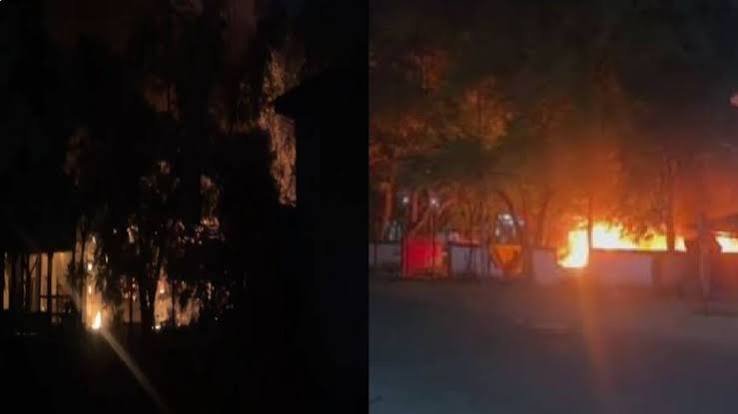
The Siang Dam Project protests in Arunachal Pradesh escalated into violence on October 23, with an NHPC office, a police station and several vehicles reportedly set ablaze in Pasighat. The unrest followed growing opposition to the proposed hydropower project and demands for the release of detained activists.
The violence unfolded amid a shutdown across Siang, Upper Siang and East Siang districts. Protesters have called for an immediate halt to survey work, the withdrawal of security forces and action on their concerns over the proposed dam.
Siang Dam Project Protests Escalate in Pasighat
Pasighat, the headquarters of East Siang district, witnessed a serious breakdown of law and order on Friday evening. Reports said protesters targeted the local office of the National Hydroelectric Power Corporation (NHPC) and the Pasighat police station.
Several police and security force vehicles were also reportedly torched during the unrest. The situation deteriorated as tensions between demonstrators and security personnel intensified, prompting a security response in the town.
According to local media reports, protesters also gathered near Ranaghat Tri-Junction, where vehicles were set on fire. Stone-pelting and the use of tear gas were reported during confrontations between demonstrators and security personnel.
A journalist was reportedly injured during the unrest. However, authorities had not provided a complete official account of the damage and injuries at the time of reporting.
The incidents marked a further escalation in the ongoing agitation against the proposed Siang Upper Multipurpose Project (SUMP).
Siang Dam Project Protesters Demand Release of Activists
The shutdown was called by several local organisations opposing the proposed project. Their demands include the release of detained activists, the withdrawal of security forces from the Siang region and an immediate suspension of pre-feasibility survey activities.
Protesters have also raised concerns about the deployment of central security personnel in areas where authorities are assessing the project’s feasibility.
Meanwhile, tensions had already risen following earlier confrontations between demonstrators and police. On Friday, clashes were reported at Dite-Dime near Geku in Siang district, where around 150 to 200 protesters gathered in support of the shutdown, according to police.
Siang Superintendent of Police Kamdam Sikhom alleged that demonstrators attempted to damage barricades, threw stones and violated prohibitory orders. Police subsequently used tear gas to disperse the crowd.
A police officer said four women sustained injuries and received hospital treatment. Protesters, however, alleged that security personnel used excessive force and that demonstrators suffered injuries during the operation.
These competing accounts have added to demands for accountability and dialogue between the administration and affected communities.
Siang Dam Project Faces Local Opposition
The proposed Siang Upper Multipurpose Project is a major hydropower initiative planned on the Siang River. NHPC is conducting preliminary assessment work for the project, which has an estimated capacity of around 11,000 to 11,200 megawatts in reported project descriptions.
However, the proposal has faced sustained opposition from sections of the local population. Residents and community organisations have expressed concerns about land, livelihoods, displacement and the potential environmental consequences of a large dam.
The project has also become a source of tension over the role of security forces during preliminary surveys. Opponents argue that authorities must address community concerns before advancing the assessment process.
Additionally, the wider debate involves the strategic importance of the Siang River, which flows into Assam and is known as the Yarlung Tsangpo in Tibet. State leaders have cited developments upstream in China when discussing the project’s importance.
Nevertheless, local groups continue to demand meaningful consultation and a halt to survey activities until their concerns receive attention.
Shutdown Disrupts Normal Life Across Three Districts
The shutdown affected parts of Siang, Upper Siang and East Siang districts on Friday. Shops and business establishments remained closed in several areas, while many residents stayed indoors amid concerns about further unrest.
Although the shutdown initially proceeded without major incidents in some locations, confrontations later intensified in parts of the region. The violence in Pasighat further heightened concerns about public safety and the protection of government property.
Moreover, reports of attacks on public infrastructure have increased pressure on authorities to restore calm. Security deployment was strengthened as officials sought to contain the situation.
Siang Dam Project Tensions Raise Calls for Dialogue
The latest violence has deepened the dispute surrounding the Siang Dam Project and the government’s approach to local opposition. While protesters continue to demand the release of detained activists and the withdrawal of security personnel, the destruction of public property has added another serious dimension to the crisis.
Authorities face the challenge of maintaining law and order while addressing concerns raised by communities affected by the proposed project.
Going forward, a transparent account of the violence, proper medical assistance for injured people and constructive engagement with community representatives could help ease tensions. The immediate priority remains restoring peace in Pasighat and preventing further clashes as debate over the proposed dam continues.