







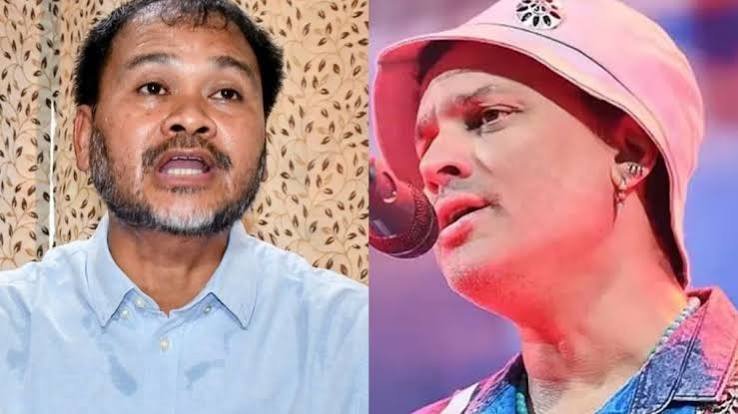
The Zubeen Garg justice movement is gaining momentum in Assam as Raijor Dal president Akhil Gogoi pushes for a united campaign demanding accountability in the death of beloved singer Zubeen Garg. His initiative seeks to bring people together across political and organisational differences.
Gogoi has called for coordinated public mobilisation alongside legal action to strengthen the campaign. The effort comes amid continuing public concern over the investigation and renewed plans for protests ahead of the next major court hearing in the case.
Zubeen Garg justice movement seeks unity across Assam
Akhil Gogoi, the Sivasagar MLA and Raijor Dal chief, has urged people from different political backgrounds to join the campaign. He has stressed that the demand for justice should not remain limited to any single political party.
The initiative aims to unite supporters, civil society groups and organisations around a common demand for accountability. Moreover, organisers want to maintain public pressure while allowing the legal process to continue.
A public meeting held at Zubeen Khetra on October 17 discussed ways to strengthen the movement. Participants called for further legal action and the formation of a coordinated structure to guide future activities.
The meeting also led to the formation of a 21-member convenor committee. The committee is expected to coordinate legal efforts, public awareness initiatives and mobilisation across Assam.
These steps reflect an attempt to give the campaign a more organised structure. They could also help supporters from different districts work towards shared objectives.
Four resolutions to strengthen the justice campaign
The campaign centres on four broad priorities intended to combine legal action with public participation.
First, organisers want further legal scrutiny of the case. Participants have called for a supplementary chargesheet to address concerns raised during the investigation and strengthen the prosecution where the evidence warrants it.
Second, the movement seeks legal action against bail orders. Organisers want the government to challenge bail granted to accused persons through the appropriate judicial channels. They have also expressed opposition to bail for those who remain in custody.
Third, the campaign plans sustained public mobilisation. Supporters want demonstrations, awareness programmes and public gatherings to keep the demand for justice in focus. Consequently, the movement aims to maintain public attention beyond individual protests.
Fourth, organisers want stronger coordination among supporters. The convenor committee and proposed legal cell are intended to connect legal experts, community groups and campaign participants. This approach could help the movement pursue its demands through organised and lawful means.
These priorities reflect the campaign’s emphasis on combining public pressure with action through the courts. However, the final outcome will depend on legal proceedings and decisions by the relevant authorities.
Legal action and protests remain central to the movement
The Zubeen Garg justice movement has continued through public meetings and demonstrations in recent weeks. On October 20, Gogoi called for a human chain outside Janata Bhawan in Dispur to demand justice for the singer.
More than 100 people gathered near the Assam Secretariat for the proposed demonstration. Police prevented them from holding the protest at the site and took participants away in buses, according to media reports.
The incident added to public discussion about the campaign and the right to peaceful demonstration. Meanwhile, organisers have continued to explore legal options and plan further activities.
The Zubeen Garg Nyay Dabi Samiti has also announced plans for statewide protests and a mass gathering. A meeting scheduled for October 25 at Zubeen Khetra was expected to discuss the next phase of the campaign.
The proposed mobilisation comes ahead of a November 6 Supreme Court hearing on the bail pleas of two accused in the case. Organisers have also discussed writing to the Assam and Union governments to seek further intervention.
Investigation remains under public scrutiny
Zubeen Garg died in Singapore on September 19, 2025, while visiting the country for the North East India Festival. His death triggered widespread grief across Assam and demands for accountability.
The Assam Police’s Criminal Investigation Department investigated the case and filed a chargesheet naming seven accused. Four of them face murder charges, according to published reports.
However, the legal process remains ongoing, and allegations against the accused must be determined through the courts. The campaign’s demands for further investigation and legal action represent the position of its organisers, rather than established findings of guilt.
The Assam government has also indicated that it intends to challenge certain bail orders. These developments have kept the case in the public spotlight as supporters seek further answers.
Zubeen Garg justice movement looks towards collective action
Akhil Gogoi’s initiative seeks to turn widespread public concern into a coordinated campaign for accountability. Its success will depend on cooperation among participating groups, sustained public engagement and respect for the legal process.
The proposed resolutions offer a framework for combining demonstrations, legal scrutiny and organisational coordination. They also provide a way for supporters across Assam to participate without making the campaign the responsibility of one political organisation alone.
As the next court hearing approaches, organisers are preparing to intensify their efforts. Their central demand remains that the circumstances surrounding Zubeen Garg’s death receive proper legal scrutiny and that those found responsible face punishment under the law.
For many supporters, the movement represents both a demand for justice and a collective expression of grief. Whether the campaign achieves its objectives will depend on the evidence, judicial decisions and the authorities’ response to its demands.