







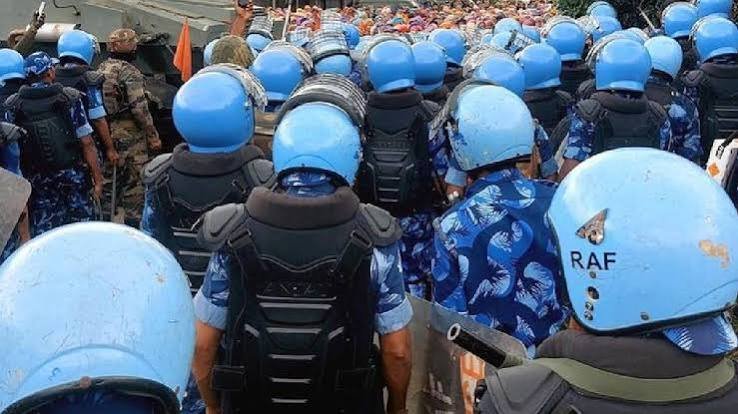
The Arunachal anti-dam protest has prompted the Centre to deploy around 250 Rapid Action Force (RAF) personnel after violence erupted in Pasighat over the proposed Siang Upper Multipurpose Project. The Ministry of Home Affairs ordered the deployment to strengthen security following incidents of arson and vandalism in East Siang district.
The additional forces are being sent as tensions rise over the proposed 11,200-megawatt hydropower project. The unrest followed a 12-hour shutdown called by groups opposing the project, which remained largely peaceful before violence broke out later on Friday night.
Arunachal Anti-Dam Protest Triggers RAF Deployment
The Centre directed two companies of the Central Reserve Police Force’s (CRPF) Rapid Action Force to move to Arunachal Pradesh on Saturday. The units, comprising approximately 250 personnel, were scheduled to travel from Navi Mumbai to Pasighat aboard an Indian Air Force transport aircraft.
Officials said the personnel were expected to reach the area and begin deployment by Sunday. The move aims to reinforce security in locations affected by the unrest.
The RAF is a specialised CRPF unit trained to handle riots and other public-order emergencies. Several CRPF units are already operating in the affected areas. Arunachal Pradesh also has a permanent deployment of around two to three CRPF battalions.
Moreover, officials said security personnel had been working to contain the protests since Friday. Some members of the CRPF, state police and other central forces sustained injuries during the unrest.
Violence Erupts in Pasighat After Shutdown
The Arunachal anti-dam protest escalated on Friday night after a 12-hour bandh across Siang, Upper Siang and East Siang districts. According to police officials, a mob allegedly set fire to an office of the National Hydroelectric Power Corporation (NHPC) and a police station in East Siang district.
The unrest also damaged the residences of three political leaders, including Arunachal Pradesh BJP president Kaling Moyong. The homes of legislators Ninong Ering and Oni Panyang were also reportedly targeted.
The violence continued into the early hours of Saturday, ending at around 3.30 am, according to the Chief Minister’s Office. However, officials said the shutdown itself had remained largely peaceful before the situation deteriorated in Pasighat.
Consequently, the incidents prompted the Centre to strengthen security arrangements. Authorities are now working to prevent further escalation and restore normalcy in the affected areas.
Why the Siang Dam Project Faces Opposition
The proposed Siang Upper Multipurpose Project has faced opposition from sections of the local population. Concerns include possible displacement, environmental damage and the impact on ancestral land and traditional livelihoods.
The project, planned with a proposed capacity of 11,200 megawatts, has become a major point of contention in the region. Opponents have also raised concerns about survey activities and the potential consequences of large-scale construction along the Siang River.
The river holds ecological, cultural and economic importance for communities in Arunachal Pradesh. Therefore, questions about land, rehabilitation and environmental protection remain central to the debate surrounding the proposed development.
The opposition also reflects broader concerns about how major infrastructure projects may affect indigenous communities. However, the specific environmental and social impacts will depend on the project’s final design, assessments and implementation plans.
Arunachal Anti-Dam Protest: CM Appeals for Peace
Chief Minister Pema Khandu described the violence in Pasighat as regrettable and appealed to people across the state to maintain peace. He also reiterated that peaceful protest remains an essential part of democracy.
However, Khandu stressed that demonstrations must remain within the law and should not result in damage to property or disruption of public order.
His appeal came as security agencies responded to the incidents and prepared for the arrival of additional RAF personnel. Meanwhile, the existing CRPF deployment continues to support local authorities in managing the situation.
The authorities face the immediate task of preventing further violence while ensuring that residents can carry on with their daily activities. A peaceful resolution will also require attention to concerns surrounding the proposed hydropower project.
Security and Dialogue Remain Key Challenges
The additional RAF deployment marks a significant security response to the unrest linked to the Arunachal anti-dam protest. Nevertheless, restoring order is only one part of the wider challenge facing the state.
Authorities must also address public concerns about the proposed Siang project through transparent communication and lawful engagement with affected communities. Clear information about environmental assessments, land acquisition and rehabilitation could help residents understand the project’s potential implications.
Overall, the coming days will be important for maintaining peace in Pasighat and surrounding areas. The Centre’s deployment of additional personnel is intended to strengthen security, while discussions over the proposed dam remain central to the wider dispute.