







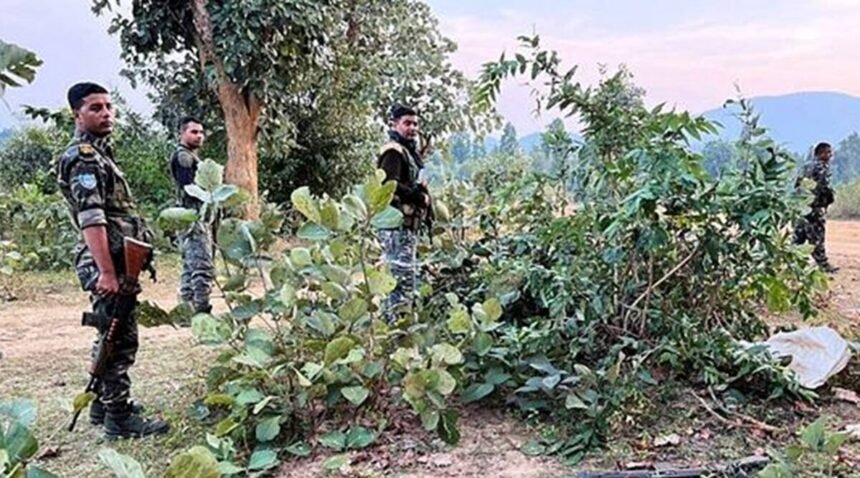
In a disturbing incident, a private company’s construction equipment involved in the building of a bridge over a river in Jharkhand’s Laterhar district fell victim to an act of arson orchestrated by Maoists. According to local authorities, the incident occurred at approximately 10 pm on Thursday. A group of armed Maoists, numbering between 12 and 14 individuals, descended upon the construction site located in the Mahuadanr police station area, approximately 180 km away from the state capital, Ranchi. The attackers not only unleashed violence upon the workers present but also set fire to four tractors and an excavator as a reprisal for the alleged non-payment of levies they had demanded.
The incident has raised concerns about the security situation in the region and the brazenness with which Maoist groups operate. Ashutosh Yadav, the in-charge of the Mahuadanr police station, confirmed the attack and revealed that the Maoists had specifically targeted the construction vehicles due to the company’s failure to meet their extortionate demands. It is not uncommon for such armed groups to extort money from businesses and construction projects in rural areas, posing a significant challenge to development efforts.
The construction of bridges and infrastructure projects plays a vital role in enhancing connectivity and improving the quality of life for residents in these regions. However, the Maoist insurgency in Jharkhand and neighboring areas has frequently disrupted such endeavors, causing delays and hindrances. This incident serves as a stark reminder of the vulnerability faced by private companies engaged in infrastructure development in Maoist-affected regions.
Authorities in Jharkhand have been grappling with the Maoist insurgency for years, as the extremists seek to establish a parallel governance system based on their ideology. These groups often target infrastructure projects and businesses as a means of exerting control and generating funds for their activities. Despite efforts by security forces to curb the influence of Maoist groups, incidents like the recent attack continue to occur, highlighting the persistent challenges faced by the government in addressing the insurgency.
The attack on the construction site underscores the urgent need for enhanced security measures in Maoist-affected areas. The safety of workers and the protection of infrastructure projects should be of paramount importance to ensure uninterrupted development. The state government, in collaboration with security forces, must devise comprehensive strategies to combat the Maoist insurgency effectively. This should include increased patrols, intelligence gathering, and coordination between law enforcement agencies to preempt such attacks and apprehend the perpetrators swiftly.
Moreover, addressing the socio-economic grievances that fuel the Maoist movement is crucial to eradicating their influence in the long run. This requires a multi-pronged approach involving development initiatives, job creation, and efforts to uplift marginalized communities. By addressing the root causes of discontent and providing opportunities for economic and social progress, the government can undermine the appeal of extremist ideologies.
The incident in Jharkhand serves as a stark reminder of the ongoing challenges posed by Maoist groups in India. It highlights the need for a comprehensive and multi-faceted approach to address the underlying issues that contribute to their strength. Only through a combination of robust security measures, socio-economic development, and inclusive governance can the government effectively counter the Maoist insurgency and create an environment conducive to progress and peace.

