






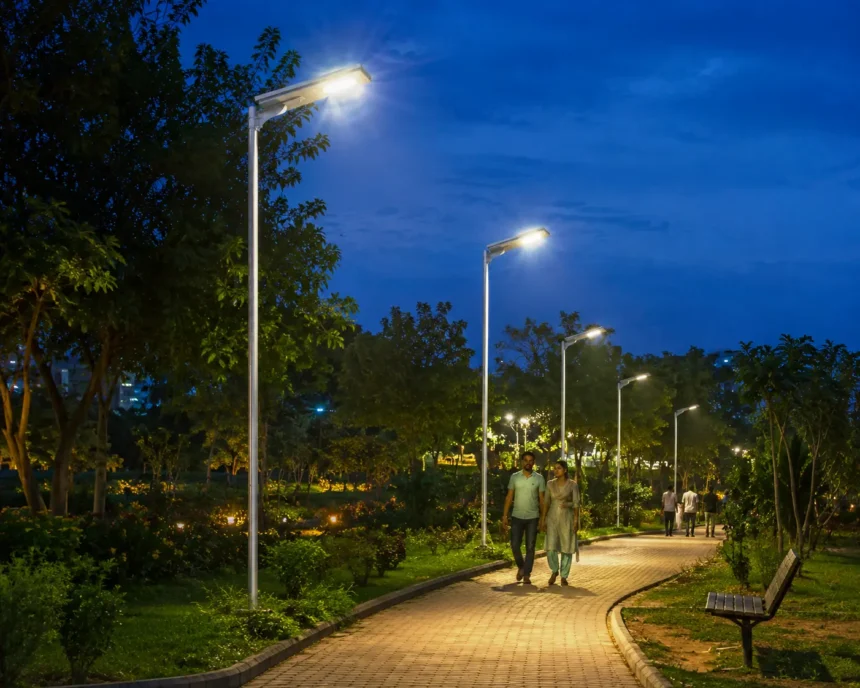
The Agartala Smart City Mission is deploying automated solar-powered streetlights across primary arterial avenues. The initiative aims to improve road illumination, strengthen urban infrastructure and promote energy-efficient public services.
The project introduces renewable energy technology into the city’s streetlighting network. It also reflects a wider effort to modernise urban facilities through smart and sustainable solutions.
Solar-powered lighting can reduce dependence on conventional electricity. Meanwhile, automated controls can help manage lighting operations according to changing conditions.
The deployment could support safer movement for motorists and pedestrians. It also places renewable energy at the centre of Agartala’s urban development plans.
Gauhati High Court Quashes Pranab Doley’s NSA Detention
Smart City Mission Expands Solar Streetlighting
The Agartala Smart City Mission has taken steps to introduce automated solar-powered streetlights along major arterial roads.
These avenues carry significant daily traffic and connect important parts of the city. Better illumination can improve visibility during evening and night-time travel.
The use of solar-powered systems also offers an alternative to conventional streetlighting arrangements. Such installations can draw energy from sunlight and store electricity for use after dark.
However, the project’s overall impact will depend on installation quality, maintenance and reliable system performance.
Solar Energy Supports Sustainable Urban Infrastructure
Solar-powered streetlights use photovoltaic panels to convert sunlight into electricity.
The systems generally store generated energy in batteries. They then use that stored power to operate lighting after sunset.
This arrangement can reduce reliance on electricity supplied through conventional power networks. It may also help manage energy costs over the long term.
Furthermore, solar technology supports efforts to increase renewable energy use in public infrastructure.
For a growing urban centre like Agartala, energy-efficient lighting can form part of broader sustainability planning.
Automated Controls Improve Lighting Management
Automation adds another important feature to the streetlighting project.
Depending on the installed technology, automated systems can control lighting according to daylight conditions. Some systems may also allow remote monitoring and fault detection.
These functions can help authorities manage streetlights more efficiently. They may also reduce the need for routine manual switching.
However, the exact automation features will depend on the equipment selected for the project.
Regular technical inspections will remain important to ensure reliable operation.
Major Roads Could Benefit from Better Illumination
Primary arterial avenues play a central role in urban transportation.
These roads connect residential areas, commercial locations and important public facilities. They also carry private vehicles, public transport and pedestrian traffic.
Poor illumination can make it harder for drivers to identify obstacles and road users. Consequently, improved lighting can support better visibility at night.
Well-lit roads may also help pedestrians feel safer while using public spaces.
The new installations aim to strengthen lighting infrastructure along key routes.
Renewable Streetlights Could Reduce Energy Dependence
Conventional streetlighting systems often depend on electricity from the power grid.
Solar-powered alternatives can reduce that dependence by generating electricity locally. This can offer operational advantages, particularly when systems receive adequate sunlight and maintain sufficient battery capacity.
Moreover, solar installations can support energy conservation goals.
However, their performance depends on weather conditions, panel efficiency and battery maintenance. Authorities must also ensure that installations provide consistent illumination throughout the night.
A reliable maintenance plan will help protect the benefits of the investment.
Smart Lighting Can Support Urban Safety
Streetlighting contributes to road safety and public convenience.
Adequate illumination helps drivers observe road markings, pedestrians and other vehicles. It can also improve visibility near intersections and busy roadside areas.
For pedestrians, better-lit avenues can make evening travel more comfortable.
However, lighting alone cannot prevent every road accident. Safe driving, traffic management and proper pedestrian facilities remain equally important.
The solar streetlight project can therefore complement other urban safety measures.
Maintenance Will Determine Long-Term Performance
Solar-powered streetlights require regular maintenance to operate effectively.
Authorities need to inspect solar panels, batteries, wiring and lighting units. Dust accumulation or damaged components can reduce system performance.
Battery condition also matters because stored energy must support lighting after sunset. Timely replacement of faulty parts can prevent prolonged outages.
Automated monitoring, where available, may help identify technical problems more quickly.
A clear maintenance schedule can ensure that the new infrastructure remains useful over time.
Smart City Development Focuses on Sustainable Services
The streetlighting deployment forms part of the wider goal of improving urban infrastructure.
Smart city initiatives often combine technology, energy efficiency and better public services. These projects can help cities manage resources and respond to changing urban needs.
Agartala’s solar-powered lighting initiative brings renewable energy into an essential municipal service.
Furthermore, successful implementation could provide a useful model for other public infrastructure projects.
Continued investment in sustainable systems can support the city’s long-term development goals.
Conclusion
The Agartala Smart City Mission is deploying automated solar-powered streetlights across primary arterial avenues. The project aims to improve night-time visibility while promoting renewable energy and modern urban infrastructure.
Its long-term benefits will depend on reliable installation, automation and regular maintenance. With effective management, solar streetlighting can support safer roads and more sustainable public services across Agartala.
FAQs
1. What project is the Agartala Smart City Mission implementing?
The mission is deploying automated solar-powered streetlights across primary arterial avenues.
2. What is the main objective of the project?
The initiative aims to improve road illumination and promote energy-efficient urban infrastructure.
3. How do solar-powered streetlights work?
Solar panels generate electricity during daylight, while batteries store energy for lighting after sunset.
4. What role does automation play?
Automated controls can manage lighting operations according to daylight conditions and the system’s installed features.
5. How can better streetlighting support road safety?
Improved illumination can help drivers and pedestrians see road conditions and other road users more clearly.
6. Why is regular maintenance important?
Inspections of solar panels, batteries and lighting units help maintain reliable performance.