



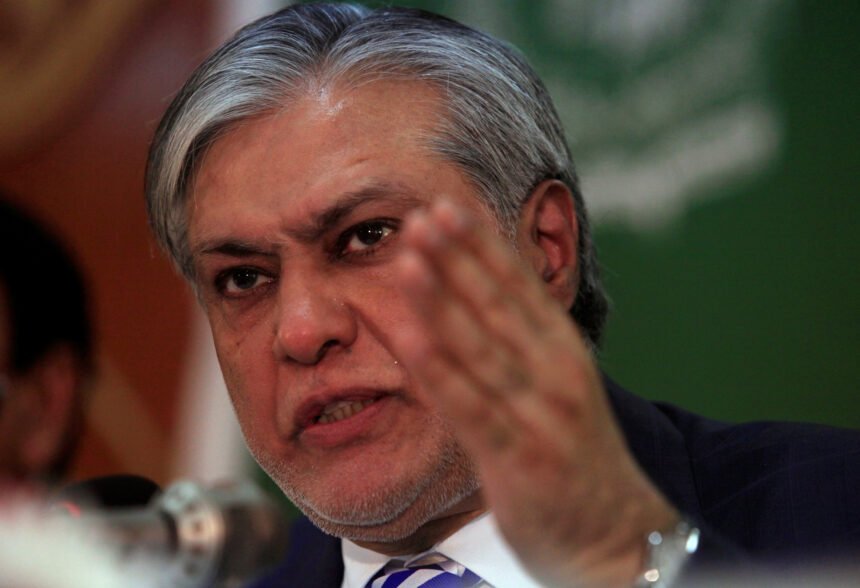
Pakistan’s Finance Minister, Ishaq Dar, has hinted at the possibility of negotiations with former Prime Minister Imran Khan to resolve the ongoing political crisis. However, he emphasized that for talks to take place, Khan must take “corrective measures” and offer an apology to the nation for the violent incidents that occurred on May 9. During a recent appearance on a Geo News program, Dar expressed this sentiment. This development comes as Pakistan’s ruling coalition rejected Khan’s offer for dialogue, stating that they would only engage in talks with politicians, not terrorists.
Imran Khan, who is the chairman of the Pakistan Tehreek-e-Insaf (PTI) party, responded to the situation by assembling a seven-member team tasked with engaging in talks with the government. The primary objective of these discussions is to establish a consensus on a date for the upcoming general elections. However, Khan’s efforts have been overshadowed by a massive crackdown on his party following the May 9 violence and his subsequent arrest. The intensified crackdown has plunged the PTI into a profound existential crisis, leading to the daily departure of numerous key party leaders.
The political crisis in Pakistan has been escalating since the violent protests that erupted on May 9, targeting sensitive military installations. These protests triggered a chain of events that have had far-reaching consequences for the PTI and its leader, Imran Khan. The government’s response has been swift and forceful, resulting in a wave of arrests and a crackdown on the party’s activities.
Ishaq Dar’s statement indicating the possibility of negotiations with Imran Khan marks a significant development in the ongoing political turmoil. It suggests that the government may be open to finding a resolution and restoring stability through dialogue. However, Dar’s insistence on Khan taking “corrective measures” and offering an apology highlights the government’s position that accountability and acknowledgement of the violence are crucial steps towards reconciliation.
Imran Khan’s decision to form a team for talks reflects his commitment to finding a peaceful resolution and moving forward. By seeking a consensus on the date for the general elections, Khan aims to ensure a fair and inclusive democratic process despite the challenges his party currently faces. The departure of key party leaders, however, underscores the immense pressure the PTI is under as it grapples with the aftermath of the violent protests. The loss of influential figures within the party poses a significant challenge to its unity and organizational strength.
The coming days will be critical in determining whether negotiations between Imran Khan and the government can materialize. Both sides must demonstrate flexibility, a willingness to compromise, and a genuine commitment to resolving the political crisis. The people of Pakistan, who have endured the consequences of the unrest, will be watching closely, hopeful for a peaceful resolution and a return to stability.
Pakistan’s Finance Minister Ishaq Dar has suggested the possibility of negotiations with former Prime Minister Imran Khan to address the ongoing political crisis. However, Dar emphasized that Khan must take corrective measures and apologize for the May 9 violence. While Khan has formed a team to engage in talks with the government, the crackdown on his party and the departure of key leaders have intensified the existential crisis facing the PTI. The coming days will be crucial in determining whether a resolution can be achieved through dialogue, bringing much-needed stability to Pakistan.