





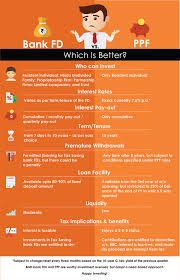
Public Provident Fund (PPF) and Fixed Deposit (FD) are two popular investment options in India that offer different benefits depending on an individual’s financial status and investment objectives. Both PPF and FD provide opportunities for saving and earning interest, while also offering certain tax advantages. Understanding the distinctions between these accounts is crucial for making an informed decision about where to invest.
PPF is a government-backed investment scheme that offers several advantages. Firstly, contributions to PPF are eligible for tax deductions under Section 80C of the Income Tax Act. This means that individuals can reduce their taxable income by the amount invested in PPF, thereby reducing their overall tax liability. Additionally, the interest earned and the maturity amount from PPF are tax-free, making it an attractive option from a tax perspective.
Another key advantage of PPF is the sense of security it provides to investors. Being a government-backed scheme, PPF is considered a safe investment. This factor contributes to the popularity of PPF among risk-averse investors who prioritize capital preservation.
PPF also stands out for its long-term investment benefits. It has a lock-in period of 7 years and a deposit duration of 15 years. Once the initial 15 years are completed, individuals can extend their PPF account indefinitely in blocks of 5 years. This makes it an appealing option for those looking for a long-term investment avenue to accumulate wealth over time.
Furthermore, PPF offers some degree of liquidity. After the completion of the 7th year, partial withdrawals are permitted, providing individuals with access to funds during emergencies or financial needs. Additionally, PPF accounts also offer loan facilities, further enhancing the liquidity aspect of this investment.
To open a PPF account, individuals need a minimum investment of Rs. 500, and the maximum investment allowed per fiscal year is Rs. 1,50,000. During the 15-year deposit period, individuals are required to deposit money into their PPF accounts at least once annually. This regular contribution helps inculcate a disciplined savings habit.
On the other hand, FDs offer their own set of advantages. One of the notable benefits of FDs is the flexibility in terms of tenure options. Individuals can choose a time frame that aligns with their specific needs and financial goals. FDs can be booked for short-term periods as little as seven days or long-term periods extending up to ten years. This flexibility allows investors to customize their investment duration according to their requirements.
Additionally, the interest rates on FDs remain constant throughout the tenure of the deposit, regardless of any changes in the market. This guarantees fixed returns upon maturity, providing individuals with a predictable outcome for their investments. This stability makes FDs particularly appealing to conservative investors who seek assured returns.
In summary, PPF and FD are both attractive investment options in India, each with its own set of advantages. PPF offers tax benefits, government backing, long-term investment opportunities, partial withdrawals, and loan facilities. FDs, on the other hand, provide flexibility in tenure options and a guarantee of fixed returns. Ultimately, the choice between PPF and FD depends on an individual’s financial goals, risk tolerance, and liquidity requirements. It is advisable to assess these factors carefully before making an investment decision to ensure alignment with one’s unique financial situation and objectives.