




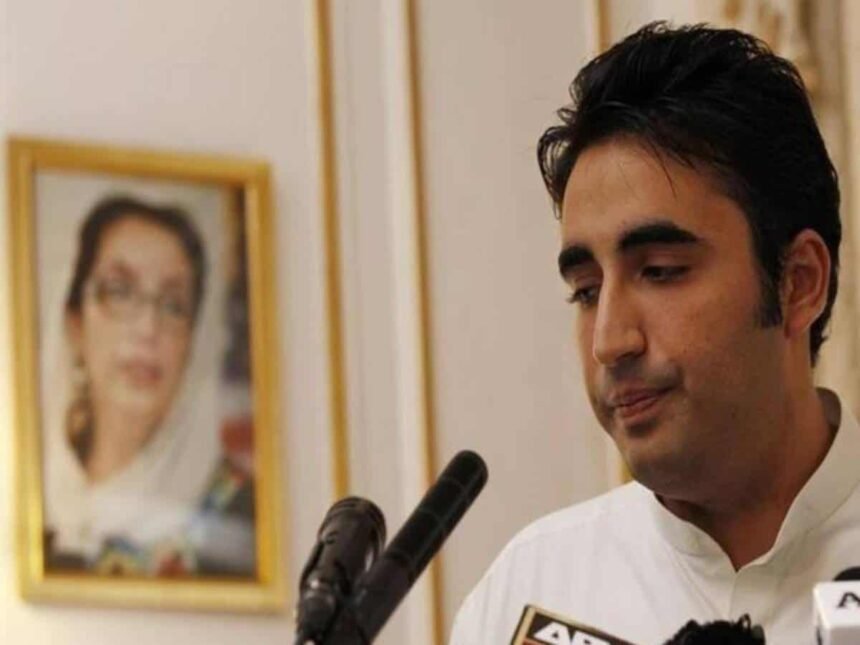
In a recent interview with Qatar-based Al Jazeera news channel, Pakistan Foreign Minister Bilawal Bhutto-Zardari made statements suggesting that deposed Prime Minister Imran Khan is not opposed to the army’s interference in politics. Bhutto-Zardari claimed that Khan’s discontent with the powerful establishment stems from the fact that it is no longer supporting him.
According to Bhutto-Zardari, Khan’s strained relationship with the Pakistan Army began in April of the previous year when the army announced its intention to remain politically neutral and refrain from taking sides. Bhutto-Zardari asserts that Khan’s issue with the army is not their involvement in politics, but rather their lack of support for his political agenda.
The Pakistan Tehreek-e-Insaf chairman, Imran Khan, has faced numerous challenges during his tenure as prime minister. Throughout his time in office, he has encountered opposition from various political parties, as well as the judiciary and the media. However, his relationship with the army has been a subject of particular scrutiny.
It is no secret that the Pakistan Army has played a significant role in the country’s political landscape over the years. Historically, military interventions have shaped Pakistan’s governance, with the army exerting influence behind the scenes. However, in a departure from the norm, the current army leadership has expressed a commitment to staying out of politics and maintaining a neutral stance.
Bhutto-Zardari’s comments imply that Khan’s grievances with the army are not rooted in a principled opposition to military interference in politics, but rather in the army’s refusal to support his political aspirations. This raises questions about Khan’s expectations and the extent to which he may have sought the army’s backing during his time in office.
While it is not uncommon for politicians to seek alliances and support from various power centers, including the military, in pursuit of their political objectives, the notion that Khan’s dissatisfaction with the army is solely based on its lack of support for him is a significant claim. Bhutto-Zardari’s remarks highlight a potential strain in Khan’s relationship with the military establishment.
It is worth noting that Khan’s relationship with the army has experienced both highs and lows throughout his political career. As a former cricketer and a popular figure in Pakistan, Khan enjoyed support from some elements within the military establishment when he entered politics. However, as prime minister, his stance on certain issues and policies may have strained this initial rapport.
The role of the army in Pakistan’s political arena remains a complex and evolving matter. The country’s democratic institutions and processes have been tested multiple times, with military interventions disrupting democratic governance in the past. The current army leadership’s commitment to staying out of politics has been viewed by some as a positive development for Pakistan’s democratic stability.
Bhutto-Zardari’s assertions shed light on the dynamics between Khan and the army, suggesting that the prime minister may have sought the military’s support for his political agenda. While these claims require further examination and verification, they contribute to the ongoing discussion surrounding the relationship between civilian leadership and the military establishment in Pakistan.

