



By using this site, you agree to the Privacy Policy and Terms of Use.
Accept
Hindustan PioneerHindustan Pioneer
  • Home
  • Business
  • News
  • Education
  • Entertainment
  • Lifestyle
  • Travel
  • Web Stories
Reading: Supreme Court Labels Article 370 Ceased to Exist After 1957 Argument as ‘Unacceptable’
Share
Notification Show More
Latest News
Shutdown Imposed in Parts of Kangpokpi After Arson Attack on K. Songlung Village
January 27, 2026
Mizoram CM Lalduhoma Launches ‘Mizoram CSR Connect’ Portal to Boost CSR Investments
January 27, 2026
Assam CM Himanta Biswa Sarma Highlights Investment Opportunities at WEF 2026
January 22, 2026
Muanpuii Saiawi Appointed India’s Next High Commissioner to New Zealand
January 22, 2026
Golden Competitions 2026 Conclude Successfully at Maghey Sankranti Mela in Sikkim
January 21, 2026
Aa
Aa
Hindustan PioneerHindustan Pioneer
  • Home
  • Business
  • News
  • Education
  • Entertainment
  • Lifestyle
  • Travel
  • Web Stories
Follow US
  • Advertise
  • Editorial Policy
  • Contact Us
© 2022 Foxiz News Network. Ruby Design Company. All Rights Reserved.
Home » Blog » Supreme Court Labels Article 370 Ceased to Exist After 1957 Argument as ‘Unacceptable’
Misc

Supreme Court Labels Article 370 Ceased to Exist After 1957 Argument as ‘Unacceptable’

Rudrakshi Gupta
By Rudrakshi Gupta 3 Min Read Published August 23, 2023
Share
Supreme Court Labels Article 370 Ceased to Exist After 1957 Argument as 'Unacceptable'
SHARE

Introduction 

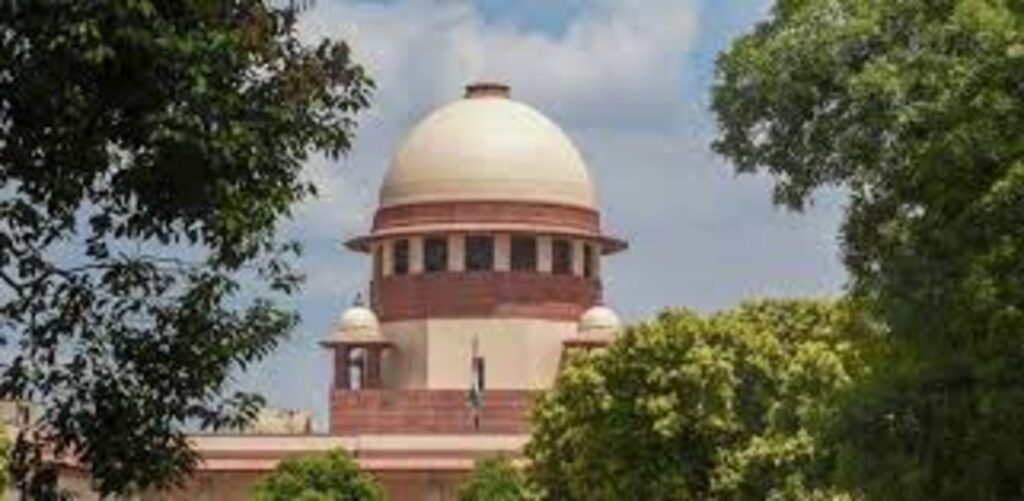
In a significant legal development, the Supreme Court has dismissed the argument that Article 370 of the Constitution ceased to operate after the dissolution of Jammu and Kashmir’s constituent assembly in 1957. The Court’s response had come during a hearing involving senior advocate Dinesh Dwivedi. He contended that Article 370 had lost its relevance after the Constitution of Jammu and Kashmir that got enacted on January 26, 1957.
Contents
Introduction Court questioned CentreConclusion 
Supreme Court Labels Article 370 Ceased to Exist After 1957 Argument as ‘Unacceptable’

The court’s five-judge bench, headed by Chief Justice DY Chandrachud, expressed its disagreement with this perspective, deeming it “unacceptable.” Dwivedi’s argument was presented as part of a case. It was initiated by intervenor Prem Shankar Jha. It challenged the central government’s decision to abrogate Article 370 on August 5, 2019. Jha’s challenge focused on whether Article 370 remained in effect after the enactment of Jammu and Kashmir’s constitution and the dissolution of its constituent assembly.

The bench stressed the need to examine the intentions behind the framing of Article 370 and the constituent assembly debates. Dwivedi’s assertion that Article 370 ceased to exist after the enactment of the Jammu and Kashmir Constitution met with skepticism. The Chief Justice raised concerns that this interpretation would essentially freeze the application of the Indian Constitution to the region at the 1957 stage.

Court questioned Centre

The court emphasized that the argument put forth by Dwivedi contradicted the views of those who opposed the abrogation of Article 370, claiming it had acquired permanent status after the conclusion of the state’s constituent assembly.

The court’s questioning cantered on whether a speech made by a constituent assembly member could genuinely reflect India’s commitment to Jammu and Kashmir.

Justice Kaul further challenged Dwivedi’s stance, highlighting the continued presence of Article 370 in the Indian Constitution even after 1957. Dwivedi countered by stating that the past practice did not validate the legality of a provision. Also if it was constitutionally invalid.

The hearing concluded without a decisive verdict. It is set to continue. The case encompasses numerous petitions contesting the abrogation of Article 370 and the Jammu and Kashmir Reorganisation Act of 2019. Which resulted in the division of the erstwhile state into the union territories of Jammu and Kashmir and Ladakh.

Conclusion 

This crucial legal debate underscores the complexities of interpreting Article 370 and its ramifications. Especially with broader implications for the constitutional status of Jammu and Kashmir within the Indian Union. As the Supreme Court navigates through the arguments presented by various parties. Its eventual ruling will have far-reaching consequences for the region and the nation as a whole.

You Might Also Like

Protests Erupt in Dhubri: Relocated Liquor Shop Near Temple Sparks Tension

ARWS Event in Mechukha: Arunachal Prepares for Global Racing

Hornbill Festival 2025 Concludes with a Spectacular Display of Naga Culture

Arunachal Pradesh Intercepts Nearly 9,000 Illegal Entries Amid ILP 3.0 Reforms

Bengal Voter Roll Mismatch Issue

TAGGED: Article 370, Supreme Court Ruling
Rudrakshi Gupta August 23, 2023
Share this Article
Facebook Twitter Whatsapp Whatsapp LinkedIn Copy Link
Previous Article Rohit Singh Sethi: Championing Growth, Innovation, and Holistic Empowerment
Next Article Delhi Transport Minister Halts Seizure and Scraping of Parked Old Vehicles Delhi Transport Minister Halts Seizure and Scraping of Parked Old Vehicles
Leave a comment

Leave a Reply Cancel reply

You must be logged in to post a comment.

Stay Connected

- Advertisement -

Latest News

Shutdown Imposed in Parts of Kangpokpi After Arson Attack on K. Songlung Village
News
Mizoram CM Lalduhoma Launches ‘Mizoram CSR Connect’ Portal to Boost CSR Investments
News
Assam CM Himanta Biswa Sarma Highlights Investment Opportunities at WEF 2026
News
Muanpuii Saiawi Appointed India’s Next High Commissioner to New Zealand
News

© 2022-2025 Hindustan Pioneer. All Rights Reserved.

  • About Us
  • Editorial Policy
  • Our Team
  • Contact Us

Removed from reading list

Undo
Welcome Back!

Sign in to your account

Lost your password?