




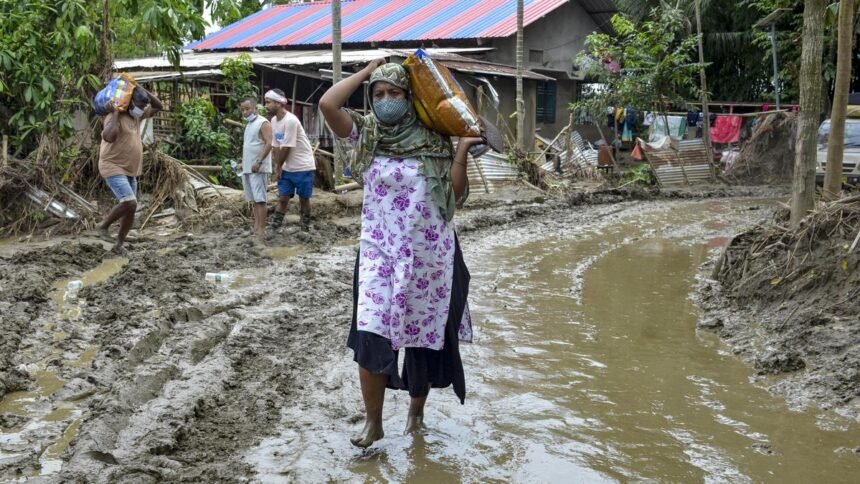
Assam’s state disaster authority has reportedly recorded 1.55 lakh individuals as displaced or affected by property losses across five major districts amid the ongoing flood situation. The figure highlights the scale of the humanitarian impact as communities continue to face disruption from rising water levels and damaged homes.
The reported assessment indicates that flooding has affected both residents who left their homes and families who suffered property damage. Moreover, widespread displacement can place additional pressure on relief camps, food supplies, healthcare services, transportation, and emergency resources.
The scale of the affected population underscores the need for coordinated district-level assistance. However, the available information does not identify the five districts, provide a breakdown between displaced residents and property-loss cases, or specify the latest number of people staying in relief camps.
Assam Reviews Flood Mapping After Worst-Hit Districts
1.55 Lakh People Reportedly Affected
The state disaster authority has reportedly logged 1.55 lakh individuals across five major districts.
The figure includes people who have reportedly faced displacement or property loss during the flood emergency. Furthermore, the number demonstrates that the impact extends beyond communities directly located along major rivers.
Flooding can affect homes, roads, agricultural land, businesses, and essential services across a wider area.
However, the available information does not provide a detailed district-wise breakdown.
Displacement Creates Immediate Challenges
Families forced to leave their homes may require immediate access to safe accommodation and essential supplies.
Relief camps can provide temporary shelter while authorities monitor flood conditions. Additionally, displaced residents may need food, drinking water, medicines, sanitation facilities, and transportation assistance.
The longer displacement continues, the greater the logistical requirements can become.
However, the reported 1.55 lakh figure does not indicate how many people remain displaced at present.
Property Loss Adds Economic Pressure
Flood damage can create significant financial difficulties for affected households.
Residents may lose household goods, agricultural equipment, vehicles, or other property while their homes remain inaccessible. Moreover, repairing damaged structures can create additional expenses after floodwaters recede.
For families with limited resources, recovery can take considerable time.
However, the available information does not provide an estimated monetary value for the reported property losses.
Five Districts Face Major Impact
The disaster authority has reportedly identified five major districts within the affected population assessment.
District-level information can help officials determine where emergency assistance is most urgently required. Furthermore, local administrations can use such assessments to coordinate shelter, food distribution, medical services, and rescue operations.
Accurate district-level data can therefore improve resource allocation.
However, the names of the five districts have not been provided.
Relief Camps Remain Important
The reported displacement adds pressure to Assam’s existing relief infrastructure.
Authorities have already reportedly established designated relief camps for vulnerable residents. Additionally, officials may need to expand shelter capacity if more families leave flood-affected areas.
Camp management must also maintain adequate supplies as the emergency continues.
However, the available information does not confirm how many of the 1.55 lakh affected individuals are currently staying in relief camps.
Healthcare Needs Could Increase
Flood displacement can increase demand for medical and public-health services.
Crowded shelters and prolonged exposure to contaminated water can create additional health challenges. Moreover, residents may need treatment for injuries, infections, and other conditions while normal healthcare access remains disrupted.
Health teams may therefore need to maintain a presence near affected communities.
However, no specific number of flood-related medical cases has been provided.
Agriculture and Livelihoods Also Face Damage
Flood impacts often extend beyond residential property.
Farmers can lose crops, livestock, equipment, and access to agricultural land. Furthermore, traders and small businesses may face interruptions when roads and markets become inaccessible.
These losses can affect household incomes even after floodwaters decline.
However, the reported 1.55 lakh figure does not provide separate statistics for agricultural or livelihood losses.
Transportation Can Complicate Relief
Flooded roads can make it difficult for authorities to reach affected communities.
Emergency teams may need alternative routes, boats, or specialised vehicles to deliver supplies and evacuate residents. Additionally, damaged bridges and waterlogged roads can slow the movement of relief materials.
Efficient transportation therefore remains an important part of the response.
However, the available information does not detail transportation disruptions across the five districts.
Vulnerable Groups Need Priority
Certain groups may require additional assistance during displacement.
Children, elderly residents, people with disabilities, and families with limited resources may face greater difficulties during emergencies. Moreover, authorities can prioritise these groups when distributing shelter, food, medicines, and other essential supplies.
Targeted assistance can help reduce the effects of prolonged displacement.
However, the disaster authority’s reported figure does not provide demographic details.
Damage Assessment Guides Recovery
Authorities need accurate information about damaged homes and property to plan recovery measures.
Officials can conduct field surveys and compare reports with satellite imagery and local administrative records. Furthermore, detailed assessments can help identify communities requiring reconstruction support or other forms of assistance.
Reliable data can therefore support both immediate relief and long-term recovery.
However, no detailed damage-assessment methodology has been provided.
River and Rainfall Conditions Remain Important
The number of affected residents can change as rainfall and river levels fluctuate.
Heavy rainfall in upstream catchments can increase downstream flooding, while prolonged rain can keep low-lying areas submerged. Additionally, falling water levels can allow some families to return home while exposing new damage.
Authorities therefore need continuous monitoring.
However, the available information does not provide a forecast for when the current flood conditions will improve.
Recovery Could Extend Beyond the Emergency
Returning home does not necessarily end the effects of flooding.
Families may need to clean and repair homes, replace damaged possessions, restore livelihoods, and address agricultural losses. Moreover, public infrastructure may require significant repairs before communities can fully resume normal activities.
Recovery planning therefore needs to continue after immediate rescue operations end.
However, no specific recovery timeline has been announced.
Government Coordination Remains Essential
The response involves multiple levels of administration.
State disaster authorities, district administrations, health departments, emergency teams, and local officials may need to coordinate relief and recovery activities. Furthermore, consistent data sharing can help authorities identify emerging needs and avoid gaps in assistance.
Strong coordination can improve the overall response.
However, the specific agencies involved in the reported population assessment have not been detailed.
What Happens Next?
Authorities are expected to continue monitoring the five affected districts as flood conditions evolve.
Officials may update displacement and property-loss figures as field assessments continue. Moreover, additional relief measures may become necessary if water levels remain high or more communities require evacuation.
The final impact will become clearer once floodwaters recede and detailed damage surveys begin.
However, the information currently available does not provide a timeline for completing those assessments.
Conclusion
The reported 1.55 lakh affected people in Assam highlight the significant humanitarian impact of the ongoing flood emergency across five major districts. The figure includes residents who have reportedly faced displacement or property losses, demonstrating that the crisis extends beyond immediate riverbank flooding.
Moreover, affected families may require shelter, food, healthcare, transportation, and financial assistance while damaged homes and livelihoods remain disrupted. Therefore, accurate district-level assessments and coordinated relief operations will remain essential.
Overall, the 1.55 lakh affected population underscores the scale of Assam’s flood challenge and the importance of sustained emergency response and long-term recovery planning.
FAQs
1. How many people have reportedly been affected?
The state disaster authority has reportedly recorded 1.55 lakh individuals as displaced or affected by property losses.
2. How many districts are included?
The reported assessment covers five major districts.
3. Does the figure include only displaced people?
No. The reported figure includes people who have experienced displacement or property loss.
4. What support may affected families need?
They may require temporary shelter, food, drinking water, healthcare, sanitation, transportation, and assistance with recovery.
5. Will the number of affected people change?
It may change as authorities conduct further assessments and as floodwaters rise or recede across affected areas.