





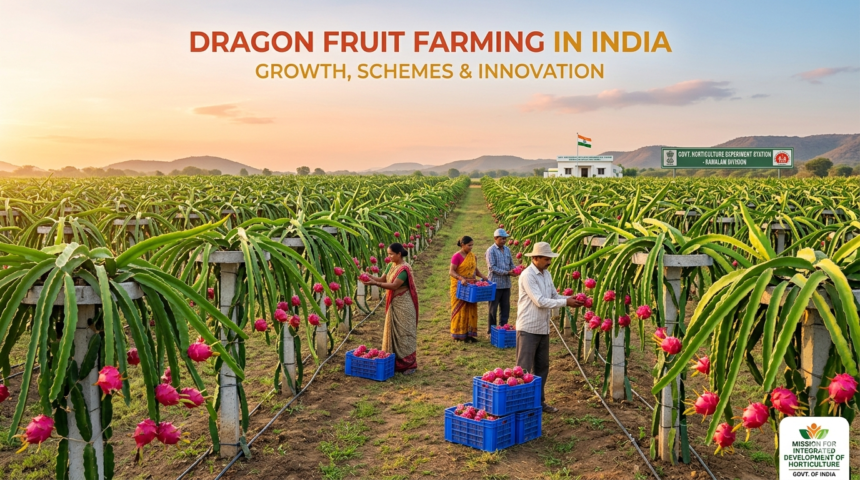
The Mizoram Alternative Farming Scheme has been launched by the state agriculture board with a new subsidy package encouraging farmers to cultivate dragon fruit and high-value spices instead of relying on traditional shifting cultivation practices. Moreover, the initiative aims to promote sustainable agriculture, improve farm incomes, and diversify crop production across the state. Consequently, the scheme is expected to strengthen Mizoram’s agricultural economy while supporting environmentally friendly farming methods.
Agartala Border Security Protocol Strengthened With Joint BSF Coordination Meeting
Mizoram Alternative Farming Scheme Introduces New Subsidy Package
The Mizoram Alternative Farming Scheme offers financial incentives to encourage farmers to adopt dragon fruit and spice cultivation. Furthermore, the subsidy package is designed to support the transition toward commercially viable and sustainable agricultural practices.
Government-backed agricultural subsidy programmes help farmers diversify production while reducing financial risks associated with crop transitions. Consequently, the initiative seeks to improve productivity and long-term income opportunities.
Moreover, officials expect the scheme to encourage wider adoption of high-value horticultural crops. Therefore, the programme supports the state’s broader agricultural development strategy.
Additionally, the agriculture board will oversee the implementation of the subsidy package. Thus, eligible farmers can benefit from institutional support during the transition.
Dragon Fruit and Spice Cultivation to Boost Farm Income
The Mizoram Alternative Farming Scheme places special emphasis on dragon fruit and spice cultivation because of their growing commercial potential. Furthermore, these crops offer opportunities for higher market value and improved returns for farmers.
Crop diversification strengthens agricultural resilience by reducing dependence on a single farming system. Consequently, farmers may benefit from broader income sources and better market opportunities.
Moreover, dragon fruit and spices are increasingly recognized as profitable horticultural crops. Therefore, expanding their cultivation can contribute to rural economic growth.
Similarly, improved access to high-value crops encourages agricultural innovation. Additionally, diversified farming supports sustainable land use practices.
Sustainable Farming Replaces Shifting Cultivation
The Mizoram Alternative Farming Scheme seeks to reduce dependence on traditional shifting cultivation by promoting more sustainable agricultural methods. Furthermore, the programme encourages practices that support soil conservation and long-term productivity.
Sustainable farming techniques help improve environmental protection while maintaining agricultural output. Consequently, the initiative aligns with efforts to promote responsible land management.
Moreover, reducing pressure on shifting cultivation can contribute to better ecosystem conservation. Therefore, the scheme supports both agricultural development and environmental sustainability.
Similarly, long-term farming systems help improve resource efficiency and land productivity. Additionally, sustainable agriculture strengthens climate resilience in rural communities.
Scheme Supports Long-Term Agricultural Development
The Mizoram Alternative Farming Scheme reflects the state’s commitment to modernizing agriculture through innovation, diversification, and farmer support. Furthermore, the programme is expected to strengthen horticulture while creating new economic opportunities for rural households.
Strategic investments in agriculture improve productivity and encourage sustainable rural development. Consequently, farmers can benefit from better cultivation practices and stronger market prospects.
Moreover, continued government support will play an important role in the successful implementation of the initiative. Therefore, collaboration between agricultural agencies and farming communities remains essential.
Similarly, expanding high-value crop cultivation contributes to the long-term growth of the agricultural sector. Additionally, modern farming practices improve the overall resilience of Mizoram’s rural economy.
Conclusion
The Mizoram Alternative Farming Scheme marks an important step toward promoting sustainable agriculture by encouraging dragon fruit and spice cultivation through a new subsidy package. Moreover, the initiative seeks to improve farmer incomes, diversify agricultural production, and reduce dependence on shifting cultivation.
Furthermore, the scheme reflects the state’s broader commitment to environmentally responsible farming and long-term rural development. Consequently, increased adoption of high-value horticultural crops is expected to strengthen Mizoram’s agricultural economy.
Looking ahead, continued investment in sustainable farming, farmer support programmes, and agricultural innovation will remain essential for ensuring the long-term success of the Mizoram Alternative Farming Scheme.
FAQs
1. What is the Mizoram Alternative Farming Scheme?
It is a government initiative offering subsidies to encourage dragon fruit and spice cultivation instead of traditional shifting cultivation.
2. Which crops are being promoted under the scheme?
The programme promotes dragon fruit and a variety of high-value spice crops.
3. Why is the scheme encouraging alternative farming?
The objective is to improve farm incomes, promote sustainable agriculture, and diversify crop production.
4. Who launched the subsidy package?
The subsidy package was rolled out by the Mizoram State Agriculture Board.
5. Why is the Mizoram Alternative Farming Scheme significant?
It supports sustainable farming practices, strengthens rural livelihoods, and encourages the cultivation of commercially valuable horticultural crops.