


Arunachal border highway project officially entered its initial development phase after authorities launched a major strategic road initiative near the Line of Actual Control in Arunachal Pradesh. The ambitious infrastructure project aims to improve military logistics, civilian transportation, and regional connectivity across remote frontier districts bordering China. Meanwhile, government officials stated that the highway could significantly strengthen border preparedness and economic access in isolated mountain regions.
Meghalaya Eco Tourism Investment Drives Infrastructure Expansion
Tripura Akhaura Rail Link Expands Regional Trade
Strategic Highway Construction Begins Near Border Areas
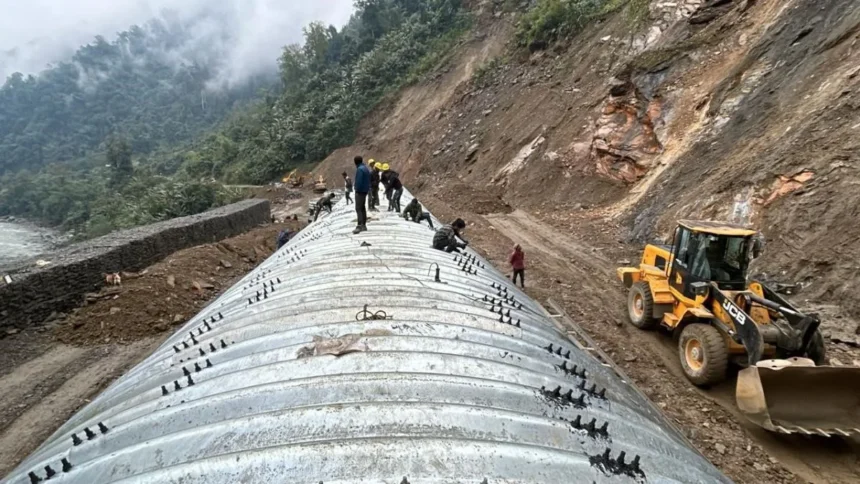
Authorities confirmed that the highway project will pass through several sensitive frontier sectors close to the Line of Actual Control. Additionally, engineers from the Border Roads Organisation have already started preliminary construction and terrain assessment activities in selected districts.
Officials explained that difficult weather conditions and mountainous terrain delayed similar infrastructure efforts in previous years. Consequently, the government accelerated approvals and funding mechanisms to ensure faster execution of the new project. Earlier, residents in remote villages often faced severe transportation difficulties during monsoon seasons and winter months.
The new highway will reportedly include reinforced bridges, protective retaining structures, and upgraded drainage systems. Furthermore, authorities plan to integrate emergency communication facilities along vulnerable stretches to support both civilian and defense operations. According to officials, the project remains part of India’s broader border infrastructure modernization strategy.
Government Emphasizes National Security Importance
Senior representatives from Ministry of Defence and the Ministry of Road Transport and Highways attended the launch ceremony in eastern Arunachal Pradesh. Meanwhile, officials described the project as a critical strategic investment for national security and regional development.
Authorities stated that improved transportation access could enhance troop mobility and logistical coordination near sensitive border zones. Specifically, the highway may reduce travel time between remote military installations and administrative centers across frontier districts. In addition, security analysts believe the project could improve rapid deployment capabilities during emergency situations.
Several local leaders also welcomed the initiative because many remote communities still depend on narrow seasonal roads. However, environmental groups expressed concerns regarding ecological disruption in fragile Himalayan ecosystems. Despite this, officials assured the public that authorities would implement environmental safeguards during all construction phases.
Remote Communities Expected To Benefit
The Arunachal border highway project may improve access to healthcare, education, and emergency services for residents living near isolated border regions. Additionally, authorities stated that improved roads could strengthen agricultural trade and local tourism opportunities across frontier districts.
Officials from district administrations explained that many villages currently remain disconnected during heavy rainfall and landslides. As a result, residents often struggle to access hospitals, schools, and government offices. Furthermore, transportation experts noted that all-weather roads could improve economic stability in remote mountain communities.
Local business groups also expect stronger commercial activity after highway connectivity improves. Meanwhile, small traders and transport operators believe the project may reduce delivery costs for essential goods in remote areas.
Development planners stated that improved road infrastructure often encourages investment in tourism and small industries. Therefore, analysts expect selected districts in Arunachal Pradesh to witness gradual economic growth over the coming years. Notably, the region contains several culturally significant tribal settlements and ecologically important landscapes.
Border Infrastructure Expansion Continues Across Northeast
Authorities indicated that the new highway aligns with broader infrastructure expansion efforts across India’s northeastern frontier. Consequently, the government continues prioritizing strategic road and bridge construction near sensitive border regions.
Earlier, the Border Roads Organisation completed several key connectivity projects in high-altitude sectors across Arunachal Pradesh and neighboring Himalayan states. At the same time, officials increased investment in tunnels, advanced bridges, and military logistics corridors.
Transportation experts stated that northeastern infrastructure development has accelerated due to rising strategic and economic priorities. Moreover, better road networks may strengthen integration between remote frontier districts and larger urban centers such as Itanagar and Guwahati.
Government representatives also highlighted the importance of reliable transportation for disaster management operations. Specifically, authorities may use the highway during floods, landslides, earthquakes, and other emergency situations common in mountainous regions.
Environmental Monitoring Measures Introduced
Officials confirmed that environmental monitoring teams would supervise construction activities throughout the project period. Additionally, authorities reportedly instructed contractors to minimize deforestation and protect water sources near ecologically sensitive zones.
Environmental experts stated that Himalayan construction projects often face challenges involving landslide risks and biodiversity protection. Therefore, planners must balance strategic infrastructure needs with long-term ecological sustainability. Furthermore, local organizations requested transparent monitoring systems during future expansion stages.
Authorities also announced plans to conduct periodic geological safety reviews across vulnerable stretches. Meanwhile, engineers continue evaluating slope stability and drainage management requirements before large-scale excavation begins.
Several academic institutions and regional environmental researchers may participate in impact assessment studies linked to the project. However, officials stressed that national security and regional connectivity remain top priorities for the government.
Economic And Strategic Impact Under Observation
Analysts believe the Arunachal border highway project could influence long-term economic activity and regional logistics patterns across Northeast India. Additionally, improved connectivity may encourage tourism, transportation services, and cross-district commercial movement.
Security observers also noted that border infrastructure projects carry strategic significance due to regional geopolitical developments. Consequently, authorities continue monitoring construction progress closely alongside defense preparedness activities.
The highway initiative may also create employment opportunities for local workers involved in construction, logistics, and transportation support services. In addition, officials expect demand for local suppliers and small contractors to increase during future phases of development.
Meanwhile, transportation planners indicated that future expansion plans could include feeder roads connecting isolated villages to the main highway corridor. Therefore, remote populations may gradually receive better access to markets and administrative centers.
Long-Term Development Plans Remain Active
Government officials stated that additional border infrastructure projects remain under consideration across Arunachal Pradesh and neighboring frontier regions. Specifically, authorities are reviewing proposals involving advanced tunnels, logistics hubs, and alternative transportation corridors.
Experts believe Northeast India’s strategic importance will continue shaping future infrastructure policy decisions. Furthermore, stronger transportation systems may improve both defense coordination and civilian economic opportunities in difficult terrain areas.
The Arunachal border highway project represents a major step in India’s broader frontier development strategy. Ultimately, officials expect the initiative to strengthen border preparedness, improve rural connectivity, and support long-term regional development goals across Arunachal Pradesh.
FAQs
What is the Arunachal border highway project?
The project is a major strategic highway initiative near the Line of Actual Control in Arunachal Pradesh aimed at improving connectivity and defense logistics.
Which organization is building the highway?
The Border Roads Organisation is leading major construction and engineering operations linked to the project.
Why is the project strategically important?
Officials stated that the highway could improve troop mobility, emergency response, and logistical coordination in sensitive frontier areas.
How will local communities benefit from the highway?
Residents may gain improved access to healthcare, markets, schools, and transportation services throughout remote mountain districts.
Are environmental safeguards included in the project?
Authorities confirmed that monitoring teams and geological assessments will oversee construction activities in ecologically sensitive areas.
What does Arunachal border highway project mean for Northeast India?
Arunachal border highway project may strengthen regional infrastructure, improve border preparedness, and support long-term economic development.