




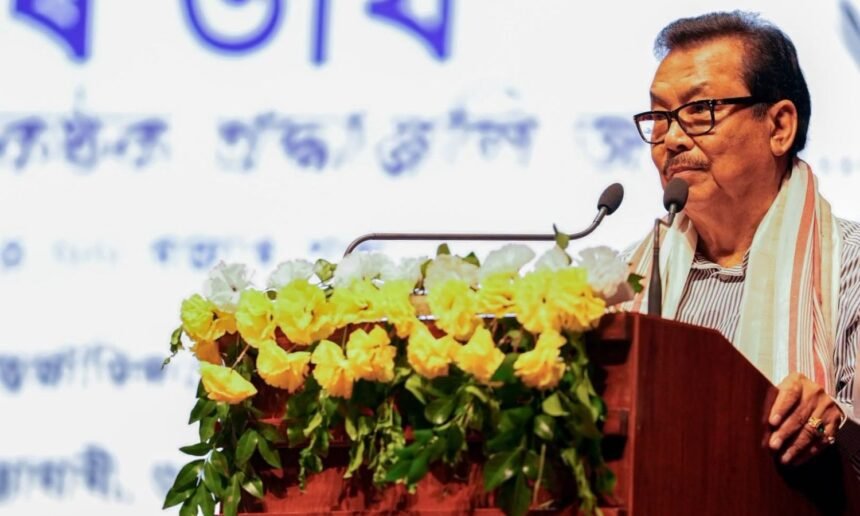
Arunachal Pradesh has received ₹1,476 crore under the Centre’s latest tax devolution transfer to state governments. The Union Finance Ministry released ₹1,09,019 crore to all 28 states on November 5, 2026. The government advanced the regular November instalment by five days from its scheduled release date. Deputy Chief Minister and Finance Minister Chowna Mein welcomed the transfer on November 6. He said the funds would give the state greater flexibility to support development priorities and welfare programmes. The release also provides additional financial resources for infrastructure creation and public expenditure across Arunachal Pradesh.
Gauhati High Court Quashes Pranab Doley’s NSA Detention
Centre Releases ₹1.09 Lakh Crore to States
The Union government transferred ₹1,09,019 crore to state governments on November 5. The payment formed part of the Centre’s tax devolution mechanism.
The Finance Ministry advanced the regular monthly instalment from November 10. It cited the festive season and the need to support state-level expenditure.
The early transfer gives state governments access to their funds ahead of the original schedule. Consequently, administrations can plan expenditure and manage financial commitments more effectively.
The ministry said the release would help states accelerate capital expenditure. It would also support development projects and welfare-related spending.
Arunachal Pradesh received ₹1,476 crore from the total transfer. The amount represents the state’s share under the central tax devolution arrangement.
Importantly, this payment is not a separate project grant. It forms part of the constitutionally established distribution of central tax revenues among states.
Chowna Mein Welcomes Financial Assistance
Deputy Chief Minister Chowna Mein announced the allocation through a social media post on November 6. He also thanked Prime Minister Narendra Modi and Union Finance Minister Nirmala Sitharaman.
Mein, who holds the Finance, Planning and Investment portfolios, described the release as an important financial boost.
He said the ₹1,476 crore transfer would provide the state with greater room to plan and prioritise development commitments.
Furthermore, he highlighted its potential role in sustaining development activities and strengthening welfare delivery.
The state government can use its available resources to meet different expenditure requirements. These include infrastructure development, public services and welfare-related commitments.
However, the transfer does not identify a specific list of projects receiving the money. The state government will determine spending priorities through its budgetary and administrative processes.
Northeast States Receive ₹8,601 Crore
The latest transfer also provides significant financial resources to the other seven Northeastern states.
Together, the eight states received ₹8,601 crore from the November 5 release.
The state-wise distribution was:
- Assam: ₹3,552 crore
- Arunachal Pradesh: ₹1,476 crore
- Tripura: ₹699 crore
- Meghalaya: ₹688 crore
- Manipur: ₹682 crore
- Mizoram: ₹615 crore
- Nagaland: ₹524 crore
- Sikkim: ₹365 crore
Assam received the largest allocation among the Northeastern states. Arunachal Pradesh followed with ₹1,476 crore.
The distribution provides additional financial resources across the region. State governments can use their respective shares to meet expenditure requirements and support development activities.
Moreover, the transfer comes at an important time for regional infrastructure planning. Several Northeastern states continue to invest in roads, public facilities and essential services.
What Is Tax Devolution?
Tax devolution refers to the transfer of a share of the Centre’s tax revenue to state governments.
The Constitution provides for the distribution of central tax proceeds between the Union and states. The Finance Commission recommends how the divisible pool should be shared.
This arrangement gives states resources to meet their expenditure responsibilities. It also supports public services and development activities.
Tax devolution differs from centrally sponsored schemes and special-purpose grants. States receive their share through the established distribution mechanism.
Therefore, the ₹1,476 crore transfer to Arunachal Pradesh should not be treated as a separate allocation for one development project.
Instead, it adds to the financial resources available to the state government. The administration can use these funds according to its budgetary priorities and expenditure requirements.
Sixteenth Finance Commission Retains States’ Share at 41%
The latest transfer also reflects the recommendations of the Sixteenth Finance Commission.
The commission recommended retaining the states’ share at 41% of the divisible pool of central taxes for the 2026–27 to 2030–31 period.
The Union government accepted this recommendation.
The arrangement establishes the overall share available to states. The commission also recommends criteria for distributing that share among individual states.
These criteria consider several factors relating to population, income differences, area and other fiscal indicators.
The distribution formula aims to balance the financial requirements of different states. It also recognises differences in economic capacity and development needs.
For Arunachal Pradesh, central tax devolution remains an important source of government revenue. The state’s mountainous terrain and scattered settlements create additional infrastructure and service-delivery challenges.
Consequently, predictable financial transfers can support long-term planning and public expenditure.
Union Budget Estimates Higher Tax Devolution
The Union Budget for 2026–27 estimates tax devolution to states at ₹15.26 lakh crore.
This compares with ₹13.93 lakh crore in the revised estimates for 2025–26.
The projected increase reflects the larger amount expected to flow to state governments during the financial year.
These transfers support expenditure across multiple sectors. States can use their available resources for infrastructure, education, healthcare and other public services.
However, the budget estimate represents the projected annual devolution. It is different from the individual instalment released on November 5.
The latest ₹1,09,019 crore transfer forms part of the wider annual distribution process.
For Arunachal Pradesh, the ₹1,476 crore payment provides an additional inflow within the state’s overall fiscal planning framework.
Funds Can Support Infrastructure and Welfare Priorities
Arunachal Pradesh faces substantial infrastructure requirements because of its geography. Remote settlements and mountainous terrain can increase the cost of delivering public services.
Road connectivity remains important for linking villages with markets and essential facilities. Reliable transportation also supports access to healthcare and education.
The state also needs investment in electricity, water supply and other public infrastructure. These facilities can improve living conditions and support economic activity.
Additionally, welfare programmes require regular financial support. Government departments need resources to deliver benefits and maintain essential services.
The latest tax devolution transfer can strengthen the state’s available finances. It gives the administration greater flexibility to manage these responsibilities.
Nevertheless, the actual impact will depend on budgetary decisions and implementation. Transparent spending and effective project monitoring will remain important.
Early Transfer Supports State Expenditure Planning
The Centre’s decision to advance the November instalment provides states with earlier access to funds.
The regular payment was originally scheduled for November 10. However, the Finance Ministry released it on November 5.
This five-day advance can help state governments manage expenditure during the festive period.
It may also support the timing of capital payments and welfare-related commitments. Departments can coordinate their spending plans with the available resources.
For Arunachal Pradesh, the ₹1,476 crore transfer adds to the state’s financial capacity. It also supports the government’s broader development priorities.
The release demonstrates the role of regular tax devolution in maintaining financial coordination between the Union and state governments.
Conclusion
Arunachal Pradesh has received ₹1,476 crore under the Centre’s November 2026 tax devolution transfer. The amount forms part of the ₹1,09,019 crore released to all states on November 5. Deputy Chief Minister Chowna Mein welcomed the payment and highlighted its importance for development and welfare priorities. The transfer also reflects the Sixteenth Finance Commission’s recommendation to retain states’ share at 41% of central taxes. Effective budget planning and implementation will determine how the additional resources support Arunachal Pradesh’s development commitments.
FAQs
1. How much has Arunachal Pradesh received under the latest tax devolution?
The Centre released ₹1,476 crore to Arunachal Pradesh on November 5, 2026.
2. How much did the Centre transfer to all states?
The Union government released a total of ₹1,09,019 crore to all 28 states.
3. Who welcomed the transfer in Arunachal Pradesh?
Deputy Chief Minister and Finance Minister Chowna Mein welcomed the release on November 6.
4. Why did the Centre advance the November instalment?
The Finance Ministry advanced the payment from November 10 to November 5 to support expenditure during the festive season.
5. What percentage of central taxes goes to states?
The Sixteenth Finance Commission recommended a 41% share for states during 2026–27 to 2030–31. The Union government accepted the recommendation.
6. How can Arunachal Pradesh use the transferred funds?
The funds add to the state’s available financial resources for infrastructure, development activities and welfare-related expenditure.