




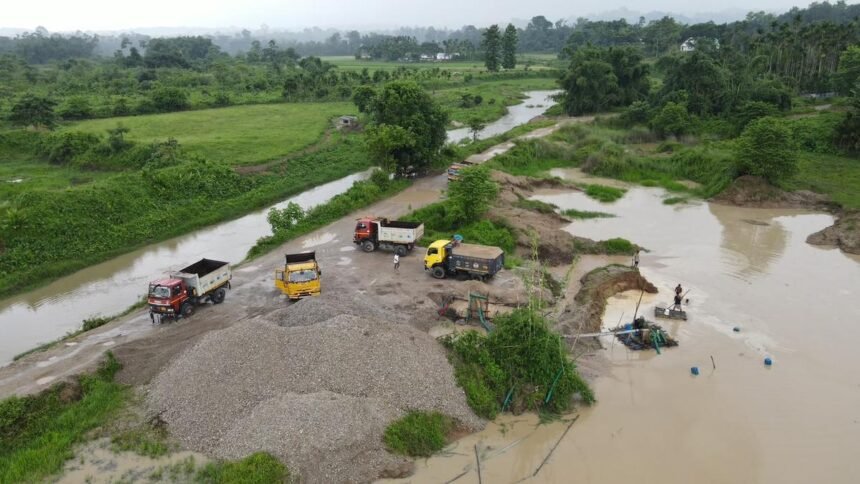
Assam is reportedly escalating its legal objections with the Centre over allegations of illegal mining and deforestation along the Nagaland border. The issue has raised concerns about environmental damage, land management, and the potential impact of unauthorised extraction activities in sensitive border areas.
The reported dispute places environmental protection alongside the broader administrative challenges associated with inter-state boundaries. Moreover, illegal mining can affect forest cover, soil stability, drainage patterns, and nearby communities.
Assam’s reported legal approach could push authorities toward stronger enforcement and closer monitoring of vulnerable areas. However, the available information does not identify the specific mining sites, the parties facing allegations, or the precise legal proceedings involved.
Meghalaya Forms Multi-Departmental Taskforce to Deliver Flags
Assam Raises Border Mining Concerns
Assam has reportedly intensified its objections over alleged illegal mining activities near the Nagaland border.
Mining operations can significantly alter landscapes when authorities do not properly regulate extraction. Furthermore, activities in forested areas can increase environmental pressure by removing vegetation and disturbing soil.
The reported escalation reflects growing concern over activities in sensitive border locations.
However, the exact scale of the alleged mining remains unclear.
Deforestation Adds Environmental Pressure
The reported issue also involves allegations of deforestation.
Forest areas provide important ecological functions, including soil protection, water regulation, and habitat support. Additionally, removing vegetation can increase erosion and alter natural drainage patterns.
The combination of mining and deforestation can therefore create wider environmental concerns.
However, no verified estimate of the forest area allegedly affected has been provided.
Legal Objections Involve the Centre
Assam is reportedly taking its concerns to the Centre through legal and administrative channels.
Inter-state environmental disputes can involve multiple authorities responsible for forests, mining, land administration, and border management. Moreover, central intervention can help coordinate discussions when activities affect more than one state.
The reported escalation could therefore bring greater scrutiny to the allegations.
However, the precise legal route being pursued has not been specified.
Nagaland Border Areas Face Scrutiny
Border areas often present complex administrative challenges.
Authorities must manage land-use activities while also dealing with difficult terrain and inter-state jurisdictional questions. Furthermore, remote forest areas can make regular monitoring more difficult.
These factors can complicate enforcement against unauthorised activities.
However, the available information does not establish how widespread the alleged activities are.
Illegal Mining Can Damage Landscapes
Unregulated extraction can affect land and water systems.
Mining may remove vegetation, disturb soil layers, create pits, and change natural drainage. Additionally, sediment runoff can affect nearby streams and agricultural areas.
Environmental authorities therefore monitor mining activities to ensure compliance with applicable rules.
However, the specific environmental effects associated with the reported border sites have not been detailed.
Forest Protection Becomes Important
Protecting remaining forest areas can help reduce environmental risks.
Forests can stabilise slopes, support biodiversity, and regulate water movement. Moreover, maintaining vegetation along sensitive landscapes can reduce erosion and help protect nearby communities.
The reported deforestation concerns therefore extend beyond tree loss alone.
However, the exact forest classification of the affected areas remains unclear.
Border Enforcement Requires Coordination
Effective enforcement may require cooperation between several agencies.
Forest departments, mining authorities, district administrations, police forces, and environmental agencies can each have different responsibilities. Furthermore, coordination becomes especially important when activities occur near an inter-state boundary.
Joint monitoring could help establish facts and identify violations.
However, no details about a joint enforcement mechanism have been provided.
Environmental Monitoring Could Increase
The reported escalation could lead to closer monitoring of border areas.
Officials may use field inspections, satellite imagery, geographic information systems, and other tools to identify changes in forest cover or mining activity. Additionally, regular monitoring can help authorities detect unauthorised operations more quickly.
Technology can therefore complement ground-level enforcement.
However, the specific monitoring tools currently being used have not been disclosed.
Communities May Face Consequences
Environmental damage can affect communities living near mining and forest areas.
Changes in water flow, soil conditions, and forest resources can influence agriculture and local livelihoods. Moreover, excessive extraction can create long-term environmental costs that extend beyond the immediate mining site.
Community concerns may therefore form part of the broader debate.
However, the available information does not identify specific communities affected by the reported activities.
Need for Clear Accountability
Legal action can help determine whether mining and deforestation activities violate environmental or land-use regulations.
Authorities can investigate permits, land ownership, extraction rights, forest status, and compliance records. Furthermore, establishing clear responsibility can support appropriate enforcement if violations occur.
Such processes can also reduce uncertainty around inter-state allegations.
However, allegations require verification through official investigations and legal proceedings.
Environmental Rules Remain Central
Mining operations generally require compliance with applicable environmental and land-use requirements.
Authorities can assess whether operators possess the necessary approvals and whether they follow prescribed safeguards. Additionally, forest regulations can impose further restrictions on activities within protected or forested areas.
Enforcement therefore depends on establishing the legal status of each site.
However, the specific permits or regulations involved in the reported dispute have not been identified.
Assam Could Seek Stronger Action
The reported escalation suggests Assam wants greater attention to the alleged environmental violations.
Officials may seek investigations, stronger monitoring, or enforcement measures where authorities establish illegal activity. Moreover, coordination with central agencies could help address disputes that cross administrative boundaries.
Such action could also strengthen environmental oversight.
However, the final response will depend on official findings and legal decisions.
What Happens Next?
Authorities are expected to continue examining the reported allegations of illegal mining and deforestation along the Assam-Nagaland border.
Further legal or administrative steps could follow if investigations confirm violations. Furthermore, additional monitoring may help establish the scale of environmental changes in the affected areas.
The issue could therefore remain an important inter-state environmental concern.
However, the timeline for any new enforcement or legal action remains unclear.
Conclusion
The reported Assam border mining crackdown highlights escalating objections over alleged illegal mining and deforestation along the Nagaland border. The issue combines environmental concerns with the complex administrative challenges that can arise in sensitive inter-state areas.
Moreover, unauthorised extraction and forest loss can affect soil stability, water systems, biodiversity, and nearby communities. At the same time, legal investigations and coordinated monitoring can help establish whether violations occurred and determine appropriate action.
Overall, the border mining dispute could lead to stronger scrutiny of land-use activities and environmental protection measures along vulnerable sections of the Assam-Nagaland boundary.
FAQs
1. What is Assam reportedly objecting to?
Assam is reportedly raising legal objections over alleged illegal mining and deforestation along the Nagaland border.
2. Why is illegal mining an environmental concern?
Unregulated mining can disturb soil, remove vegetation, alter drainage, and affect nearby water systems.
3. Why does the Centre have a role?
The issue involves an inter-state boundary and can require coordination among central and state authorities.
4. How can authorities monitor the affected areas?
Officials can combine field inspections with satellite imagery, GIS mapping, and other environmental monitoring tools.
5. Has illegal activity been legally established?
The information provided describes allegations and objections. Official investigations and legal proceedings would need to establish any violations.