



The Central Agricultural University (CAU) in Imphal has developed a new climate-resilient high-yield rice variety aimed at improving productivity under changing weather conditions. The breakthrough focuses on enhancing tolerance to flooding, drought, and erratic rainfall patterns. Moreover, scientists stated that the new variety is designed to support food security in climate-vulnerable regions. The development marks a significant advancement in agricultural research for Northeast India.
Arunachal Pradesh Signs MoU With Global Non-Profit
Khaidem Amarjit Scores Two Goals to Guide Utlou FC Into the Regional CC Football Meet Finals
Scientific Breakthrough in Climate-Resilient Rice Development
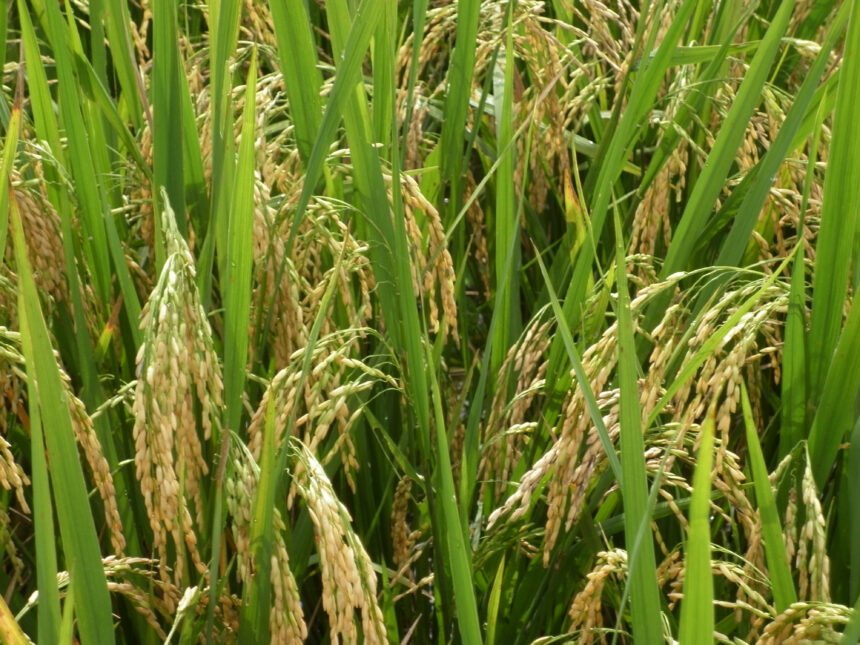
Central agricultural university in Imphal develops new climate-resilient high-yield rice variety as part of its ongoing agricultural innovation research. Consequently, the new strain is engineered to withstand multiple environmental stress factors.
Researchers focused on improving the plant’s ability to survive extreme weather conditions. Moreover, the variety demonstrates stronger resistance to both excess water and short dry spells. Therefore, it is expected to perform well in flood- and drought-prone regions.
Officials stated that field trials were conducted across different agro-climatic zones. Furthermore, early results indicate improved crop stability and consistent growth patterns. As a result, the variety shows strong potential for large-scale adoption.
Meanwhile, agricultural scientists are continuing multi-season testing. Consequently, further refinements may be made before full release.
Enhanced Yield Potential for Farmers
The new rice variety developed by Central agricultural university in Imphal aims to significantly improve yield levels. Moreover, higher productivity can help address food security concerns in the region. Therefore, the innovation is expected to benefit small and marginal farmers.
Improved genetic traits allow the crop to produce more grains per plant. Consequently, farmers may achieve better harvest output from the same land area. Such improvements are crucial for increasing agricultural efficiency.
Furthermore, the variety is designed to reduce crop failure risks during adverse weather. As a result, farmers can experience more stable income cycles.
Meanwhile, extension agencies are preparing awareness programmes. Similarly, seed distribution strategies are being planned for future rollout.
Climate Adaptation for Vulnerable Agricultural Regions
Central agricultural university in Imphal develops new climate-resilient high-yield rice variety to address the challenges of climate change in agriculture. Moreover, unpredictable monsoon patterns have increasingly affected rice cultivation. Therefore, adaptive crop varieties are becoming essential.
The Northeast region frequently experiences flooding and irregular rainfall. Consequently, traditional rice varieties often suffer yield losses. Such conditions highlight the need for resilient alternatives.
Furthermore, the new variety is expected to improve farm sustainability. As a result, agricultural resilience in vulnerable regions can be strengthened.
Meanwhile, researchers are studying long-term environmental performance. Similarly, integration with sustainable farming practices is being explored.
Support for Food Security and Agricultural Sustainability
The development supports broader goals of food security and sustainable agriculture in India. Moreover, rice remains a staple crop for millions of people. Therefore, improving its resilience has national importance.
Stable crop yields help reduce dependency on external food sources. Consequently, regional agricultural stability can improve. Such advancements contribute to rural development and economic security.
Furthermore, government agencies are expected to evaluate large-scale adoption possibilities. As a result, policy-level support may be introduced for distribution.
Meanwhile, collaborations with agricultural extension networks are being strengthened. Similarly, farmer training initiatives are planned.
Conclusion
Central agricultural university in Imphal develops new climate-resilient high-yield rice variety, marking a major step in agricultural innovation for climate-affected regions. Moreover, the new variety offers improved yield, resilience, and stability under extreme weather conditions.
The breakthrough is expected to benefit farmers and strengthen food security in Northeast India. Therefore, it represents a significant advancement in sustainable agriculture research.
As Central agricultural university in Imphal develops new climate-resilient high-yield rice variety, it highlights the growing importance of science-driven solutions in addressing climate challenges in farming.
FAQs
1. Which institution developed the new rice variety?
Central Agricultural University, Imphal.
2. What is special about the new rice variety?
It is climate-resilient and high-yielding.
3. What conditions can it withstand?
Flooding, drought, and erratic rainfall.
4. Who benefits from this development?
Farmers, especially in climate-vulnerable regions.
5. Why is this important?
It supports food security and sustainable agriculture.