





The Chittagong Hill Tracts tensions have renewed security concerns along India’s northeastern border with Bangladesh, particularly around Tripura and Mizoram. Recent developments have included alerts over possible movement by Bangladesh-based armed groups, concerns about cross-border activity and growing humanitarian pressure from the neighbouring hill region.
The situation has also drawn attention to the wider India-Bangladesh security relationship. Moreover, border forces have continued coordination while authorities in northeastern states monitor sensitive stretches more closely.
The Chittagong Hill Tracts, comprising Rangamati, Khagrachari and Bandarban, lie close to India’s northeastern frontier. Consequently, instability in the region can have security and humanitarian implications for border districts in Tripura and Mizoram.
Malem Thongam’s Kashmir-to-Mizoram Peace Ride Gains Local Support
Chittagong Hill Tracts Tensions Raise Border Security Concerns
The Chittagong Hill Tracts tensions became a direct security concern for Tripura in early 2026 after authorities received inputs about possible movement by cadres associated with the Parbatya Chattagram Jana Samhati Samiti and the United People’s Democratic Front. The reports prompted increased vigilance along sensitive sections of the Tripura-Bangladesh border.
Gomati district authorities responded by imposing restrictions along a section of the international boundary. The order cited concerns over possible infiltration, criminal activity, smuggling and attempts to disturb public order. Officials based the measures on inputs received from the Border Security Force.
The affected stretch covered areas near the Labokant Para and Chaplin Chera border outposts. Authorities also restricted certain nighttime movements and gatherings under Section 163 of the Bharatiya Nagarik Suraksha Sanhita. The measures were designed as preventive steps rather than evidence that a major cross-border incident had already occurred.
Tripura’s geography adds to the sensitivity. The state shares an 856-kilometre international border with Bangladesh, while its southern and eastern districts lie close to the Chittagong Hill Tracts. Therefore, developments in the neighbouring hill region can quickly become relevant to local border management.
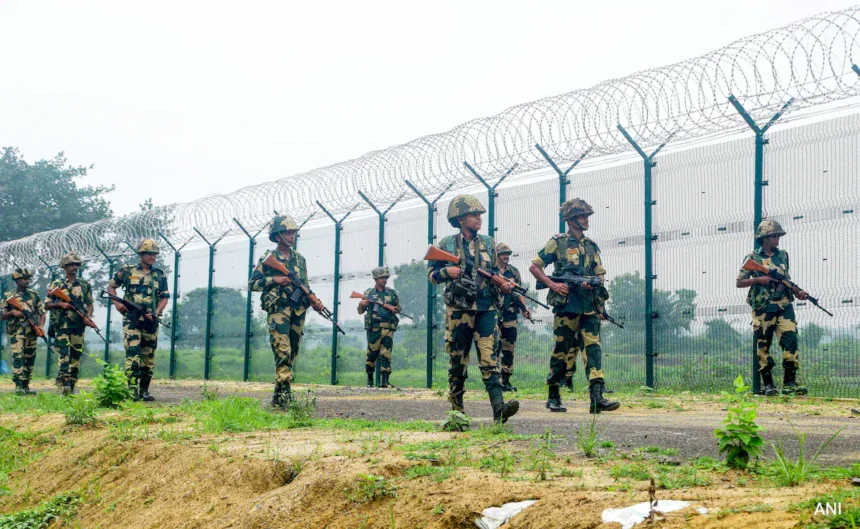
The Ministry of Home Affairs describes the northeastern region as strategically important because several states share international borders. Its Border Management-I Division says India uses fencing, roads, Border Out Posts, floodlighting and technological systems to strengthen border security.
Chittagong Hill Tracts Tensions Put Mizoram on Alert
The Chittagong Hill Tracts tensions also have implications for Mizoram, which shares an international boundary with Bangladesh. The state has recently faced questions about how it should respond to people fleeing insecurity in Bangladesh’s hill areas, adding a humanitarian dimension to the existing security concerns.
Mizoram Home Minister K. Sapdanga said in July that the state needed to carefully consider its response to people arriving from the Chittagong Hill Tracts. He noted that the situation could involve both Zo communities and other groups. His comments reflected the difficulty of balancing humanitarian concerns with border-management requirements.
The issue is particularly sensitive because communities on both sides of the border share ethnic and cultural connections. Consequently, unrest in the hill tracts can generate concern in Mizoram even when incidents occur on Bangladeshi territory.
At the same time, security agencies have continued monitoring cross-border networks. A 2026 report on developments around the Bangladesh-India-Myanmar tri-border area said security officials were concerned about armed-group activity, illegal movement and regional instability. Such assessments underline the complex security environment surrounding the Chittagong Hill Tracts.
However, allegations concerning armed groups and cross-border networks require careful verification. Reports about cooperation between different organisations do not automatically establish that every group operates as part of a single coordinated network. Therefore, authorities must distinguish confirmed incidents from intelligence assessments and allegations.
Mizoram’s location makes the state especially important to regional security planning. It borders both Bangladesh and Myanmar, placing it within a wider corridor where developments in either neighbouring country can affect local security and humanitarian conditions.
Chittagong Hill Tracts Tensions Increase Need for India-Bangladesh Coordination
The Chittagong Hill Tracts tensions have emerged alongside continuing efforts by India and Bangladesh to strengthen border coordination. In June 2026, the BSF and Border Guard Bangladesh held their 57th Director General-level Border Coordination Conference in New Delhi. Both sides reviewed the prevailing border situation and discussed security and management concerns.
The two border forces agreed to strengthen coordinated patrols, improve vigilance and enhance real-time information sharing. They also discussed cooperation against trans-border criminal networks. These mechanisms are important because security challenges along the frontier frequently involve issues that cannot be addressed effectively by either country alone.
Bangladesh has also raised concerns about armed groups allegedly linked to the Chittagong Hill Tracts and their possible presence in Mizoram. During the 2026 border meeting, the BGB sought Indian cooperation regarding such groups. The BSF reiterated India’s stated zero-tolerance approach towards armed insurgent and terrorist organisations.
Both sides nevertheless reaffirmed their commitment to maintaining peace, stability and security along the shared border. The countries also agreed to continue addressing sensitive issues through established bilateral mechanisms. Another DG-level conference was provisionally planned for Dhaka in November 2026.
Such dialogue becomes particularly important when local tensions rise. Regular communication can help border forces respond to incidents without allowing isolated developments to create wider misunderstandings. Furthermore, information sharing can help authorities identify cross-border crime while protecting legitimate movement and trade.
India has already developed several institutional mechanisms for managing its 4,096.70-kilometre border with Bangladesh. The frontier runs through West Bengal, Assam, Meghalaya, Tripura and Mizoram. The government also uses integrated border-management measures to improve surveillance and response capabilities.
Chittagong Hill Tracts Tensions Carry Wider Regional Implications
The Chittagong Hill Tracts tensions extend beyond conventional border security because the region also has a long history of ethnic, political and land-related disputes. The 1997 Chittagong Hill Tracts Peace Accord sought to address major grievances and establish a framework for greater regional autonomy. However, questions about its implementation have continued to generate debate.
The security environment has also been influenced by developments along the Bangladesh-Myanmar frontier. Violence and instability in Myanmar’s Rakhine and Chin regions have created additional pressure across southeastern Bangladesh. As a result, the Chittagong Hill Tracts sit within a wider area affected by political instability, displacement and cross-border security concerns.
International travel advisories have reflected these concerns. The United States currently advises against travel to the Chittagong Hill Tracts because of unrest, crime, terrorism and kidnapping risks. The United Kingdom also advises against all but essential travel to the region because of reported violence and criminal activity.
For India, the immediate concern remains the potential spillover of instability into northeastern border areas. Tripura’s earlier security alert demonstrated how intelligence inputs can lead to preventive administrative measures even without a confirmed major attack. Such action allows authorities to increase surveillance and reduce opportunities for unauthorised movement.
Meanwhile, humanitarian developments require a separate policy response. Mizoram’s discussion about people arriving from the Chittagong Hill Tracts shows that border security and humanitarian considerations can overlap. Authorities must therefore coordinate across security, civil administration and relief agencies when dealing with cross-border movement.
The broader objective remains stability along the frontier. India and Bangladesh have continued using bilateral security mechanisms despite disagreements over several border issues. Consequently, sustained communication remains important for preventing local tensions from developing into wider diplomatic or security problems.
Conclusion
The Chittagong Hill Tracts tensions have renewed attention on the security and humanitarian challenges facing India’s northeastern border with Bangladesh. Recent alerts in Tripura, concerns in Mizoram and continuing border-force coordination show the region’s strategic sensitivity.
For India, the priority remains protecting border communities while preventing illegal cross-border activity and maintaining communication with Bangladesh. At the same time, humanitarian concerns linked to displacement require careful handling. Therefore, continued BSF-BGB coordination and timely information sharing will remain important as authorities monitor developments in the Chittagong Hill Tracts.
FAQs
What are the Chittagong Hill Tracts tensions?
The Chittagong Hill Tracts tensions refer to continuing security, political and ethnic concerns in Bangladesh’s southeastern hill region, including unrest, armed-group activity and disputes involving indigenous communities.
Why do the tensions concern India?
The region lies close to India’s northeastern states, particularly Tripura and Mizoram. Consequently, instability can create concerns about infiltration, cross-border crime, movement of armed groups and displacement.
Which Indian states are closest to the Chittagong Hill Tracts?
Tripura and Mizoram share international borders with Bangladesh near the Chittagong Hill Tracts. Their geography makes developments in the region particularly relevant to border security.
Have India and Bangladesh discussed the security situation?
Yes. The BSF and BGB held their 57th Director General-level Border Coordination Conference in June 2026. Both sides discussed border security, coordinated patrols, information sharing and trans-border criminal networks.
Why is Mizoram concerned about developments in the hill tracts?
Mizoram shares a border with Bangladesh and has cultural links with several communities in the hill region. State authorities have also discussed how to respond to people arriving from Bangladesh because of insecurity, making the issue both humanitarian and security-related.