




The Congress issues three-line whip directive has put all party MPs on high alert ahead of crucial parliamentary business scheduled for August 10–12, 2026. The party has instructed its Lok Sabha and Rajya Sabha MPs to remain present in Parliament during the three-day period as the government prepares to take up important legislation and contentious political issues.
Shillong Parliamentary Vacancy: Electoral Bodies Advance Revision Tracking
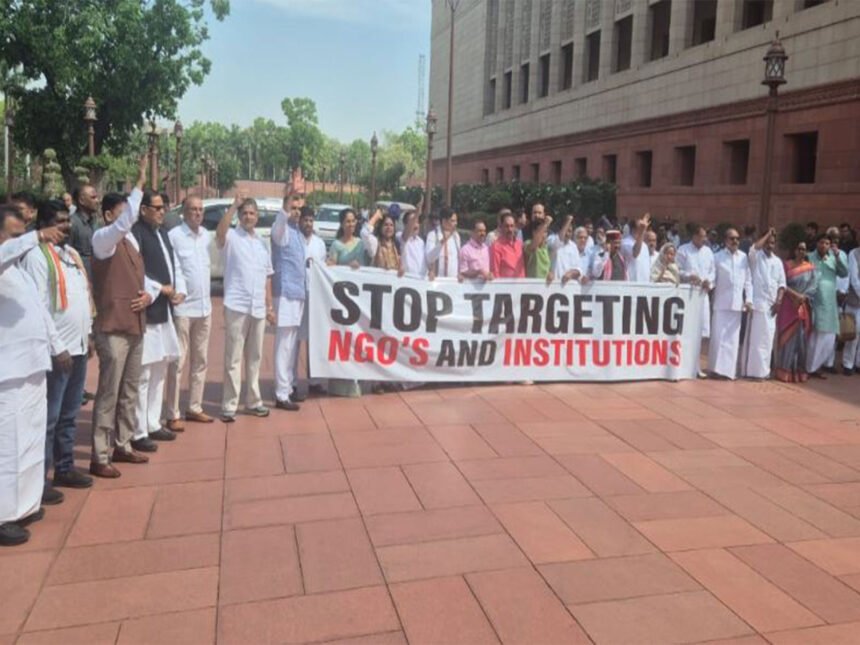
The directive comes amid expectations of a heated debate over the proposed Foreign Contribution (Regulation) Amendment Bill. Moreover, the FCRA legislation has already generated strong political opposition and concern among several civil-society and religious groups.
Congress wants its MPs to maintain a strong presence as Parliament enters a potentially contentious phase. However, the party’s formal directive focuses on attendance and participation, while the exact parliamentary strategy could depend on the business taken up by both Houses.
Congress Issues Three-Line Whip for August 10–12
The Congress has issued a three-line whip directing its MPs in both the Lok Sabha and Rajya Sabha to remain present in Parliament on August 10, 11, and 12. Reports said the party described the scheduled parliamentary business as important and instructed members to ensure their attendance.
A three-line whip represents a stringent party directive. It generally requires lawmakers to remain present and follow the party position during important parliamentary proceedings.
Therefore, the latest instruction signals that Congress considers the upcoming three days politically significant.
The directive also allows the party leadership to coordinate its parliamentary response more closely. Additionally, a full attendance can strengthen the opposition’s ability to participate in debates, raise objections, and vote on legislation.
Congress has not limited the instruction to one House. Instead, the directive covers MPs in both chambers, underlining the importance the party attaches to the upcoming proceedings.
Congress Issues Three-Line Whip as FCRA Debate Nears
The FCRA Amendment Bill has emerged as a major issue ahead of the scheduled parliamentary business.
Reports indicate that the government is expected to take up the proposed legislation, while Congress and other opposition parties are preparing to challenge provisions they consider contentious.
The Foreign Contribution (Regulation) Act governs the receipt and use of foreign contributions by individuals, associations, and organisations in India. Consequently, proposed changes to the framework can generate significant debate over regulation, transparency, organisational autonomy, and government oversight.
Congress has opposed the proposed amendments and is preparing to mobilise its MPs around the issue. Furthermore, the party has reportedly sought support from opposition allies as Parliament approaches the expected discussion.
The government’s handling of the legislation will therefore remain closely watched.
Meanwhile, the Congress directive ensures that its parliamentary strength remains available when discussions and voting take place.
Congress Issues Three-Line Whip Amid Opposition Strategy
The whip also reflects the wider opposition strategy for the upcoming parliamentary proceedings.
Opposition parties frequently coordinate before major legislation reaches the floor. Moreover, maintaining attendance becomes particularly important when parties expect close or politically significant votes.
Congress’s decision to require MPs to remain present from August 10 to 12 indicates that the party does not want gaps in its parliamentary strength during this period. Additionally, the directive can help party leadership coordinate speeches, amendments, procedural objections, and voting decisions.
The move comes against the backdrop of repeated disagreements between the government and opposition during the current parliamentary session.
The FCRA debate could consequently become another flashpoint between the two sides.
However, attendance alone cannot determine the outcome of parliamentary proceedings. The government’s numerical strength, support from allies, opposition coordination, and the final legislative agenda will all influence developments.
The opposition may also use the debate to raise broader questions about the proposed changes. At the same time, the government can present its arguments in favour of the legislation and respond to concerns raised by opposition parties.
The coming parliamentary proceedings could therefore provide an important test of how effectively the opposition coordinates around contentious legislation.
Congress Issues Three-Line Whip and Parliament’s Next Phase
The August 10–12 period could become an important phase of the monsoon parliamentary session.
Congress’s directive has already signalled that the party expects significant business during these dates. Furthermore, reports indicate that several important government measures could come before Parliament, making attendance particularly important for opposition MPs.
The FCRA Bill is likely to remain one of the central points of discussion. If the legislation reaches the floor as expected, Congress and its allies could seek detailed debate on its provisions.
Such discussions can also provide MPs with an opportunity to raise concerns from affected sectors and communities.
At the same time, the government may seek to demonstrate that its proposed changes serve legitimate regulatory or administrative objectives.
The parliamentary contest will therefore involve both legislative arguments and political strategy.
Congress’s three-line whip also shows that the party leadership wants to avoid absenteeism during a potentially decisive period. Moreover, a strong presence can allow MPs to participate more actively in discussions rather than relying only on senior leaders.
The coming days could consequently determine whether the government and opposition find room for discussion or move toward another period of parliamentary confrontation.
The final outcome will depend on the bills placed before Parliament, the positions adopted by political parties, and the proceedings in both Houses.
Conclusion
The Congress issues three-line whip directive for August 10–12, 2026, marks an important escalation in the party’s parliamentary preparations. Congress has instructed its Lok Sabha and Rajya Sabha MPs to remain present during the three-day period as Parliament prepares to consider important business, including the expected debate over the FCRA Amendment Bill.
Moreover, the directive highlights the importance Congress attaches to maintaining full parliamentary attendance during contentious proceedings. At the same time, the upcoming debate could become a major test of opposition coordination and the government’s ability to advance its legislative agenda.
Overall, the August 10–12 proceedings could prove politically significant. The FCRA Bill, opposition resistance, government strategy, and voting dynamics will determine how the parliamentary confrontation develops.
FAQs
1. Why did Congress issue a three-line whip?
Congress issued the directive to ensure that its MPs remain present in Parliament from August 10 to 12 during important scheduled proceedings.
2. Which MPs must follow the Congress directive?
The reported whip applies to Congress MPs in both the Lok Sabha and Rajya Sabha.
3. Why is the FCRA Amendment Bill important?
The proposed legislation could change aspects of India’s regulatory framework governing foreign contributions, making its provisions a significant subject of parliamentary debate.
4. What does a three-line whip mean?
A three-line whip is a strict party directive requiring lawmakers to maintain attendance and follow the party’s position during important parliamentary proceedings.
5. What could happen during August 10–12?
Parliament could see detailed debate over important government legislation, including the proposed FCRA Amendment Bill, with Congress and other opposition parties expected to scrutinise the government’s proposals.