




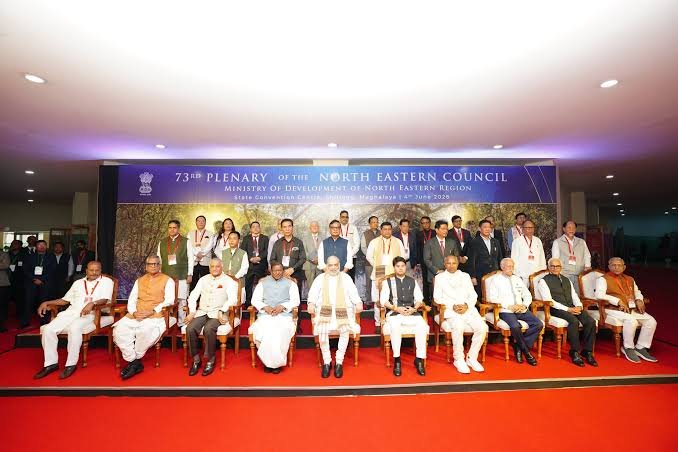
The 73rd NEC Plenary Session brought together central and state leadership to discuss development priorities across Northeast India. The Ministry of Development of North Eastern Region (DoNER) coordinated preparations for the meeting, which took place in Shillong, Meghalaya, on June 4, 2026. A pre-plenary meeting on June 3 brought together senior officials to discuss regional initiatives and prepare key issues for consideration. The main session, chaired by Union Home Minister Amit Shah, addressed infrastructure, investment, agriculture, tourism and long-term development planning. The discussions aimed to strengthen coordination among the Centre and the eight northeastern states.
Tripura BJP Candidate List Finalised Ahead of ULB Polls
DoNER Ministry Coordinates Preparations for the NEC Meeting
The Ministry of Development of North Eastern Region played a central role in coordinating preparations for the 73rd Plenary Session of the North Eastern Council. The meeting provided a platform for central and state representatives to discuss shared development priorities and review ongoing initiatives across the region.
The NEC scheduled its pre-plenary meeting for June 3, followed by the main session on June 4 in Shillong. The preparatory meeting involved the DoNER Secretary, chief secretaries of the eight northeastern states, the NEC Secretary and senior officials from central and state departments.
These discussions covered initiatives such as bamboo development, agarwood promotion and Ashtalakshmi Darshan. Officials also considered other regional development matters before the main plenary.
The preparatory process allowed state administrations to bring forward their priorities and coordinate their positions on issues affecting the region. Furthermore, discussions between central and state officials helped establish a common basis for reviewing projects and development programmes.
The main plenary was chaired by Union Home Minister Amit Shah, who also serves as the NEC Chairman. Union DoNER Minister Jyotiraditya M. Scindia and Minister of State for DoNER Sukanta Majumdar attended alongside governors, chief ministers and senior officials from the eight northeastern states.
This broad participation reflected the NEC’s role in bringing together different levels of government to discuss regional planning and development.
Eight Northeastern States Discuss Regional Development Priorities
The North Eastern Council serves as an important platform for cooperation among Arunachal Pradesh, Assam, Manipur, Meghalaya, Mizoram, Nagaland, Sikkim and Tripura. Established under the North Eastern Council Act, 1971, it supports coordinated planning and development across the region.
The 73rd plenary focused on recommendations from eight High-Level Task Forces formed after the previous plenary session. These task forces prepared action plans covering several sectors considered important for the region’s future growth.
Their areas of work included investment promotion, agriculture and horticulture, infrastructure and connectivity, economic corridors, tourism, sports, handicrafts and greater self-reliance in livestock and fisheries.
The task forces brought together state leadership and representatives from central and state institutions. Their recommendations sought to provide a coordinated approach to regional development rather than treating each state’s priorities in isolation.
During the meeting, DoNER Minister Jyotiraditya M. Scindia highlighted the ministry’s role as a facilitator and coordinator. He described its approach through the framework of “Connect, Converge and Catalyse,” which emphasises stronger links, coordinated efforts and support for development.
The discussions also addressed the need to translate recommendations into implementation. Effective follow-up will require state departments to identify responsibilities, coordinate with central agencies and monitor progress on agreed initiatives.
However, the presentation of recommendations does not itself guarantee that every proposal will receive funding or immediate approval. Individual projects still depend on relevant procedures, available resources and implementation decisions.
Infrastructure, Investment and Agriculture Feature in Discussions
Infrastructure and connectivity formed an important part of the plenary agenda. Better transport links can help communities reach essential services, support trade and improve access to markets across the Northeast.
Economic corridor development also featured among the areas examined by the High-Level Task Forces. Improved corridors can help connect production centres with markets, although their benefits depend on supporting infrastructure, logistics and effective implementation.
Investment promotion was another priority. The plenary reviewed initiatives connected with the North East Investment Summit and Bankers’ Conclave, alongside wider efforts to encourage economic activity in the region.
Agriculture and horticulture received attention because they support livelihoods across many northeastern communities. Better market access, processing facilities and investment can help producers reach customers beyond their immediate areas.
The meeting also discussed greater self-reliance in milk, eggs, fish and meat. The wider objective is to strengthen local production and reduce dependence on supplies brought from outside the region.
Bamboo and agarwood featured in the preparatory discussions as well. Both offer opportunities for value-added products, but sustainable growth depends on responsible resource management, processing capacity and access to domestic and international markets.
Tourism, sports and handloom and handicrafts were also included in the task forces’ work. These sectors can create economic opportunities while supporting the region’s cultural identity.
The discussions brought several interconnected priorities into a common planning framework. Nevertheless, the impact of these initiatives will depend on the detailed actions that follow, including project execution, coordination between departments and measurable progress.
North East Vision Plan 2047 Sets a Long-Term Direction
The 73rd NEC Plenary also considered the North East Vision Plan 2047. The plan seeks to establish a long-term development direction for the region leading up to the centenary of India’s independence.
Its broad objectives include economic growth, improved connectivity, innovation, sustainability and cultural prosperity. The vision also places regional development within the wider national objective of Viksit Bharat 2047.
Long-term planning is important because major infrastructure and economic changes often require sustained investment and coordination across several years. Transport networks, industrial development, agricultural modernisation and tourism infrastructure cannot always be delivered through isolated projects.
The NEC can help states identify shared priorities and coordinate their approaches. At the same time, each state has different geographic conditions, economic strengths and development needs. Regional planning therefore needs to accommodate local requirements while identifying opportunities for cooperation.
The plenary also reviewed youth-focused initiatives, logistics, tourism programmes and projects intended to highlight the region’s distinctive strengths. These areas can contribute to employment opportunities and help businesses reach wider markets.
However, a vision document needs clear implementation plans to produce measurable results. Funding decisions, project timelines, monitoring and coordination between government departments will remain important.
The plenary created an opportunity for state leaders to share perspectives and discuss common goals. Its long-term significance will depend on how the recommendations translate into policies, funded projects and practical outcomes for communities across Northeast India.
Conclusion
The Ministry of Development of North Eastern Region coordinated preparations for the 73rd NEC Plenary Session, held in Shillong on June 4, 2026. The pre-plenary meeting on June 3 brought together senior officials from the Centre and all eight northeastern states to discuss regional initiatives and prepare for the main discussions. Union Home Minister Amit Shah chaired the plenary, with DoNER Minister Jyotiraditya M. Scindia and other senior representatives in attendance.
The meeting reviewed recommendations from eight High-Level Task Forces covering infrastructure, connectivity, investment, agriculture, tourism, sports, handicrafts and livestock and fisheries. It also considered initiatives linked to regional economic development and the North East Vision Plan 2047. These discussions sought to improve coordination and establish shared priorities across the region.
Ultimately, the NEC’s role extends beyond holding meetings. The practical value of its decisions depends on implementation, funding, cooperation between governments and regular progress reviews. Sustained action on the priorities discussed at the plenary could help strengthen regional connectivity, support livelihoods and create new opportunities across Northeast India.
FAQs
1. What is the North Eastern Council Plenary Session?
The NEC Plenary is a meeting where representatives of the central government and the eight northeastern states discuss regional development priorities and coordination.
2. When was the 73rd NEC Plenary Session held?
The 73rd Plenary Session took place on June 4, 2026, in Shillong, Meghalaya. A preparatory meeting took place the previous day.
3. What role did the DoNER Ministry play?
The ministry coordinated preparations and participated in discussions on regional development initiatives, including infrastructure, investment, tourism and economic planning.
4. Which major sectors featured in the plenary discussions?
The discussions covered investment, agriculture and horticulture, infrastructure, economic corridors, tourism, sports, handicrafts and self-reliance in livestock and fisheries.
5. What is the North East Vision Plan 2047?
It is a long-term development roadmap intended to support economic growth, connectivity, innovation, sustainability and cultural prosperity across Northeast India by 2047.