




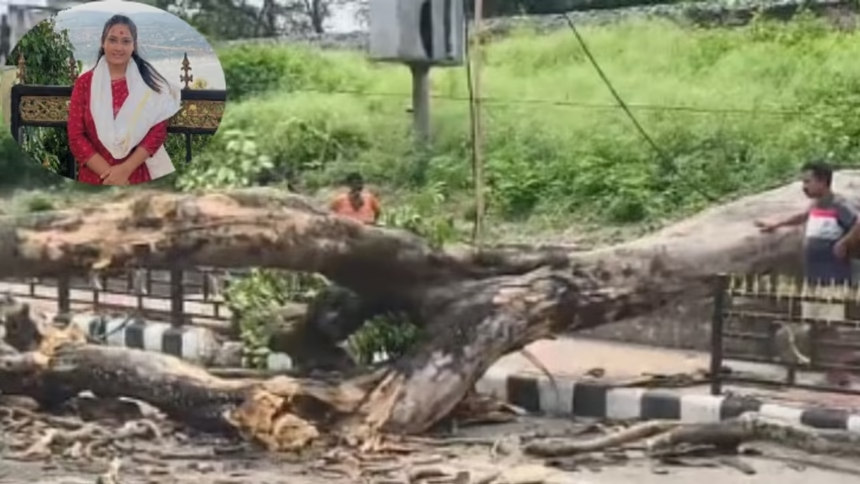
The Guwahati Student Fatality Prompts Civic Safety Review following a tragic road accident has drawn attention to urban safety and infrastructure maintenance in Assam’s largest city. A student lost their life, while another sustained injuries after a falling tree struck their two-wheeler in Guwahati. Moreover, authorities have ordered a comprehensive civic safety review to assess potential hazards and strengthen preventive measures across the city. Consequently, the incident has intensified discussions on public safety and urban risk management.
Assam Japan Semiconductor Investment Talks Focus on Clean Energy and Technology
Union Home Minister Amit Shah Reviews Northeast Flood Crisis
Guwahati Student Fatality Prompts Civic Safety Review Following Tree Collapse
The incident under Guwahati Student Fatality Prompts Civic Safety Review occurred when a tree suddenly fell onto a moving two-wheeler in Guwahati, resulting in the death of one student and injuries to another. Furthermore, the accident prompted authorities to initiate an immediate review of civic safety measures.
Urban areas with large roadside trees require regular inspections to identify weakened branches, diseased trunks, and structural instability. Consequently, the state government and civic authorities have begun evaluating existing maintenance practices following the tragedy.
Moreover, officials are expected to examine vulnerable locations where aging trees or poor maintenance could pose risks to commuters. Therefore, the review aims to improve public safety and reduce the likelihood of similar incidents.
Additionally, emergency response teams acted promptly after the accident, highlighting the importance of coordinated rescue operations during civic emergencies. Thus, the incident has underscored the need for both preventive maintenance and efficient emergency response.
Civic Safety Review to Assess Urban Infrastructure Risks
The Guwahati Student Fatality Prompts Civic Safety Review has led authorities to focus on identifying potential safety hazards across public roads and urban spaces. Furthermore, civic safety assessments are essential for ensuring that infrastructure remains safe for residents and commuters.
Regular inspections of roadside trees, public utilities, and civic infrastructure can help authorities identify potential dangers before accidents occur. Consequently, preventive maintenance has become a central aspect of the ongoing review.
Moreover, coordinated efforts among municipal agencies, disaster management authorities, and engineering departments can improve the effectiveness of safety measures. Therefore, the review is expected to examine existing protocols and recommend necessary improvements.
Similarly, urban planning increasingly incorporates risk assessments to enhance public safety. Additionally, routine maintenance contributes to the long-term sustainability of civic infrastructure.
Public Safety and Preventive Maintenance Gain Renewed Focus
The Guwahati Student Fatality Prompts Civic Safety Review has renewed attention on the importance of preventive maintenance in densely populated urban areas. Furthermore, maintaining trees and public infrastructure is a critical responsibility of civic authorities.
Natural factors such as heavy rainfall, strong winds, and aging vegetation can increase the risk of tree-related accidents. Consequently, periodic inspections and timely pruning play an important role in reducing hazards.
Moreover, effective maintenance programs help protect pedestrians, motorists, and cyclists using public roads. Therefore, strengthening inspection systems remains an important objective for civic administration.
Similarly, public awareness regarding hazardous conditions can support authorities in identifying risks more quickly. Additionally, coordinated reporting mechanisms contribute to faster corrective action and improved community safety.
Authorities Aim to Strengthen Urban Safety Measures
The decision that followed the Guwahati Student Fatality Prompts Civic Safety Review reflects the government’s commitment to improving civic infrastructure and public safety standards. Furthermore, comprehensive safety reviews often lead to policy improvements and stronger maintenance practices.
Urban governance depends on continuous monitoring of infrastructure and timely intervention wherever risks emerge. Consequently, the current review may help identify areas requiring immediate attention.
Moreover, collaboration among civic bodies, engineers, environmental experts, and disaster management officials can strengthen future safety initiatives. Therefore, integrated planning remains essential for minimizing avoidable accidents.
Similarly, regular audits of public infrastructure support better decision-making and long-term urban resilience. Additionally, proactive governance can significantly improve the safety of residents and daily commuters.
Conclusion
The Guwahati Student Fatality Prompts Civic Safety Review serves as a reminder of the importance of maintaining safe public infrastructure in rapidly growing urban centers. Moreover, the tragic loss of a student’s life has prompted authorities to reassess existing safety measures and strengthen preventive maintenance practices.
Furthermore, the comprehensive review ordered by the government demonstrates a commitment to identifying potential hazards and improving civic management. Consequently, coordinated efforts among municipal agencies will be essential in reducing future risks.
Looking ahead, regular inspections, preventive maintenance, and effective emergency preparedness can contribute to safer urban environments. Therefore, the Guwahati Student Fatality Prompts Civic Safety Review represents an important step toward strengthening public safety and improving infrastructure management in Guwahati.
FAQs
1. What happened in the Guwahati student accident?
A falling tree struck a moving two-wheeler in Guwahati, resulting in the death of one student and injuries to another.
2. Why was a civic safety review ordered?
Authorities ordered the review to assess public infrastructure, identify safety hazards, and strengthen preventive maintenance measures.
3. What areas will the civic safety review likely examine?
The review is expected to assess roadside trees, public infrastructure, maintenance practices, and other potential urban safety risks.
4. How can preventive maintenance improve public safety?
Regular inspections, timely pruning, and infrastructure maintenance can reduce the risk of accidents caused by weakened trees or deteriorating public assets.
5. Why is the Guwahati Student Fatality Prompts Civic Safety Review significant?
The incident has highlighted the need for stronger urban safety measures and prompted authorities to review maintenance systems aimed at protecting commuters and residents.