





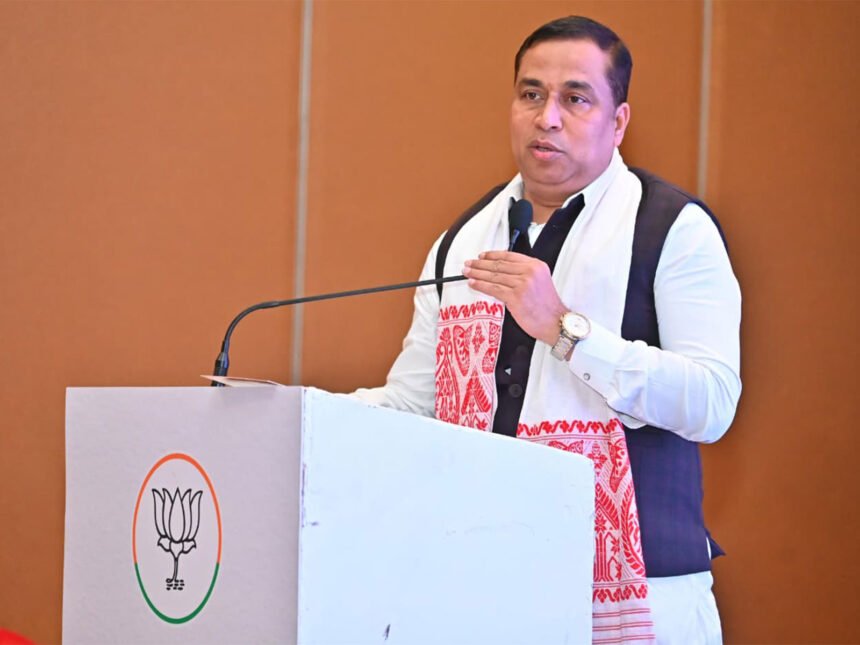
The Assam Forest Encroachment Audit has brought renewed attention to the protection and management of the state’s forest resources. Forest Minister Jayanta Mallabaruah informed the Assam Legislative Assembly that more than 3.14 lakh hectares of state forest land remain under illegal encroachment. Moreover, the disclosure highlights the scale of the challenge facing forest authorities and underscores the need for stronger conservation, monitoring, and land management efforts. Consequently, the issue has become a significant topic of discussion during the Assembly session.
Guwahati Student Fatality Prompts Civic Safety
Himanta Biswa Sarma Chairs 14th AUIDFCL Board Meeting on Urban Infrastructure
Assam Forest Encroachment Audit Highlights Scale of Illegal Occupation
The latest Assam Forest Encroachment Audit was presented by Forest Minister Jayanta Mallabaruah during the Assembly proceedings. Furthermore, the minister stated that over 3.14 lakh hectares of state forest land continue to remain under illegal encroachment.
Forest land plays a vital role in maintaining ecological balance, conserving biodiversity, and supporting environmental sustainability. Consequently, illegal occupation of these areas poses long-term challenges for conservation and land administration.
Moreover, the official figures provide lawmakers and policymakers with an updated assessment of the extent of encroachment across the state. Therefore, the audit serves as an important reference for future policy decisions related to forest management.
Additionally, regular assessments help authorities understand changing land-use patterns and identify areas requiring administrative attention. Thus, the audit strengthens the state’s environmental governance framework.
Illegal Encroachment Continues to Challenge Forest Management
The Assam Forest Encroachment Audit demonstrates that illegal occupation of forest land remains a significant administrative and environmental concern. Furthermore, effective forest management requires continuous monitoring, legal enforcement, and coordinated action among multiple government departments.
Encroachment can affect forest conservation, wildlife habitats, and the long-term sustainability of natural resources. Consequently, forest authorities continue implementing measures to monitor and protect government-owned forest areas.
Moreover, accurate land records and periodic surveys improve the ability of officials to identify encroached land. Therefore, regular audits remain essential for planning conservation and restoration efforts.
Similarly, coordination between forest officials, district administrations, and law enforcement agencies strengthens the implementation of land protection measures. Additionally, technological tools such as satellite mapping and digital records can support effective monitoring.
Forest Conservation Remains a Key Governance Priority
The Assam Forest Encroachment Audit also highlights the broader importance of forest conservation in the state’s environmental policy. Furthermore, Assam is home to extensive forests that support biodiversity, ecological stability, and the livelihoods of many communities.
Protecting forest land contributes to climate resilience, water conservation, and sustainable development. Consequently, government initiatives often focus on balancing conservation objectives with responsible land management.
Moreover, preserving forest ecosystems supports wildlife protection and environmental sustainability. Therefore, addressing illegal encroachment remains an important aspect of long-term conservation planning.
Similarly, awareness programs and community participation can complement government initiatives aimed at protecting forest resources. Additionally, continued environmental monitoring helps improve policy implementation and conservation outcomes.
Audit Data May Guide Future Policy and Enforcement Measures
The Assam Forest Encroachment Audit provides valuable information that can assist policymakers in strengthening forest governance. Furthermore, reliable data enables authorities to prioritize areas requiring immediate administrative intervention.
Government agencies often use audit findings to review enforcement strategies, improve land management practices, and strengthen conservation policies. Consequently, the latest figures are expected to contribute to future planning and administrative decision-making.
Moreover, transparent reporting promotes accountability and informed public discussion on environmental issues. Therefore, periodic audits remain an important component of effective governance.
Similarly, stronger coordination between environmental agencies and district administrations can improve enforcement efforts. Additionally, long-term planning supported by accurate data enhances the protection of forest resources across Assam.
Conclusion
The Assam Forest Encroachment Audit has highlighted the continued challenge of protecting state-owned forest land, with more than 3.14 lakh hectares reported to be under illegal encroachment. Moreover, the data presented by Forest Minister Jayanta Mallabaruah provides an important overview of the current situation and reinforces the need for sustained conservation efforts.
Furthermore, effective forest governance will depend on continuous monitoring, legal enforcement, and coordinated administrative action. Consequently, the audit serves as a valuable tool for strengthening environmental management and policy planning.
Looking ahead, regular assessments, improved land management systems, and stronger conservation initiatives will remain essential for safeguarding Assam’s forest resources. Therefore, the Assam Forest Encroachment Audit represents a significant step in informing future environmental governance and sustainable land management.
FAQs
1. What did the Assam Forest Minister announce in the Assembly?
Forest Minister Jayanta Mallabaruah informed the Assembly that over 3.14 lakh hectares of state forest land remain under illegal encroachment.
2. How much forest land is reportedly under illegal encroachment in Assam?
According to the official statement, more than 3.14 lakh hectares of state forest land are under illegal encroachment.
3. Why is the forest encroachment audit important?
The audit provides official data that helps authorities assess the scale of encroachment and plan conservation and enforcement measures.
4. How can illegal forest encroachment affect the environment?
Illegal encroachment can impact biodiversity, wildlife habitats, ecological balance, and sustainable management of natural resources.
5. Why is the Assam Forest Encroachment Audit significant?
The audit offers an updated assessment of forest land under illegal occupation and supports future policy decisions aimed at protecting Assam’s forests.