

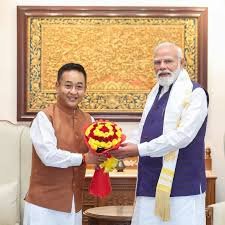
The Sikkim Statehood Golden Jubilee 2026 marks a historic milestone as the state celebrates 50 years of its journey within the Indian Union. Prime Minister Narendra Modi is scheduled to attend the grand concluding समारोह today, highlighting the importance of this occasion. The event reflects Sikkim’s progress, cultural richness, and contribution to the nation. Therefore, the celebration has drawn national attention.
Significance of the Golden Jubilee
The Sikkim Statehood Golden Jubilee 2026 celebrates five decades since Sikkim became a full-fledged state of India in 1975. This milestone represents political stability, economic growth, and social development.
Moreover, the jubilee offers an opportunity to reflect on achievements and plan future progress. As a result, the event holds deep historical and emotional value for the people of Sikkim.
PM Modi’s Participation
The Sikkim Statehood Golden Jubilee 2026 gains further prominence with the participation of Prime Minister Narendra Modi. His presence underscores the central government’s recognition of Sikkim’s development journey.
Additionally, he is expected to address the gathering and highlight key achievements. Therefore, his visit adds national significance to the celebrations.
Highlights of the Celebration
The Sikkim Statehood Golden Jubilee 2026 includes cultural performances, official ceremonies, and public events. Artists and performers showcase the state’s rich traditions and heritage.
Furthermore, the कार्यक्रम features speeches by leaders and presentations on development milestones. Consequently, the celebration blends culture with governance.
Development Journey of Sikkim
The Sikkim Statehood Golden Jubilee 2026 reflects on the state’s transformation over 50 years. Sikkim has achieved progress in areas such as infrastructure, tourism, education, and environmental conservation.
Moreover, it has gained recognition for sustainable practices, including organic farming initiatives. Therefore, the jubilee celebrates both growth and innovation.
Cultural Heritage and Identity
The Sikkim Statehood Golden Jubilee 2026 also highlights the state’s diverse cultural identity. Communities across Sikkim contribute to its vibrant traditions and festivals.
Additionally, the celebration showcases music, dance, and art forms unique to the region. As a result, it strengthens cultural pride and unity.
Impact on Tourism and Economy
The Sikkim Statehood Golden Jubilee 2026 boosts tourism as visitors travel to witness the celebrations. Hotels, local businesses, and artisans benefit from increased activity.
Furthermore, the event promotes Sikkim as a key destination in Northeast India. Consequently, it supports economic growth and visibility.
Future Vision for Sikkim
The Statehood Golden Jubilee 2026 sets the stage for future development. Leaders emphasize sustainable growth, innovation, and inclusive policies.
Moreover, the focus remains on preserving the environment while advancing infrastructure. Therefore, the state aims to balance progress with sustainability.
Conclusion
The Statehood Golden Jubilee 2026 stands as a proud moment in the state’s history. With Prime Minister Narendra Modi attending the concluding event, the celebration gains national importance.
As Sikkim reflects on its journey, it also looks ahead to a future of continued growth and prosperity. Therefore, the golden jubilee serves as both a celebration and a vision for progress.
Bold Manik Saha Victory Claim Signals BJP Surge in Silchar
Summary
The Statehood Golden Jubilee 2026 celebrates 50 years of statehood with a grand event. PM Narendra Modi is attending the concluding समारोह. The celebration highlights development, culture, and achievements. Overall, the Sikkim Statehood Golden Jubilee 2026 marks a historic milestone.
Grand Laba Longte Festival 2026 Ends with Cultural Celebration
FAQs
1. What is the Sikkim Statehood Golden Jubilee 2026?
It marks 50 years since Sikkim became a state of India.
2. Why is PM Modi attending the event?
He is attending the concluding celebration to mark the milestone.
3. What activities are part of the celebration?
Cultural performances, speeches, and official ceremonies are included.
4. When did Sikkim become a state?
Sikkim became a state of India in 1975.
5. Why is this jubilee important?
It celebrates Sikkim’s development and cultural heritage over 50 years.