







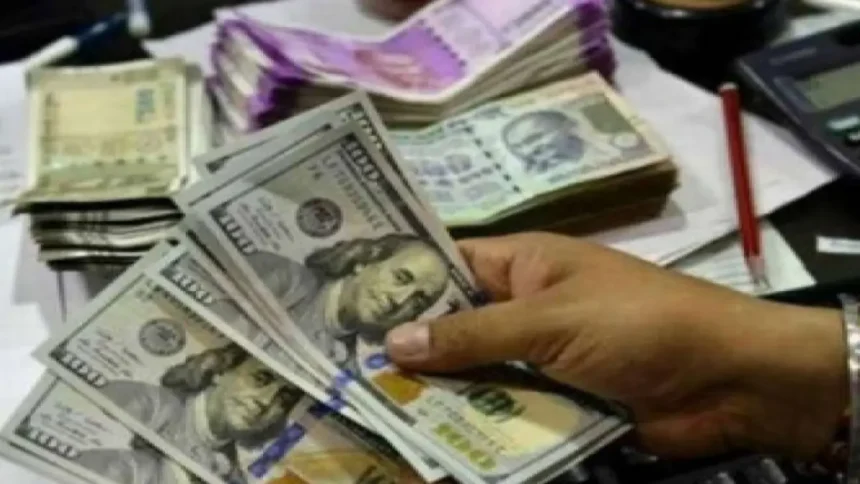
India’s foreign exchange reserves witnessed a notable increase of USD 1.853 billion in the week ending June 30, reaching a total of USD 595.051 billion, according to a statement by the Reserve Bank of India (RBI). This positive development comes after a previous reporting week that saw a decline in reserves by USD 2.901 billion to USD 593.198 billion.
The rise in foreign exchange reserves indicates a potential recovery for the Indian economy, which had experienced a decline in reserves since reaching an all-time high of USD 645 billion in October 2021. The decrease in reserves was primarily attributed to the central bank’s efforts to defend the Indian rupee against pressures arising from global developments.
The RBI has been utilizing the foreign exchange reserves strategically to stabilize the rupee amidst various economic challenges. These challenges include fluctuations in global commodity prices, the impact of the COVID-19 pandemic, and the uncertainties surrounding global trade dynamics. The central bank’s intervention aims to ensure the stability of the Indian currency and safeguard the economy against external shocks.
The recent increase in foreign exchange reserves reflects renewed confidence in the Indian economy and its ability to withstand global uncertainties. It is a positive sign indicating a potential strengthening of the rupee and improved macroeconomic stability.
Foreign exchange reserves play a crucial role in the Indian economy, serving as a buffer against external shocks and ensuring liquidity in times of crisis. They provide a sense of security and confidence to investors, both domestic and foreign, and act as a safeguard for the country’s external payments position.
The rise in reserves can be attributed to several factors. First, the Indian economy has been gradually recovering from the impact of the COVID-19 pandemic, with improving growth prospects and a revival in key sectors. This positive trajectory has boosted investor sentiment and attracted foreign capital inflows, contributing to the increase in reserves.
Second, India has been witnessing a significant rise in exports, driven by strong demand for various goods and services. Robust export performance helps in earning foreign exchange and strengthening the country’s reserves.
Furthermore, the RBI’s prudent monetary policies and effective management of the currency market have played a crucial role in maintaining stability and confidence in the Indian rupee. The central bank’s timely interventions and measures to address any excessive volatility in the foreign exchange market have reassured investors and minimized risks associated with currency fluctuations.
The increase in foreign exchange reserves is a positive development for India’s external sector, as it enhances the country’s capacity to meet its international payment obligations, import requirements, and manage any unforeseen external shocks. It also strengthens India’s position to navigate through global economic uncertainties and maintain stability in its balance of payments.
Going forward, sustaining the upward trajectory of foreign exchange reserves will be crucial. Continued efforts to attract foreign investment, promote exports, and strengthen the overall resilience of the Indian economy will play a vital role in maintaining and enhancing the reserves. It is essential to strike a balance between deploying reserves to manage short-term fluctuations and preserving an adequate buffer for long-term stability.
India’s foreign exchange reserves have shown signs of recovery with a notable increase to USD 595.051 billion. This development reflects renewed confidence in the Indian economy, boosted by improving growth prospects, strong export performance, and effective management of the currency market. The rise in reserves strengthens India’s ability to withstand global uncertainties, safeguard the rupee, and maintain stability in its external payments position.

