





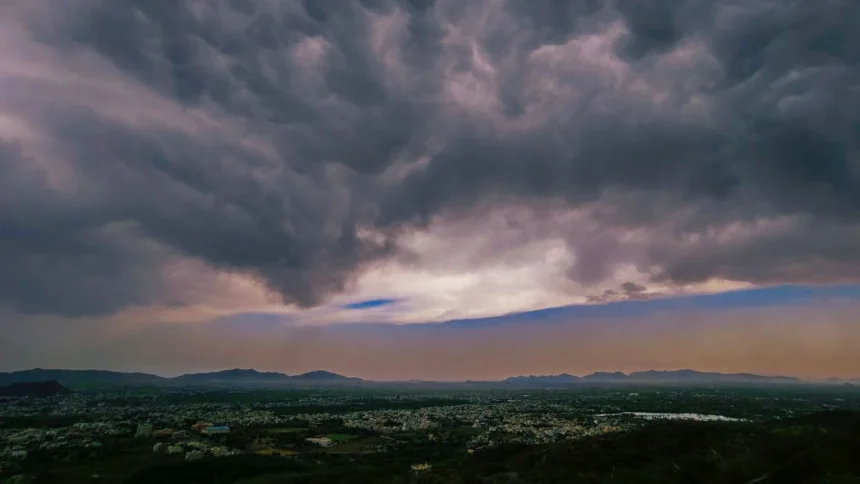
The Isolated Heavy Rainfall Warning has been issued as weather authorities confirmed that while central India continues to experience heavy rainfall associated with monsoon depressions, the northeastern states are expected to receive isolated spells of heavy rain, particularly across hill tracts. Moreover, the advisory urges residents and local administrations to remain vigilant in vulnerable areas prone to localized flooding and landslides. Consequently, authorities are maintaining close surveillance over rainfall patterns and issuing regular weather updates.
Monsoon Phase Transition Brings Vigorous July Rainfall
Isolated Heavy Rainfall Warning Highlights Northeast Weather Pattern
The Isolated Heavy Rainfall Warning indicates that rainfall across Northeast India will occur in scattered but intense spells, especially over hilly terrain. Furthermore, weather officials noted that the region’s rainfall pattern differs from the widespread storm activity affecting central India.
Monsoon systems often produce varying rainfall intensity across different parts of the country. Consequently, localized heavy showers are expected in elevated regions of the Northeast.
Moreover, changing atmospheric conditions continue to influence rainfall distribution. Therefore, meteorological agencies are closely monitoring weather developments.
Additionally, regular weather bulletins help authorities respond promptly to evolving conditions. Thus, preparedness remains an important priority.
Hill Tracts Expected to Receive Intense Rainfall
The Isolated Heavy Rainfall Warning places particular emphasis on the hill tracts of Northeast India, where localized downpours are forecast during the active monsoon period. Furthermore, mountainous terrain can intensify rainfall and increase runoff in vulnerable locations.
Heavy rainfall in hilly regions may temporarily affect transportation and local infrastructure. Consequently, authorities have advised residents to remain alert and follow official weather advisories.
Moreover, district administrations are monitoring rainfall conditions and maintaining preparedness for any weather-related emergencies. Therefore, precautionary measures remain in place across sensitive areas.
Similarly, local agencies continue coordinating with disaster management authorities. Additionally, timely communication supports effective emergency response.
Central India Faces Monsoon Depressions While Northeast Sees Localized Showers
The Isolated Heavy Rainfall Warning follows weather assessments showing different monsoon conditions across the country. Furthermore, central India continues to experience widespread rainfall due to active monsoon depressions, while Northeast India is expected to receive isolated heavy showers rather than continuous widespread rainfall.
Regional variations are common during the southwest monsoon season. Consequently, weather forecasting remains essential for planning and public safety.
Moreover, meteorological observations help authorities prepare for changing weather conditions. Therefore, continuous monitoring remains a key part of disaster preparedness.
Similarly, updated forecasts enable communities to respond quickly to weather advisories. Additionally, coordinated planning improves overall resilience.
Authorities Continue Monitoring Weather Conditions
The Isolated Heavy Rainfall Warning underscores the importance of continuous weather surveillance during the peak monsoon season. Furthermore, meteorological agencies and disaster management authorities are tracking rainfall trends and issuing timely alerts where necessary.
Accurate forecasting allows government agencies to strengthen preparedness and minimize weather-related risks. Consequently, early warnings support effective emergency planning.
Moreover, cooperation between weather agencies and local administrations enhances public safety. Therefore, residents are encouraged to stay informed through official weather bulletins.
Similarly, public awareness plays an important role in reducing the impact of heavy rainfall. Additionally, continued vigilance will remain necessary throughout the active monsoon phase.
Conclusion
The Isolated Heavy Rainfall Warning highlights the likelihood of localized heavy rain across the hill tracts of Northeast India while central India continues to experience widespread rainfall linked to monsoon depressions. Moreover, the advisory emphasizes the importance of preparedness in areas vulnerable to heavy showers.
Furthermore, authorities will continue monitoring weather conditions and issuing timely updates as the active monsoon progresses. Consequently, coordinated disaster management and public cooperation will remain essential for minimizing weather-related risks.
Looking ahead, sustained weather surveillance, improved forecasting, and adherence to official advisories will help communities respond effectively to the Isolated Heavy Rainfall Warning during the ongoing monsoon season.
FAQs
1. What is the Isolated Heavy Rainfall Warning?
It is a weather advisory indicating that parts of Northeast India, especially hill tracts, may experience localized heavy rainfall.
2. Which areas are expected to receive heavy rain?
Hill tracts across Northeast India are expected to receive isolated spells of heavy rainfall.
3. How does the Northeast weather differ from central India?
While central India is experiencing widespread rainfall due to monsoon depressions, the Northeast is expected to receive scattered heavy showers.
4. Why should residents remain alert?
Heavy rainfall may lead to localized flooding, landslides, and temporary disruptions in vulnerable areas.
5. Why is the Isolated Heavy Rainfall Warning important?
It helps authorities and the public prepare for localized heavy rainfall and supports timely disaster management during the active monsoon season.