



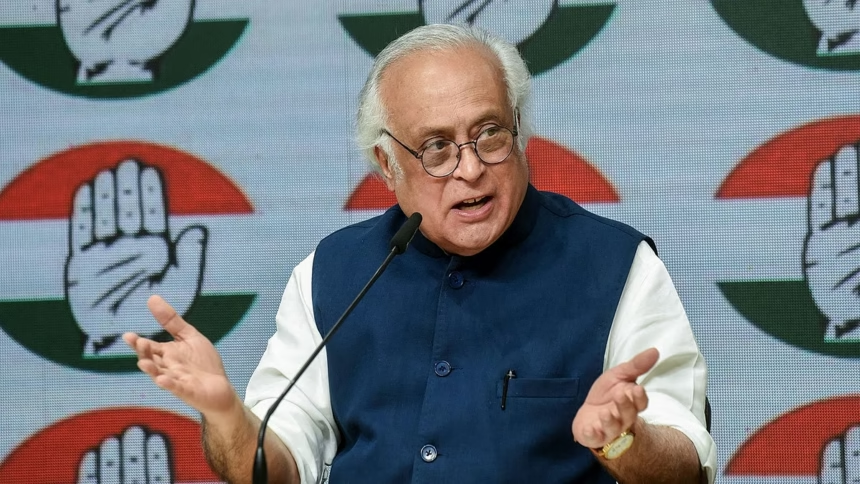
Congress leader Jairam Ramesh has reportedly linked the opposition’s participation in the FCRA Bill debate to a response from Union Home Minister Amit Shah over recent student protests at Jantar Mantar. Ramesh has said that Congress will not allow the proposed Foreign Contribution (Regulation) Amendment Bill, 2026, to proceed to debate until the Home Minister addresses concerns surrounding the handling of the protests.
Shillong Parliamentary Vacancy: Electoral Bodies Advance Revision Tracking
The position adds another layer to the ongoing parliamentary confrontation over the proposed FCRA amendments. Moreover, the Congress demand connects the legislative dispute with broader concerns over civil liberties, protest rights, and the government’s handling of student demonstrations.
The government and opposition now face the possibility of another parliamentary deadlock if neither side changes its position. However, the allegations surrounding the protests and the reasons for any police action require verification through official records and independent reporting.
Jairam Ramesh Raises Condition for Debate
Jairam Ramesh’s reported statement places the FCRA Bill within a wider political dispute.
According to the Congress position, the party wants Amit Shah to address concerns regarding recent student protests before it participates in the proposed legislative debate. Furthermore, Congress has linked the issue to questions about how authorities handled demonstrations at Jantar Mantar.
The demand could make the upcoming parliamentary proceedings more contentious.
However, the exact parliamentary consequences will depend on the positions adopted by other opposition parties and the government’s response.
Jantar Mantar Protests Become Central Issue
Student protests at Jantar Mantar have become an important part of the political discussion surrounding the FCRA Bill.
Congress has raised concerns about the reported handling of demonstrators and wants the Home Minister to respond. Additionally, the party may seek clarification about police procedures, restrictions on demonstrations, and the treatment of students during the protests.
These questions could now enter parliamentary debate.
However, allegations about specific incidents require confirmation from official records and credible independent accounts.
FCRA Bill Faces Wider Opposition
The proposed FCRA Amendment Bill has already attracted opposition scrutiny.
INDIA bloc parties have demanded greater examination of the legislation and have called for a Joint Parliamentary Committee to review its provisions. Moreover, opposition parties have raised concerns about the potential impact of changes on NGOs, minority institutions, and other organisations that receive foreign contributions.
Congress’s latest position adds a separate political demand to the legislative dispute.
Consequently, the government may face pressure on both the substance of the bill and the circumstances surrounding its parliamentary consideration.
Opposition Links Civil Liberties With Legislation
Congress’s position connects the FCRA debate with broader questions about civil liberties.
Opposition leaders may argue that Parliament should address concerns over the treatment of protesters alongside legislative discussions. Furthermore, they can use parliamentary proceedings to seek explanations from the government regarding policing and protest management.
The strategy could increase political pressure on the government.
However, the FCRA Bill itself concerns the regulation of foreign contributions, while protest-related issues involve separate legal and administrative questions.
Government Faces Parliamentary Challenge
The government’s response to the Congress demand could influence the next stage of the FCRA debate.
If the government agrees to address the concerns, Parliament could move toward discussion of the legislation. Conversely, if the government rejects the condition, Congress and other opposition parties could continue their resistance.
The disagreement could therefore affect the legislative timetable.
Moreover, the government may argue that separate issues should not prevent Parliament from examining proposed legislation.
JPC Demand Adds to the Deadlock
The latest dispute comes after opposition parties demanded a Joint Parliamentary Committee review of the FCRA Bill.
A JPC can examine legislation in greater detail, hear representations, and consider concerns from different stakeholders. Additionally, committee proceedings can provide lawmakers with more time to study technical and legal implications.
The opposition’s JPC demand and Congress’s protest-related condition could consequently reinforce pressure for a more extensive review.
However, the government retains the ability to determine its legislative strategy within parliamentary procedures.
Student Protest Issue Gains Political Attention
Student demonstrations have become a broader political issue amid the FCRA controversy.
Congress can use parliamentary proceedings to raise questions about the right to protest and the government’s response to demonstrations. Moreover, the party may demand greater transparency regarding any police restrictions or detentions connected with the protests.
The issue could therefore extend beyond the FCRA legislation itself.
However, authorities must establish the facts surrounding individual incidents before responsibility can be assigned.
Amit Shah Faces Opposition Questions
The demand specifically places Union Home Minister Amit Shah at the centre of the dispute.
Congress wants the Home Minister to respond to its concerns before allowing the FCRA debate to proceed, according to the reported position. Furthermore, opposition MPs could raise questions about law-and-order decisions and the handling of demonstrations.
A response from the Home Ministry could therefore influence the parliamentary atmosphere.
However, it remains unclear whether the government will accept Congress’s proposed condition.
Parliament Could Face Another Deadlock
The dispute creates the possibility of another confrontation between the government and opposition.
If Congress maintains its position, parliamentary proceedings involving the FCRA Bill could face interruptions or procedural resistance. Additionally, other INDIA bloc parties may decide whether to support the Congress position or pursue separate strategies.
The government’s numerical strength and parliamentary floor management will also influence developments.
However, negotiations can still produce a compromise before the legislation reaches a decisive stage.
FCRA Regulation Remains the Core Legislative Issue
Despite the political dispute, the FCRA Bill concerns India’s framework for regulating foreign contributions.
The government can argue that amendments are necessary to strengthen transparency, accountability, and oversight. Meanwhile, opposition parties have raised concerns about possible effects on NGOs, minority institutions, and other organisations receiving foreign funds.
The debate therefore involves both regulatory policy and political disagreement.
Furthermore, detailed parliamentary scrutiny could help lawmakers assess the practical implications of the proposed provisions.
Civil Society Watches the Dispute
Civil-society organisations are likely to follow the parliamentary developments closely.
Changes to foreign-contribution rules could affect funding arrangements, compliance obligations, reporting requirements, and organisational operations. Moreover, concerns about protest rights have added another dimension to the discussion among advocacy groups.
A prolonged parliamentary dispute could therefore attract attention beyond political parties.
However, the eventual impact will depend on the final legislation and its implementation.
What Happens Next?
The government’s response to Congress’s demand will determine the immediate direction of the dispute.
If Amit Shah addresses the concerns raised by Congress, opposition parties may reconsider their position on parliamentary debate. Conversely, continued disagreement could result in further confrontation over the FCRA Bill.
The JPC demand could also remain on the table.
Moreover, negotiations between the government and opposition parties may determine whether Parliament moves toward detailed discussion or faces further disruption.
Conclusion
Congress leader Jairam Ramesh has reportedly made the handling of student protests at Jantar Mantar a pre-condition for his party’s participation in the FCRA Bill debate, demanding that Home Minister Amit Shah address the issue first. The position adds another complication to an already contentious dispute over the proposed Foreign Contribution (Regulation) Amendment Bill, 2026.
Moreover, the INDIA bloc’s demand for a JPC has already created pressure for greater scrutiny of the legislation. At the same time, Congress’s protest-related demand shifts part of the parliamentary confrontation toward broader questions about civil liberties and the handling of demonstrations.
Overall, the next stage will depend on the government’s response and the ability of both sides to negotiate. Whether Parliament proceeds with the FCRA debate, considers a JPC, or faces further confrontation will become clearer as the scheduled proceedings approach.
FAQs
1. What condition has Jairam Ramesh reportedly set?
Ramesh has reportedly linked Congress’s participation in the FCRA Bill debate to Home Minister Amit Shah addressing concerns about recent student protests at Jantar Mantar.
2. Why is Congress raising the Jantar Mantar protests?
Congress has raised concerns about the reported handling of the student demonstrations and wants greater clarity from the Home Ministry.
3. What is the FCRA Amendment Bill about?
The proposed bill seeks to amend India’s framework governing foreign contributions received and used by eligible individuals and organisations.
4. What does the INDIA bloc want?
Opposition parties within the INDIA bloc have demanded greater parliamentary scrutiny of the proposed legislation, including consideration of a Joint Parliamentary Committee.
5. Could the dispute delay the FCRA debate?
Yes. If Congress and other opposition parties maintain their objections and the government does not address their demands, parliamentary proceedings over the bill could face further political resistance.