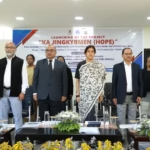

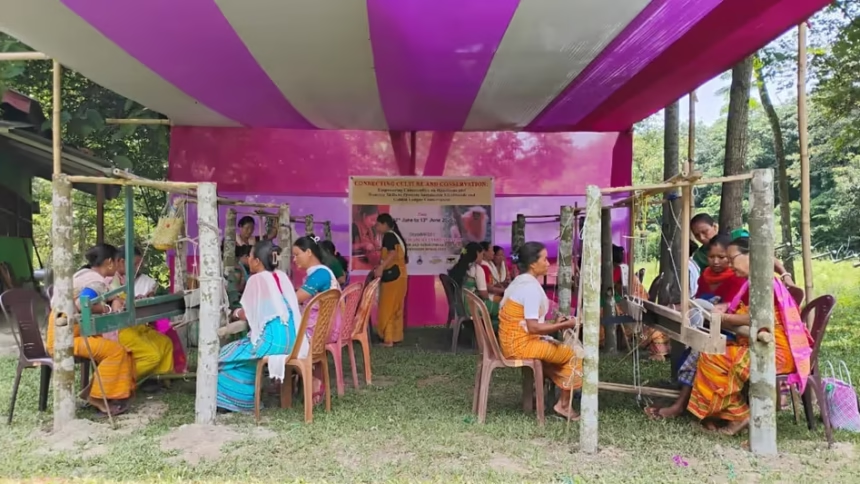
A two-day workshop aimed at linking cultural heritage with wildlife conservation began in Kokrajhar on June 13. The Primate Research Centre Northeast India (PRCNE), in collaboration with the Bodoland Territorial Council (BTC) Forest Department, organized the programme. Participants are learning advanced weaving skills while promoting awareness about the endangered Golden Langur.
Additionally, the initiative encourages sustainable livelihoods for women living near key forest habitats. Organizers believe the programme can strengthen community participation in conservation and boost eco-tourism in the region.
Read More: Sikkim Artists Honoured with Yuva Puraskar
Key Facts
- Event: Two-day culture and conservation workshop
- Location: Kokrajhar, Assam
- Date: June 13
- Organizers: PRCNE and BTC Forest Department
- Theme: Connecting Culture and Conservation
- Participants: 23 women from forest-fringe villages
- Focus Species: Golden Langur
- Training: Traditional weaving using the Tat Xal loom
- Goal: Conservation awareness and livelihood generation
Workshop Connects Culture with Wildlife Conservation
The Primate Research Centre Northeast India (PRCNE) launched a two-day workshop in Kokrajhar on June 13. The programme carries the theme “Connecting Culture and Conservation.”
PRCNE organized the event with support from the BTC Forest Department. The workshop focuses on strengthening traditional weaving skills while raising awareness about the endangered Golden Langur.
Moreover, the initiative targets villages located near the Chakrashila Wildlife Sanctuary–Nayekgaon PRF–Bakshamara RF–Amguri RF–Nadangiri RF forest complex. This landscape serves as an important habitat for the Golden Langur.
Organizers aim to create sustainable livelihood opportunities for local communities. At the same time, they encourage residents to take an active role in protecting forests and wildlife.
Experts Highlight Community-Led Conservation
Several conservationists, researchers, and forestry officials attended the inaugural session.
The guests included Mohan Chandra Brahma, Retired DFO and Officer on Special Duty (Wildlife), BTC; Raju Kumar Brahma, Retired DFO and Advisor to the BTC Forest Department; and Tanu Brahma, Assistant Manager of Silk Park Kokrajhar.
In addition, Dr. Jihosuo Biswas, Senior Scientist at PRCNE, Dr. Nabajit Das of Barpeta Howly College, Dr. Joydeep Shil, entrepreneur Prithwi Narzary, and Nayekgaon Range Officer Rimwn Sarrang attended the event.
The speakers stressed the importance of community participation in conservation. Furthermore, they highlighted the role of traditional crafts in supporting sustainable development.
Women Receive Practical Weaving Training
The workshop has brought together 23 women from Dabargaon, Dabargaon-Amguri, Kultungpara, Bakshamara, Nayekgaon, Boropathar, and Pundibari.
Experts from Silk Park Kokrajhar and experienced artisans are guiding the participants. As a result, the women are gaining practical knowledge of traditional weaving techniques.
The training uses the “Tat Xal,” a hand-operated wooden loom that remains popular across the region. Consequently, participants can improve their skills while preserving local weaving traditions.
Golden Langur Motifs Added to Handloom Products
A major feature of the programme involves weaving wildlife-inspired designs into traditional textiles.
Participants are learning to create motifs of the Golden Langur, one of BTC’s most recognized wildlife symbols. They are also incorporating designs inspired by other native species.
As a result, the workshop blends conservation awareness with cultural expression. These products may also attract tourists and environmentally conscious buyers.
Sustainable Livelihoods and Eco-Tourism Opportunities
Organizers expect the initiative to support both economic growth and environmental protection.
By combining wildlife themes with traditional weaving, the programme can help generate new income opportunities. In addition, it can strengthen public awareness about biodiversity conservation.
BTC is home to three major national parks and rich wildlife resources. Therefore, officials believe the region offers strong potential for community-based conservation initiatives.
The programme demonstrates how culture, tourism, and conservation can work together to benefit local communities and protect endangered species.
Question and Answer Section
What happened in Kokrajhar?
PRCNE and the BTC Forest Department launched a two-day workshop that combines weaving training with wildlife conservation awareness.
Who organized the programme?
The Primate Research Centre Northeast India organized the programme in partnership with the BTC Forest Department.
Who is participating in the workshop?
Twenty-three women from several forest-fringe villages are taking part in the training.
What skills are participants learning?
Participants are learning traditional weaving techniques using the Tat Xal handloom.
Why is the Golden Langur important to the programme?
The workshop promotes awareness and conservation of the endangered Golden Langur through wildlife-themed handloom products.
How can the initiative help local communities?
The programme can create income opportunities, support eco-tourism, and encourage community involvement in conservation.
Location Context
Kokrajhar is located in the Bodoland Territorial Region of Assam. The area contains important forests, wildlife habitats, and protected areas. Therefore, conservation programmes in the region play a vital role in protecting biodiversity and endangered species such as the Golden Langur.
Also Read: Brahmaputra Water Level Monitoring Intensified Amid Rising River Levels – Borok Times