

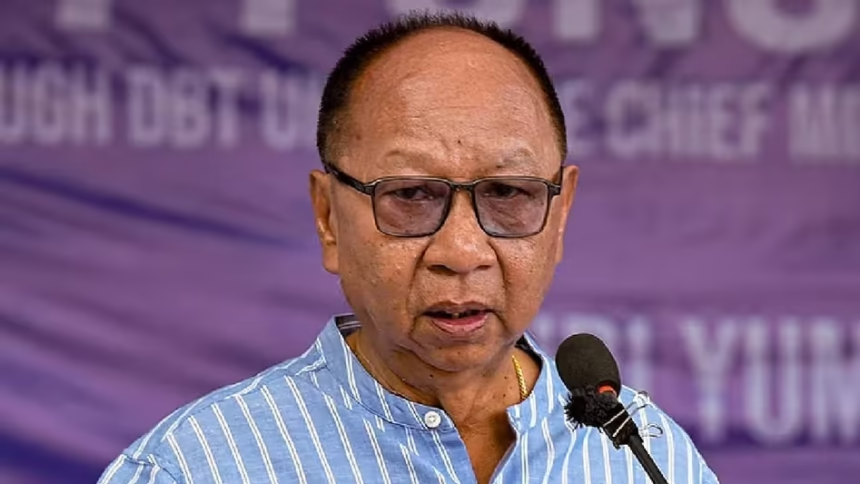
Manipur Chief Minister Yumnam Khemchand Singh on September 3 said around 36,000 internally displaced persons (IDPs) have returned home since the ethnic conflict began in May 2023. However, nearly 24,000 displaced people still live in relief camps across the state. Speaking in the Assembly, the Chief Minister said the government continues to support affected families with financial assistance and rehabilitation measures.
He also highlighted the need to address livelihood problems and the mental trauma caused by the prolonged conflict. Meanwhile, the government is working to rebuild trust between communities and restore normal life in Manipur.
Read More: Nagaland MLA Raises Oil Drilling Concern
Key Facts
- Location: Manipur
- Conflict: Ethnic violence that began in May 2023
- People displaced: Around 60,000
- IDPs resettled: Around 36,000
- IDPs still in relief camps: Around 24,000
- Chief Minister: Yumnam Khemchand Singh
- Assembly discussion: Moved by Congress MLA Th Lokeshwar Singh
- Other priorities: Rehabilitation, employment, connectivity and restoration of economic activity
36,000 Displaced People Return Home
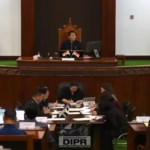
Chief Minister Khemchand made the announcement while replying to a short-duration discussion in the Manipur Assembly.
He said around 36,000 displaced people have returned to their respective homes. However, approximately 24,000 IDPs continue to stay in relief camps across Manipur.
Khemchand credited the collective efforts of legislators and others for the progress in the resettlement process.
Government Continues Financial Support
Despite the return of thousands of displaced people, the government continues to provide financial assistance to around 59,000 of the 60,000 people affected by the conflict.
The Chief Minister explained that many returnees still face serious livelihood and income problems. Therefore, the government has continued monthly financial support to help affected families rebuild their lives.
However, Khemchand stressed that financial assistance alone cannot solve the problems created by a conflict that has lasted for nearly three years.
Mental Health and Rehabilitation
The Chief Minister also highlighted the psychological impact of the prolonged crisis.
According to him, many affected people continue to experience mental trauma. Consequently, the Health Department has started taking steps to address the psychological needs of conflict-affected communities.
Meanwhile, Khemchand said he was consulting the Planning Department on additional rehabilitation and livelihood measures.
The government is also considering employment-related support. For example, labour cards issued through the Labour Department could help displaced people access work opportunities.
IDPs Want to Return Home
Khemchand said people displaced from both the hills and the valley share a common desire to return home and live peacefully.
During his visits to relief camps and conflict-affected areas, he said he interacted with people from different communities. According to him, their shared aspiration remains a return to their respective homes.
Last month, the Chief Minister also met representatives of six to seven joint IDP associations. The discussions focused on additional assistance and ways to speed up the resettlement process.
Government Focuses on Restoring Normalcy
The Chief Minister identified the trust deficit between communities as one of the biggest challenges facing Manipur.
Therefore, he said the government is working to rebuild trust and create conditions for peaceful resettlement. He also urged people to approach the issue of displaced families without political considerations.
Meanwhile, efforts are underway to restore connectivity and economic activity. The Imphal-Dimapur-Guwahati bus service has already resumed, while the government is working towards reopening the Moreh trade route.
Q&A
How many IDPs have returned home in Manipur?
Around 36,000 displaced people have reportedly returned home.
How many IDPs remain in relief camps?
Around 24,000 people continue to live in relief camps across the state.
When did the conflict begin?
The ethnic conflict began in May 2023.
Is the government still providing financial assistance?
Yes. The government continues to provide financial support to around 59,000 displaced people.
What is the biggest challenge to resettlement?
The Chief Minister identified the trust deficit between communities as a major challenge.
What other steps is the government taking?
The government is focusing on rehabilitation, livelihood support, mental health assistance, employment opportunities and restoring connectivity.
Location Context
Manipur remains a strategically important state in Northeast India, sharing international and interstate borders and serving as a key gateway to Southeast Asia. Restoring peace, resettling displaced families and reviving economic activity remain crucial for the state’s long-term stability and development.
Also Read: Indo-Myanmar Border Interception: Four UNLF (K) Insurgents Apprehended in Manipur – Borok Times